
 Algeria
 Egypt
 Libya
 Morocco
 Sudan
 Tunisia
 Benin
 Burkina Faso
 Cabo Verde
 Côte d'Ivoire
 Ghana
 Guinea
 Guinea-Bissau
 Liberia
 Mali
 Mauritania
 Niger
 Nigeria
 Senegal
 Sierra Leone
 The Gambia
 Togo
 Cameroon
 Central African Republic
 Chad
 Equatorial Guinea
 Gabon
 Republic of the Congo
 São Tomé and Príncipe
 Burundi
 Comoros
 Djibouti
 Eritrea
 Ethiopia
 Kenya
 Madagascar
 Malawi
 Mauritius
 Mozambique
 Rwanda
 Seychelles
 Somalia
 South Sudan
 Tanzania
 Uganda
 Angola
 Botswana
 Eswatini
 Lesotho
 Namibia
 South Africa
 Zambia
 Zimbabwe
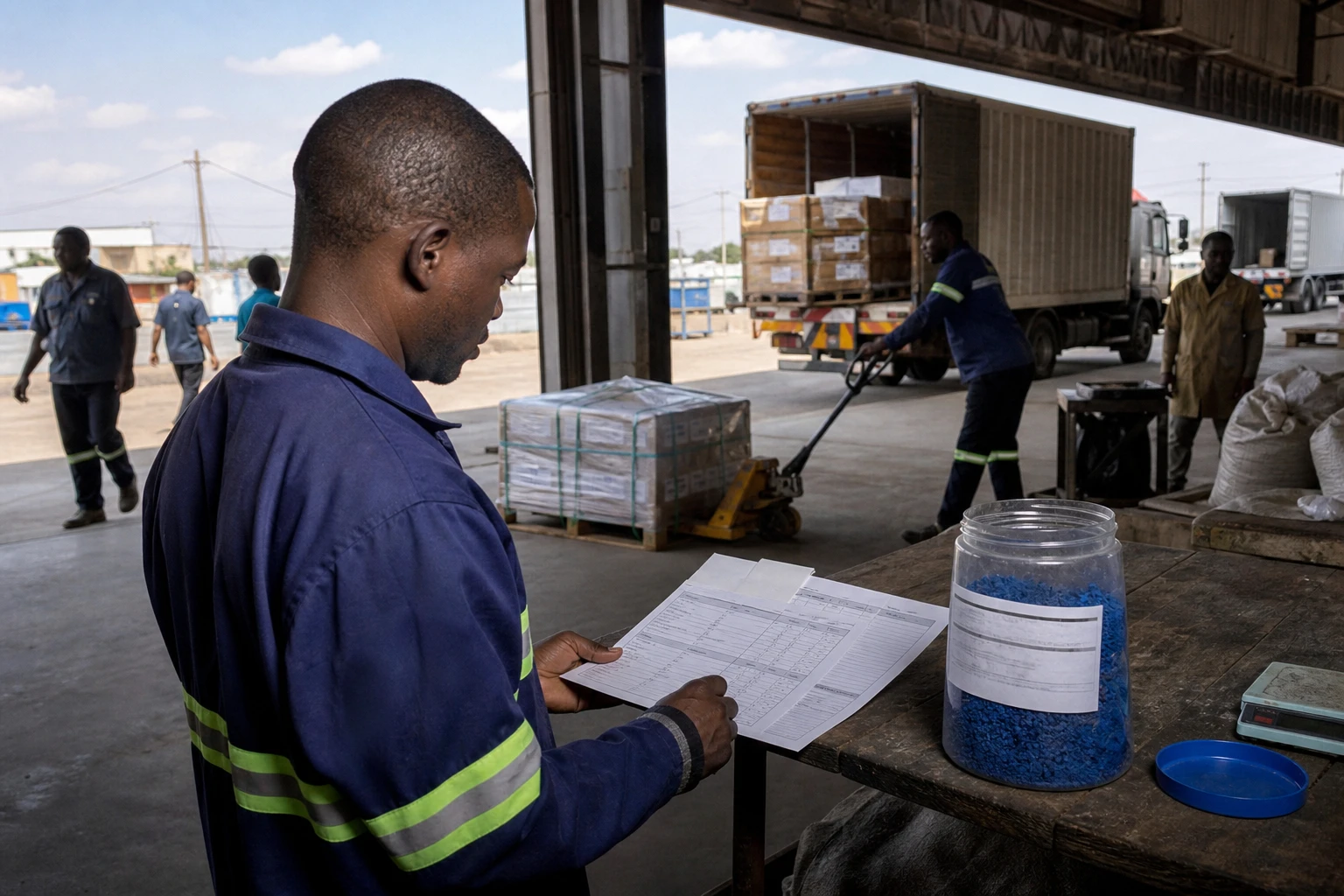
In Kinshasa, the debate over cobalt is no longer just about the volumes extracted. It now concerns the Democratic Republic of the Congo’s ability to turn its dominant position into sustainable revenues, as battery makers accelerate their technological diversification.
A global market caught between dependence and substitution
The DRC remains the world’s leading supplier of mined cobalt. The metal is used, among other things, in the manufacture of some lithium-ion batteries, used in electric vehicles, electronic devices and energy storage systems.
This position gives the country significant weight in an industrial supply chain largely structured around Asia. Much of the cobalt mined in Central Africa is, however, refined outside the continent. Value added, technological capabilities and the setting of commercial terms therefore remain concentrated further down the chain.
In this context, Kinshasa’s decision to limit exports is aimed at addressing a specific problem: excess supply and weak prices. In February 2025, the Congolese authorities suspended cobalt exports. The measure was subsequently extended before giving way to a quota system from 16 October 2025.
The International Energy Agency confirmed the regulatory timetable set by the Regulatory and Control Authority for Strategic Mineral Substances Markets, ARECOMS. For 2026 and 2027, the scheme provides for an annual cap of 96,600 tonnes, part of which is reserved for a strategic quota managed by the public authority.
Kinshasa’s gamble: cut supply without losing buyers
The logic is simple. By slowing shipments, the DRC reduces the volumes available on the international market. If demand remains strong, this constraint could support prices and increase revenue from the mining sector.
There is, however, a limit to this calculation. The DRC does not control the market alone. Indonesia is developing its production, while China has major influence over refining and the manufacture of active battery materials. Manufacturers can also adjust their stocks, contracts and processes.
Major mining producers were quick to highlight this risk. In May 2025, China’s CMOC, the world’s largest cobalt producer and operator of several mines in Lualaba, called for the Congolese suspension to be lifted, according to information reported by Reuters. The group said at the time that prolonged restrictions could accelerate the replacement of cobalt in batteries.
This concern does not mean that demand will disappear. Rather, it shows that the balance of power is shifting. Buyers are seeking to secure their supplies, but also to reduce their exposure to a metal concentrated in a limited number of countries and subject to sharp price fluctuations.
LFP batteries are changing the picture
The main technological shift concerns lithium iron phosphate batteries, known by the acronym LFP. They use little or no cobalt. Their lower cost and lifespan, suited to many applications, explain their rapid growth in electric vehicles and stationary storage.
According to the 2026 edition of the Global EV Outlook, LFP batteries accounted for more than 55% of batteries deployed in electric vehicles in 2025, compared with nearly half in 2024. This growth reduces the average amount of cobalt required per vehicle.
Nevertheless, cobalt-containing chemistries have not left the market. They are still used when high energy density, long range or high performance are priorities. They therefore retain a place in some premium vehicles, electronics and applications where weight and size are decisive.
The International Energy Agency also estimates that cobalt demand linked to energy technologies will continue to grow in the long term, even though its projections have been revised downwards as LFP batteries gain ground. In its 2026 analysis, the agency notes that electric vehicles, electricity storage and grids remain the main drivers of demand for critical minerals.
A price recovery that remains fragile
The Congolese suspension helped tighten available supply and support prices after a period of steep decline. However, a rebound is not enough to measure the success of public policy.
Three indicators will need to be monitored together: price levels, the volumes actually exported and the revenues received by the state and operators. A higher price may lose its advantage if the quantities sold fall too sharply. Conversely, substantial exports can support revenues without triggering a lasting rise if global supply remains plentiful.
How the quotas are implemented will also be crucial. Congolese mines often produce cobalt alongside copper. An administrative limit on the former must therefore be reconciled with the technical and commercial constraints of the latter. Any uncertainty over export permits can complicate production schedules, contracts and stock management.
Mining companies will also have to contend with quota allocations based partly on past performance. This mechanism may favour established producers and increase the concentration of the sector. At the same time, it raises questions about the role of state operators and the DRC’s ability to develop more local processing.
The real challenge goes beyond the price of cobalt
For Congolese people, the desired outcome is not simply a recovery in prices. The issue is how much of the mining wealth goes to the public budget, producing provinces and communities near mining sites.
The quota strategy could give Kinshasa greater visibility over exports. On its own, it will not be enough to create a Congolese industry for precursors, active materials or battery cells. These activities require reliable electricity, logistics infrastructure, technical skills and a stable contractual framework.
The DRC must therefore balance two timeframes. In the short term, it is seeking to curb the surplus and protect its revenues. In the long term, it must avoid restrictions permanently encouraging manufacturers to choose technologies less dependent on cobalt.
This issue extends beyond the DRC’s borders. It concerns Africa’s place in the global energy transition. As long as the continent mainly exports raw minerals, its influence over supply will remain strong, but its influence over the value created will be more limited.
The next step will be to assess the tangible results of the quota regime for 2026: volumes actually shipped, price movements, public revenues and the response of battery makers. Cobalt will remain strategic for the DRC, but its future will depend as much on supply management as on the country’s ability to influence the industrial processes that follow extraction.



