
 Algeria
 Egypt
 Libya
 Morocco
 Sudan
 Tunisia
 Benin
 Burkina Faso
 Cabo Verde
 Côte d'Ivoire
 Ghana
 Guinea
 Guinea-Bissau
 Liberia
 Mali
 Mauritania
 Niger
 Nigeria
 Senegal
 Sierra Leone
 The Gambia
 Togo
 Cameroon
 Central African Republic
 Chad
 Equatorial Guinea
 Gabon
 Republic of the Congo
 São Tomé and Príncipe
 Burundi
 Comoros
 Djibouti
 Eritrea
 Ethiopia
 Kenya
 Madagascar
 Malawi
 Mauritius
 Mozambique
 Rwanda
 Seychelles
 Somalia
 South Sudan
 Tanzania
 Uganda
 Angola
 Botswana
 Eswatini
 Lesotho
 Namibia
 South Africa
 Zambia
 Zimbabwe
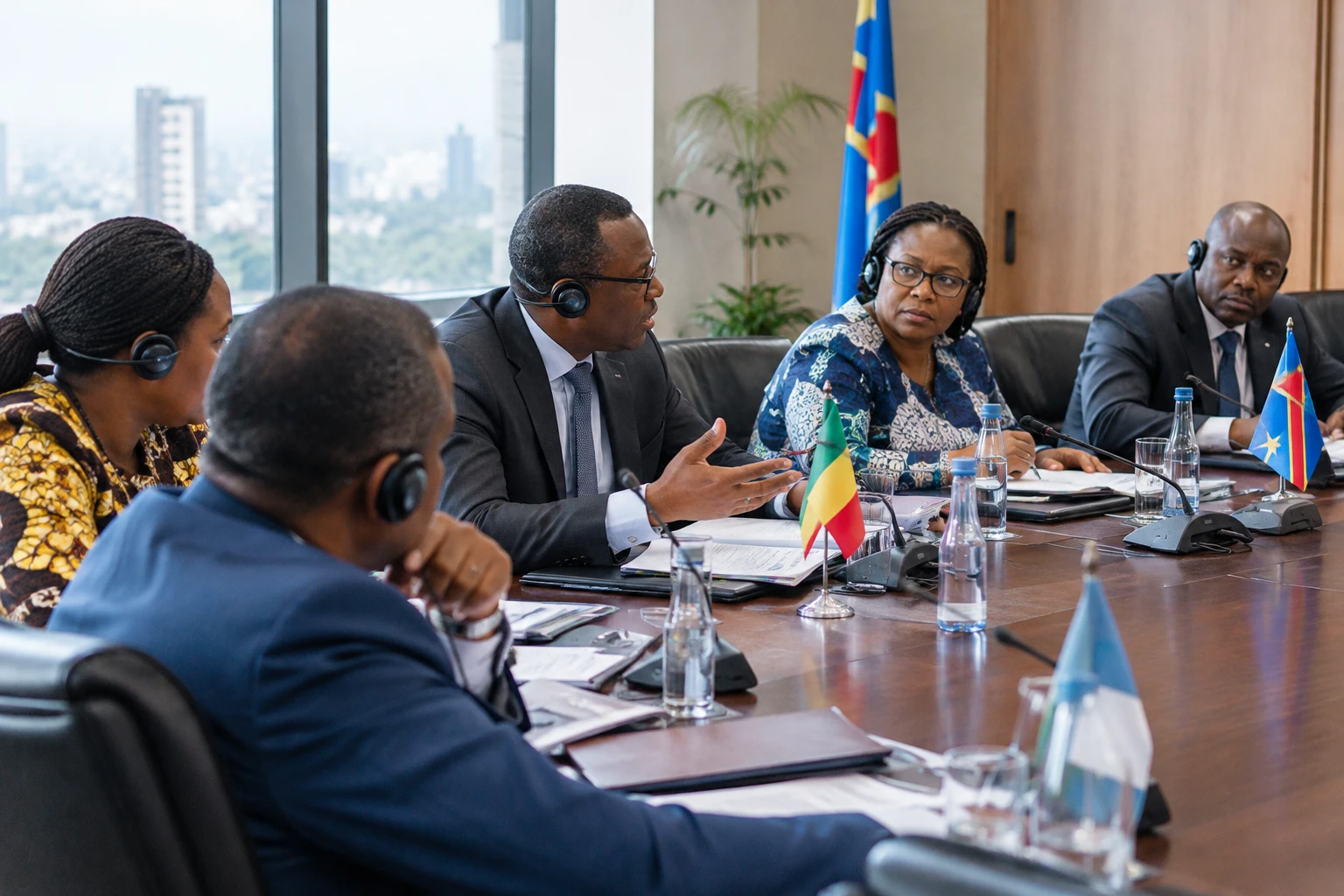
In Kinshasa, debate over national dialogue also turns on a very practical question: who can take part, and under what conditions? The detention of opposition figure Prince Epenge, as he was travelling to a meeting of the Article 64 Coalition (C64) in Rome, has renewed doubts about the space available to the opposition.
A national dialogue contested before it even begins
The Democratic Republic of the Congo is facing a crisis on several fronts. In the east, fighting and population displacement are weighing on security and the unity of the territory. In Kinshasa, discussions about institutions, political freedoms and the future of the Constitution are fuelling a confrontation between the government and the opposition.
President Félix Tshisekedi has raised the prospect of a national dialogue. But political actors disagree on its format, its mediation and who should take part. The National Episcopal Conference of Congo and the Church of Christ in Congo, two influential religious institutions, have also advocated a consultative process. It remains to be seen whether this initiative can bring together parties that are already challenging the conditions of the process.
The C64 includes Martin Fayulu, Moïse Katumbi, Delly Sesanga, Augustin Matata Ponyo and Jean-Marc Kabund, among others. The coalition says it is defending the constitutional order and rejects the use of arms as a means of resolving political disputes. It also opposes any change to the Constitution that would, in its view, allow the president to extend his time in power. This position comes as Félix Tshisekedi is due to complete his second term in 2028.
Rome, and then the question of Prince Epenge
From 25 to 27 October 2026, C64 leaders met in Rome for their first in-person conclave since the coalition was formed. They announced plans to meet Félix Tshisekedi and his predecessor Joseph Kabila separately to discuss the conditions for inclusive national dialogue. They also sought the attention of international partners.
The trip was marked by the arrest of Prince Epenge, Lamuka spokesperson and a member of the C64. He was detained at N’djili International Airport in Kinshasa on 25 October as he was due to travel to the meeting. Congolese media reported that he was subsequently held at the National Cyber Defence Council, then transferred to the Kinshasa/Gombe prosecutor’s office after about 48 hours. Authorities reportedly accused him of spreading “false rumours”, according to information reported by the press; this accusation does not amount to a conviction.
Martin Fayulu condemned his detention and called for his rights to be respected. The coalition, for its part, called for his release. International coverage has also reported on the case and its impact on debate about political freedoms. This information sheds light on the context, but is not sufficient to establish publicly all the details of the judicial case.
Political guarantees and red lines
For the C64, meeting the president and the former head of state separately does not necessarily mean placing them on an equal institutional footing. The coalition is seeking guarantees for a dialogue that addresses the political and security causes of the crisis without challenging the constitutional order. It also intends to secure recognition of the role of opposition forces and social actors in the discussions.
The choice of Joseph Kabila is politically sensitive. He led the country from 2001 to 2019 and remains an influential figure, while his relations with the current government are strained. Talking to him could broaden the scope for consultation, but it resolves neither the differences between the camps nor the question of the actors’ responsibility for the crisis. The content of any meetings and the commitments expected remain to be specified.
For residents, the stakes go beyond rivalries between leaders. A credible dialogue could open up space for debate on security, governance and living conditions. But a meeting between leaders does not in itself guarantee changes in provinces affected by violence, or effective representation for women, young people, civic organisations and local communities.
The detention of an opposition figure on the eve of a political meeting is also fuelling mistrust. The authorities must clearly establish the legal grounds for any arrest and ensure judicial safeguards. For their part, C64 leaders will have to demonstrate that their proposal goes beyond negotiations between political figures and can include the populations directly affected.
A closely watched regional issue
The Congolese crisis has regional implications, particularly in Central Africa and the Great Lakes region. Insecurity in the east spills across borders through its humanitarian and diplomatic consequences. National dialogue in Kinshasa would not replace regional efforts to reduce tensions, but it could strengthen their credibility if the Congolese authorities and political forces agree on a domestic path forward.
The European tour by C64 leaders is also intended to draw the attention of external partners. Their role may carry weight in diplomatic discussions, but cannot replace an agreement among Congolese. The immediate focus is therefore twofold: the judicial follow-up in Prince Epenge’s case and whether the proposed meetings with Félix Tshisekedi and Joseph Kabila take place.
The announced dialogue will be judged less by its name than by its rules: freedom to participate, an accepted mediator, a defined agenda and verifiable guarantees. Without these elements, consultations risk prolonging political rivalry rather than bringing the actors closer together.



