Algeria
 Egypt
 Libya
 Morocco
 Sudan
 Tunisia
 Benin
 Burkina Faso
 Cabo Verde
 Côte d'Ivoire
 Ghana
 Guinea
 Guinea-Bissau
 Liberia
 Mali
 Mauritania
 Niger
 Nigeria
 Sierra Leone
 The Gambia
 Togo
 Cameroon
 Central African Republic
 Chad
 DR Congo
 Equatorial Guinea
 Gabon
 Republic of the Congo
 São Tomé and Príncipe
 Burundi
 Comoros
 Djibouti
 Eritrea
 Ethiopia
 Kenya
 Madagascar
 Malawi
 Mauritius
 Mozambique
 Rwanda
 Seychelles
 Somalia
 South Sudan
 Tanzania
 Uganda
 Angola
 Botswana
 Eswatini
 Lesotho
 Namibia
 South Africa
 Zambia
 Zimbabwe
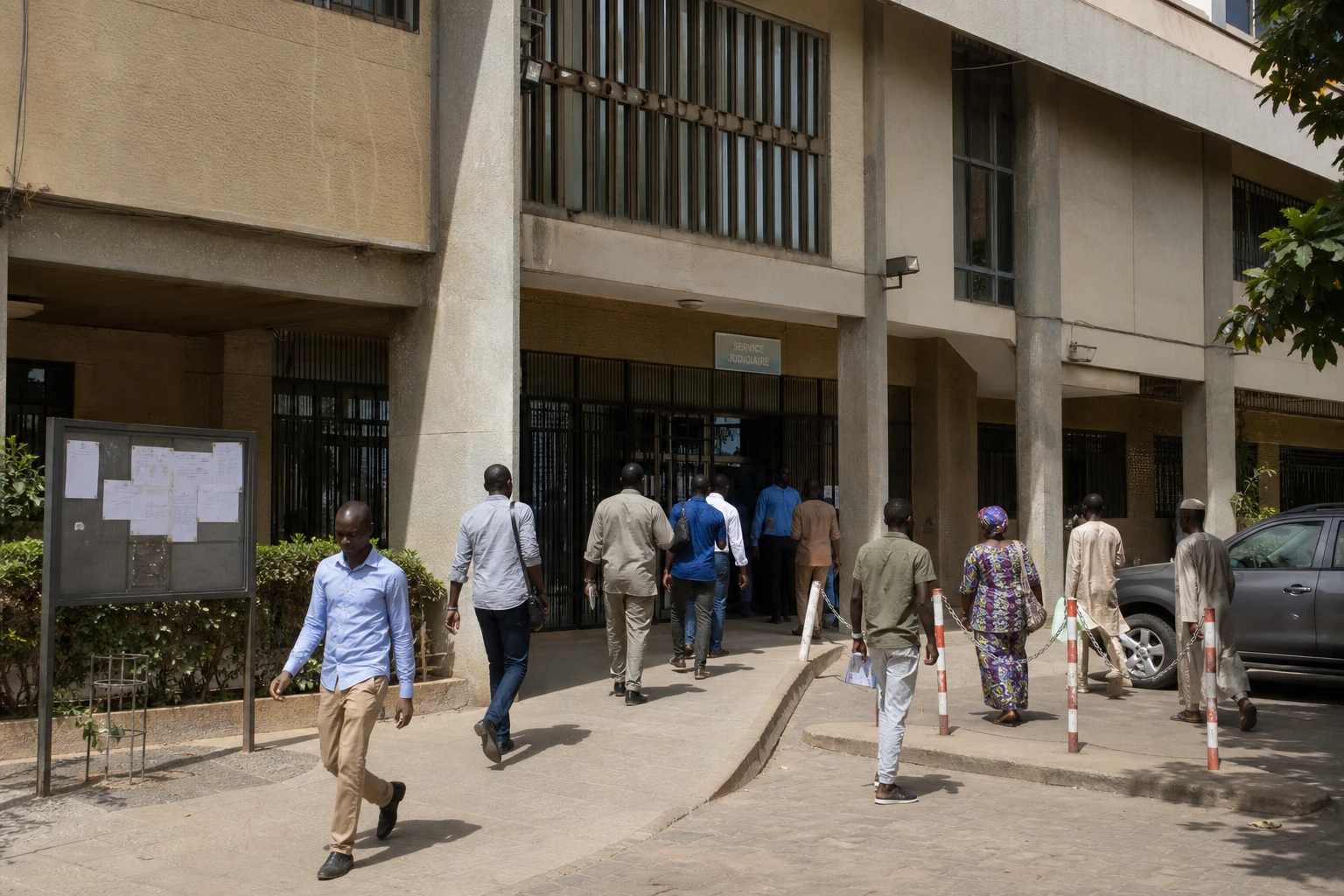
In Dakar, the maritime route remains a highly organised underground economy
In Senegal, the sea is no longer just a space for fishing and trade. For some networks, it has also become a route for departures, recruitment and fundraising. In the capital, Dakar, neighbourhoods near the coast remain areas of particular concern, as departures for the Canary Islands are often prepared out of sight, but rarely without logistics, contacts and funding. This reflects a renewed Atlantic route in West Africa, which the IOM describes as an active corridor for several years between Senegal, The Gambia, Mauritania and the Canary Islands.
The case concerned a suspected irregular crossing from Ouakam, in Dakar, to the Spanish archipelago. Recent investigations show that departures are no longer simply a matter of a pirogue and a few prospective migrants. They also involve outboard motors, fuel, provisions, identity documents and financial arrangements, often funded through small instalments. Cases handled in recent months by Senegalese services point in the same direction, with arrests in Saint-Louis, Bargny, Karang and the Dakar region.
Operation launched in Ouakam, then case strengthened by admissions
The facts of the case are straightforward. After an anonymous call reported an imminent sea journey, the National Division for the Fight against Migrant Smuggling and Related Practices (DNLT) deployed its Arrest, Surveillance and Tracking Office in Ouakam. Four people were arrested. Two were subsequently referred to the financial prosecutor at Dakar’s High Court. The others were questioned and then excluded from the core of the case, according to corroborated information.
At the premises searched, investigators say they seized a 40-horsepower Yamaha outboard motor, perishable foodstuffs and 12 copies of Senegalese national identity cards, with telephone numbers and sums of money written on them. Another man, described as a motorcycle courier, reportedly arrived with nine empty 60-litre petrol containers, an empty 200-litre barrel and a motorised pump. He is said to have explained that he was transporting the equipment on behalf of the main suspect. These material findings lend weight to the theory that the crossing was being prepared as a commercial operation, rather than as a simple, improvised departure.
The case took another turn when six of the 12 people whose identity card copies were found at the suspect’s home confirmed that they had each paid between 250,000 and 600,000 CFA francs to board. The main suspect initially denied the allegations, before admitting during a second interview that he had organised the journey with another person identified by investigators. In this type of case, the contradiction between an initial denial, material evidence and testimony from prospective migrants often carries considerable weight in subsequent legal proceedings.
What the case reveals: a market in risk, not just an offence
Beyond the arrests, the case highlights a well-established market in risk. The sums cited, from 250,000 to 600,000 CFA francs, show that the crossing is not limited to the poorest. It also affects households that draw on their savings, family support or debt to attempt the journey. In several recent cases in Senegal, investigators have found the same pattern: collecting money, identifying prospective migrants, storing fuel, buying motors, then meeting discreetly before departure.
This parallel economy relies on intermediaries who are not always the visible faces of the smuggling operation. There is the recruiter, the logistics organiser, the equipment supplier, the transporter and, sometimes, the person who keeps copies of documents or collects payments. It is precisely this network that the authorities are seeking to break up. But pressure remains high, as many continue to see the Atlantic route as a way to reach Spain and, in turn, the European market, despite the well-known risks and repeated shipwrecks. The IOM notes that the route has caused thousands of deaths or disappearances since 2014.
For the Senegalese state, the response is police-led, judicial and preventive. Arrests at sea or on land are not enough if departures are immediately replaced by others. The expansion of the DNLT and surveillance units reflects a determination to treat the phenomenon as organised crime. But on the ground, demand for departures continues to be fuelled by insecure employment, irregular fishing incomes, social pressure and the often exaggerated belief that leaving for Europe is the quickest way out of hardship. The IOM and several recent analyses of Senegal confirm that these factors combine in coastal areas and inland.
A regional issue for ECOWAS and neighbouring Europe
This case extends beyond Senegal. It affects West Africa as a whole, where free movement within ECOWAS, the Economic Community of West African States, facilitates legal mobility but can also be exploited by clandestine networks. In several recent operations, Gambian, Guinean, Nigerian and Malian prospective migrants have been found alongside Senegalese nationals, confirming the cross-border nature of the phenomenon.
The continental significance is clear. When the Canary Islands route becomes active, it involves Senegal, its neighbouring transit countries, regional security cooperation and relations with Spain. Arrivals in the Canary Islands vary from year to year, but recent sources show that the pressure has not disappeared, even when some months see a decline. In June 2026, for example, RTS reported a fall in arrivals of Senegalese nationals in the Canary Islands compared with 2025, indicating that enforcement and changing circumstances can shift flows without stopping them.
For Dakar, the challenge is therefore twofold. It must maintain pressure on organisers, while also shrinking the economic space that fuels these departures. This is where the response becomes as much political as it is a matter of security. Without credible alternatives in cities, coastal areas and regions of departure, the networks will continue to find willing participants. And as long as the Atlantic is seen as an opportunity, Senegalese services will have to treat every crackdown as a useful but temporary victory.