Algeria
 Egypt
 Libya
 Morocco
 Sudan
 Tunisia
 Benin
 Burkina Faso
 Cabo Verde
 Côte d'Ivoire
 Ghana
 Guinea
 Guinea-Bissau
 Liberia
 Mali
 Mauritania
 Niger
 Nigeria
 Sierra Leone
 The Gambia
 Togo
 Cameroon
 Central African Republic
 Chad
 DR Congo
 Equatorial Guinea
 Gabon
 Republic of the Congo
 São Tomé and Príncipe
 Burundi
 Comoros
 Djibouti
 Eritrea
 Ethiopia
 Kenya
 Madagascar
 Malawi
 Mauritius
 Mozambique
 Rwanda
 Seychelles
 Somalia
 South Sudan
 Tanzania
 Uganda
 Angola
 Botswana
 Eswatini
 Lesotho
 Namibia
 South Africa
 Zambia
 Zimbabwe
As the land grows tired, villages are reinventing their own rules
In Senegal’s groundnut basin, the land no longer simply feeds people. It also needs to be cared for. In Diohine, in the Fatick region, families have brought an old practice back to the fore: leaving a plot fallow so it can regain its vigour. The logic seems simple. Yet it addresses a major challenge for Senegal’s countryside: producing food without further exhausting already fragile soils.
The case of Diohine says much about a country where rain-fed agriculture remains exposed to climate variability, demographic pressure and declining fertility. Senegalese public documents report that the groundnut basin contains areas of severe degradation, with shorter fallow periods and vegetation cover more vulnerable to erosion. In this part of the country, the question is not just how to grow more. It is also how to preserve the productive base of the village and the municipality and, beyond that, a large part of the country’s rural economy.
A collective practice that gives the soil time to recover
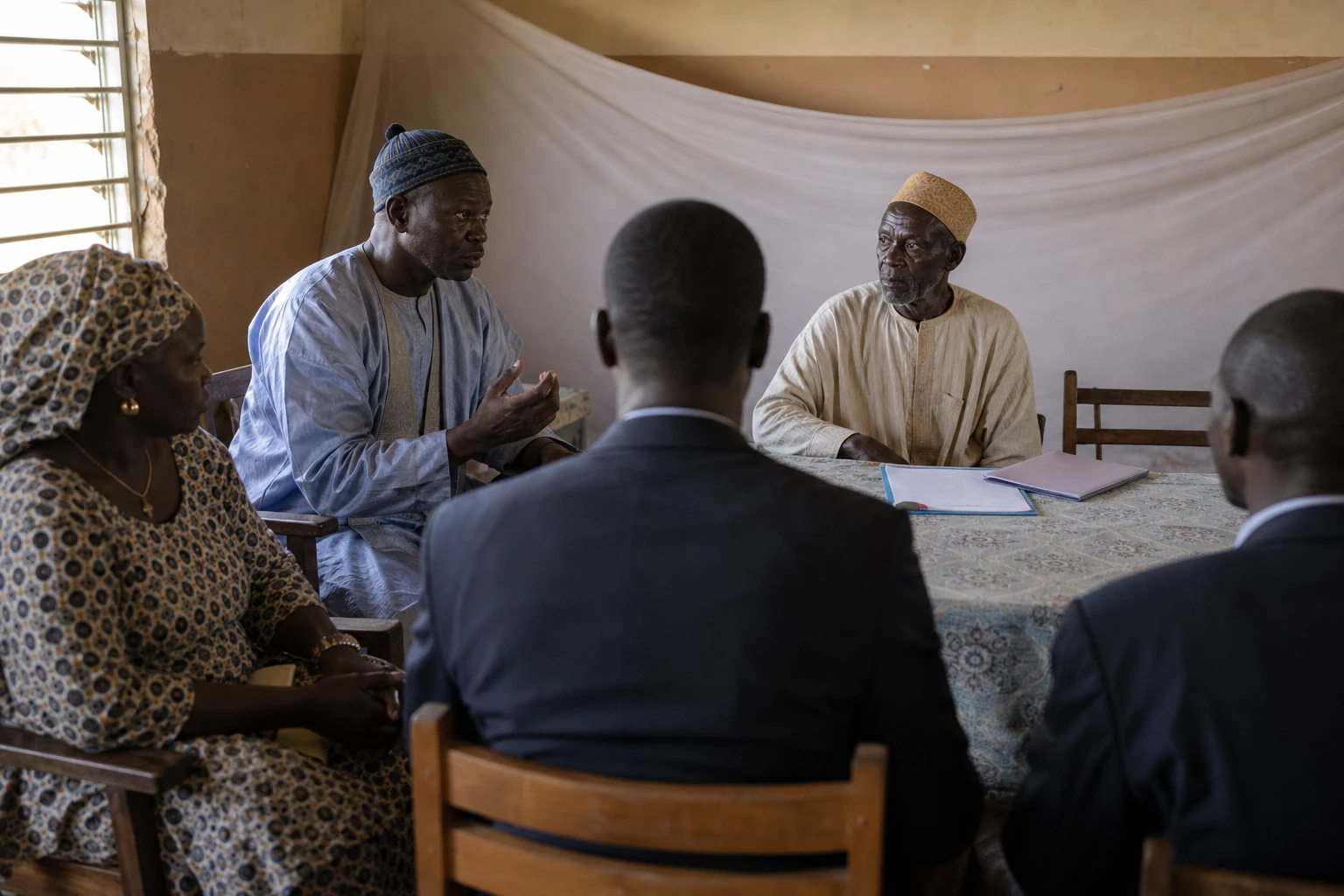
In Diohine, fallowing is not an isolated decision made field by field. It is part of a collective system. Residents call the practice « Toss » in the Serer language and associate it with an old social rule: one area is left to rest for a set period, then another takes its turn. This rotation limits soil exhaustion, but it also regulates how land is used for farming, grazing and the movement of people and animals.
This point matters. Fallowing is not just about « waiting » for the soil to regenerate. It brings biological time back into a system under excessive cultivation. FAO analyses note that, in the groundnut basin, the abandonment or reduction of fallowing has gone hand in hand with the expansion of cultivated areas, declining fertility and increased erosion. Senegalese government services also note that shorter periods of rest for the land are among the factors behind degradation in this strategically important agricultural zone.
On the ground, this system also serves a social purpose. When a family has a significant share of its land left fallow, the community provides mechanisms for compensation and solidarity. This is no minor detail. In a village where land shapes income, livestock, food and sometimes mutual support between households, collective management prevents soil restoration from becoming a net loss for a few people. Fallowing thus becomes a local compromise between immediate production and survival in the medium term.
What Diohine reveals about the future of the groundnut basin
The groundnut basin is more than an agricultural map. It is a densely populated, long-established area facing major ecological and economic constraints. Senegalese public data describe it as a key area for groundnuts and rain-fed crops, but also as a region affected by salinisation, erosion, falling yields and fragile vegetation cover. Senegal’s agriculture ministry is now pursuing land restoration and soil fertility improvement measures there. This shows that the issue extends well beyond Diohine. It affects national agricultural strategy.
In this context, fallowing is not a nostalgic return to an idealised past. It is an adaptation response. It replaces neither organic amendments nor sustainable land management policies nor public investment. But it is a reminder of something essential: rural communities still have know-how that can cushion climate shocks, especially when it remains rooted in local mutual support and customary regulation. The limitation, however, is clear. If pressure on the land continues to increase, the resting period may become too short to restore soils sustainably.
This tension is evident far beyond Senegal. Across Africa, the fight against land degradation has become a major focus of the Great Green Wall, an African Union initiative launched to restore landscapes, strengthen livelihoods and contain desertification in the Sahelian belt. Senegal plays a leading role in it, both as a coastal Sahel country and as a testing ground for solutions combining soil restoration, agroforestry and rural resilience. The issue is therefore not only environmental. It is also economic and political: stabilising local lands, securing agricultural incomes and reducing the vulnerability of rural households.
For Senegalese people in rural areas, the issue is tangible. Depleted land produces less, is less resilient to irregular rainfall and requires more inputs. For cities, it affects prices, supply and internal migration. For the state, it raises a public policy choice: support proven local solutions, link them to restoration programmes, and ensure that agricultural modernisation is not reduced to increasing fertiliser use. In Diohine, fallowing offers a useful lesson for Senegal today: sometimes, protecting tomorrow’s harvest starts with accepting that not everything can be cultivated straight away.