Algeria
 Egypt
 Libya
 Morocco
 Sudan
 Tunisia
 Benin
 Burkina Faso
 Cabo Verde
 Côte d'Ivoire
 Ghana
 Guinea
 Guinea-Bissau
 Liberia
 Mali
 Mauritania
 Niger
 Nigeria
 Sierra Leone
 The Gambia
 Togo
 Cameroon
 Central African Republic
 Chad
 DR Congo
 Equatorial Guinea
 Gabon
 Republic of the Congo
 São Tomé and Príncipe
 Burundi
 Comoros
 Djibouti
 Eritrea
 Ethiopia
 Kenya
 Madagascar
 Malawi
 Mauritius
 Mozambique
 Rwanda
 Seychelles
 Somalia
 South Sudan
 Tanzania
 Uganda
 Angola
 Botswana
 Eswatini
 Lesotho
 Namibia
 South Africa
 Zambia
 Zimbabwe
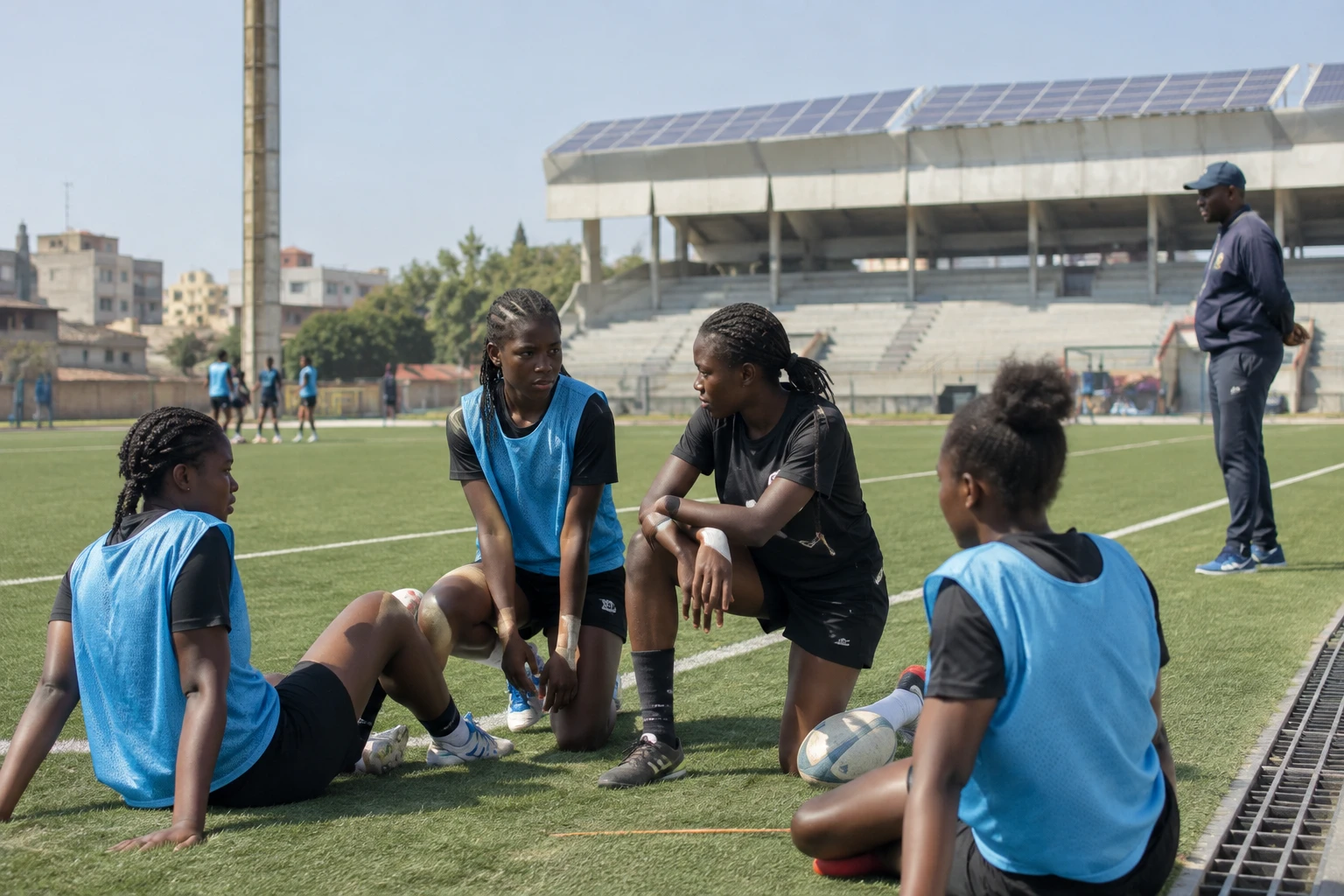
In Dakar, the Olympic event is also played out in its opening minutes: stepping onto a field, gauging the level of opponents and experiencing the attention of a crowd that has come from around the world. For athletes aged 14 to 17, the challenge goes beyond the score. It is about taking their place in an international competition without losing sight of the fact that they are still developing.
The Iba Mar Diop complex, in the Médina neighbourhood, is hosting rugby sevens and futsal, among other events. The two sports have different rhythms, but demand the same things of young players: making quick decisions, communicating with team-mates and adapting to opponents they do not always encounter on their usual circuits.
An international tournament in the heart of Dakar
The Dakar Youth Olympic Games (YOG) run from 31 October to 13 November 2026. They bring together athletes aged 14 to 17 at several venues in Dakar, Diamniadio and Saly. This is the first Olympic sporting event to be held on the African continent. Competitions began on 1 November, including at the Iba Mar Diop complex, where rugby sevens and futsal are on the programme. The Senegalese Press Agency sets out the schedule of events in Dakar.
This first gives the Games a significance that goes beyond the results. Senegal is hosting delegations from many countries and enabling young athletes to compete at Olympic level on African soil. But this historic significance should not reduce the athletes to symbols: they are also competitors, with goals, strategies and experience to build.
Dakar’s selection is part of a particular history. The city was due to host the YOG in 2022, before the edition was postponed to 2026. The event is now spread between the capital and other Senegalese venues. This organisation mobilises infrastructure and teams well beyond the stadium itself. It also puts sport and young people at the centre of an event followed by national federations, sports institutions and foreign delegations.
Learning to compete under pressure
In rugby sevens, phases of play are short and space opens up quickly. A positional mistake can give the opposition an opportunity; a good reading of the game can change the course of a move. In futsal, the smaller pitch demands quick exchanges and constant involvement in the game. In both sports, the intensity forces teams to find their bearings quickly.
For participants, the experience is therefore not limited to a medal. Playing against foreign teams allows them to compare training methods, physical preparation and collective instincts. It is also an opportunity to learn how to manage the pressure of a major stage, recovery periods and the attention paid to every result. At this age, these lessons can count as much as the immediate standings.
The competition also features disparities in ability. On 1 November, Senegal’s men’s rugby sevens team lost its first three matches, against South Africa, Germany and Canada, according to the Senegalese Press Agency. The team’s coach, quoted by the agency, stressed the importance of taking part in more competitions to help young players improve. These results describe one day of the tournament; they do not sum up the players’ potential or Senegal’s participation as a whole. The APS report on Senegal’s first matches helps put the sporting stakes behind the atmosphere in the stands into context.
The Youth Games also have an educational dimension. Athletes compete in a setting where interaction between delegations, exposure to new practices and representing their country accompany the events. This alone does not guarantee lasting progress. That will depend on access to training, coaching and regular competitions in each country.
An African first, with benefits to be assessed
For young Senegalese people, seeing international competitions take place in Dakar makes the event close at hand and visible. For athletes from elsewhere, the visit offers direct contact with the host country and its facilities. This encounter matters, but it should not obscure practical questions: what use will be made of the facilities after the Games? Will local clubs be able to use them? And will young people have more opportunities to compete at regional level?
These questions also concern West Africa. Young athletes’ pathways often depend on uneven national and regional calendars. Federations, clubs and public authorities will have to turn the YOG’s visibility into opportunities to participate and compete, in Senegal and neighbouring countries alike. The event is a showcase; its legacy will be measured more by the years that follow than by the tournament days alone.
At Iba Mar Diop, the impressions gathered from young athletes thus take on meaning in a broader context: making their Olympic debut, discovering other styles of play and representing their delegation, while still being at the start of a sporting career. Futsal and rugby sevens matches continue through the Games schedule and into the next stages. The challenge for Dakar, and for the continent’s sports authorities, will be to sustain this momentum after 13 November.