Algeria
 Egypt
 Libya
 Morocco
 Sudan
 Tunisia
 Benin
 Burkina Faso
 Cabo Verde
 Côte d'Ivoire
 Ghana
 Guinea
 Guinea-Bissau
 Liberia
 Mali
 Mauritania
 Niger
 Nigeria
 Sierra Leone
 The Gambia
 Togo
 Cameroon
 Central African Republic
 Chad
 DR Congo
 Equatorial Guinea
 Gabon
 Republic of the Congo
 São Tomé and Príncipe
 Burundi
 Comoros
 Djibouti
 Eritrea
 Ethiopia
 Kenya
 Madagascar
 Malawi
 Mauritius
 Mozambique
 Rwanda
 Seychelles
 Somalia
 South Sudan
 Tanzania
 Uganda
 Angola
 Botswana
 Eswatini
 Lesotho
 Namibia
 South Africa
 Zambia
 Zimbabwe
A sporting event that extends far beyond the field
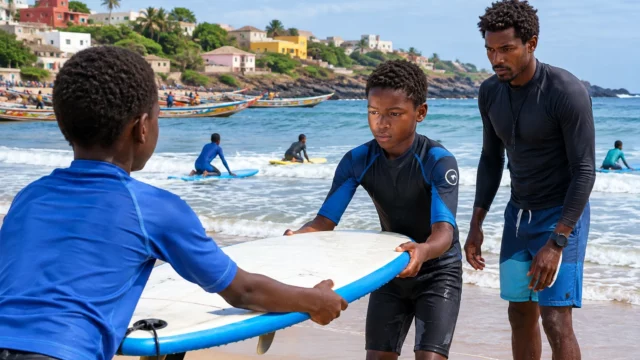
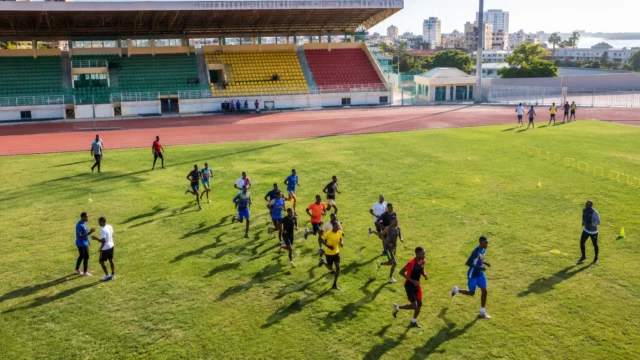
In Dakar, a major sporting event is never played out solely in stadiums. Its impact is also measured in roads, hotel rooms, trained professionals and businesses able to meet demand. This is precisely what Senegal is seeking to build with the Dakar 2026 Youth Olympic Games, which will take place from 31 October to 13 November 2026 and bring together 2,700 young athletes across three host hubs: Dakar, Diamniadio and Saly. The International Olympic Committee also describes this edition as the first-ever Olympic event to be held on the African continent.
In this project, the stakes go beyond visibility. The country is seeking to turn a short competition into a lasting lever for its sports economy. This approach comes as Senegal’s executive links the Youth Olympic Games to urban modernisation, young people and the country’s international profile. At its meeting on 4 March 2026, the presidency also reviewed progress on host infrastructure, stressing road access to Diamniadio and Saly Portudal.
Projects designed to outlast the Games
At the heart of Senegal’s project is a simple bet: not to leave the facilities idle after the closing ceremony. Sites renovated or developed in Dakar and Diamniadio are expected to host competitions, training sessions, cultural events and commercial activities well beyond November 2026. Official Olympic documents confirm the distribution of venues: Dakar is home to the Iba Mar Diop complex, the Tour de l’Œuf complex and the Corniche Ouest, among others; Diamniadio hosts the Equestrian Centre, Dakar Arena, Abdoulaye Wade Stadium and the exhibition centre; Saly will host the beach events.
This territorial layout matters. Dakar provides the public face, but Diamniadio is central to Senegal’s new urban development, while Saly opens the event up to the coast and the Thiès region. The government thus presents the Youth Olympic Games as an urban development project as much as a tournament. In its end-of-year address for 2025, the presidency had already referred to more than CFAF 100 billion committed to roads, urban development and strategic facilities, including those linked to the Games. The 2026 state budget also includes allocations for sports infrastructure and the facilities programme.
Financially, the host contract signed by Senegal sets a commitment of CFAF 35.97 billion, or about $63.3 million. Added to this are investments in facilities, which public budget documents put at at least CFAF 91 billion for the infrastructure programme associated with the Games. The precedent is significant: in October 2024, APS reported that the state had already mobilised close to CFAF 18.2 billion of the CFAF 36 billion planned under its Olympic financial commitment. This shows that the financial undertaking was under way well before the final deadline.
The test of local procurement and economic benefits
The other battle is over subcontracting. For an event of this scale to genuinely benefit Senegal’s economy, contracts must not be channelled too quickly back to a handful of major foreign suppliers. That is why the organising committee and the Public Procurement Regulatory Authority have set up a platform to make it easier for small and medium-sized enterprises to access contracts linked to the Games. In April 2026, ARCOP said the share of public procurement awarded to local private companies had fallen from 66% in 2022 to 58% in 2023, explaining the authorities’ desire to reverse the trend.
The organising committee, for its part, says more than 70% of contracts awarded have gone to local businesses. This indicator, which still needs to be substantiated by further independent assessments, points to a stronger national economic base. It should, however, be treated with caution: what matters is not only the number of contracts, but their real added value, payment times, the share of local content and SMEs’ ability to survive after the event. Senegal’s minister of industry and trade noted in February 2026 that many of the country’s SMEs still lack contracts, support infrastructure and access to finance.
In practice, the anticipated benefits are spread across several sectors. Hospitality, transport, catering, security, digital services and media could all benefit from increased activity. The organising committee says it has secured 74 establishments and about 5,000 rooms in the Dakar, Diamniadio and Saly areas, a figure confirmed by Olympic preparation materials consulted by the Olympic movement and the Senegalese press. Such bookings primarily benefit the capital and neighbouring hubs, but they can also boost informal activities around major events.
Training for careers, not just medals
The human dimension is Senegal’s other major wager. The organising committee says it has 715 contract staff, more than half of them young graduates. Alongside them, the Jambaar26 programme involves about 6,000 volunteers. The two schemes do not have the same status, but together they are helping to shape an event-sector labour market that is still rare in the country. The Learning Academy aims to train nearly 400 young people in sports event management, logistics, accreditation, transport, media, technology and venue management.
This is a strategic choice. Senegal is not simply building a generation of volunteers; it is seeking to establish skills that can be exported to other competitions in West Africa. Such a sector could benefit sports federations, technical service providers, ticketing agencies, security companies and specialist media. In a country where sport is often seen primarily as a passion, the Youth Olympic Games are also trying to make it a services sector, with professions, standards and income.
The training programme is accompanied by initiatives to broaden participation in sport. The Olympic, Civic and Sports Certificate, presented as a tool for raising awareness on a large scale, had directly or indirectly reached 1,021,655 young people by 15 June 2026, exceeding its initial target of 900,000 beneficiaries. This indicator does not tell the whole story of the project’s economic returns, but it measures a base of participants, families and audiences that matters to clubs, federations, gyms, sports equipment manufacturers and the media.
An impact beyond Senegal
For West Africa, Dakar 2026 is more than a national event. It is a test of whether an ECOWAS country can host a global event to Olympic standards, at a time of growing competition among regional capitals to attract conferences, competitions and investment. Senegal wants to show that an international event can accelerate infrastructure development, training and economic sovereignty without being reduced to a branding exercise.
After 13 November 2026, the continent will be watching two things in particular: how often the renovated venues are used and whether the country can turn the skills acquired into lasting jobs. If the facilities remain active and local SMEs retain a place in the value chain, Dakar 2026 could become an African precedent. Otherwise, it will join the long list of major projects whose legacy fades once the cameras have left. For Senegal, the real test begins after the medals are handed out.