Algeria
 Egypt
 Libya
 Morocco
 Sudan
 Tunisia
 Benin
 Burkina Faso
 Cabo Verde
 Côte d'Ivoire
 Ghana
 Guinea
 Guinea-Bissau
 Liberia
 Mali
 Mauritania
 Niger
 Nigeria
 Sierra Leone
 The Gambia
 Togo
 Cameroon
 Central African Republic
 Chad
 DR Congo
 Equatorial Guinea
 Gabon
 Republic of the Congo
 São Tomé and Príncipe
 Burundi
 Comoros
 Djibouti
 Eritrea
 Ethiopia
 Kenya
 Madagascar
 Malawi
 Mauritius
 Mozambique
 Rwanda
 Seychelles
 Somalia
 South Sudan
 Tanzania
 Uganda
 Angola
 Botswana
 Eswatini
 Lesotho
 Namibia
 South Africa
 Zambia
 Zimbabwe
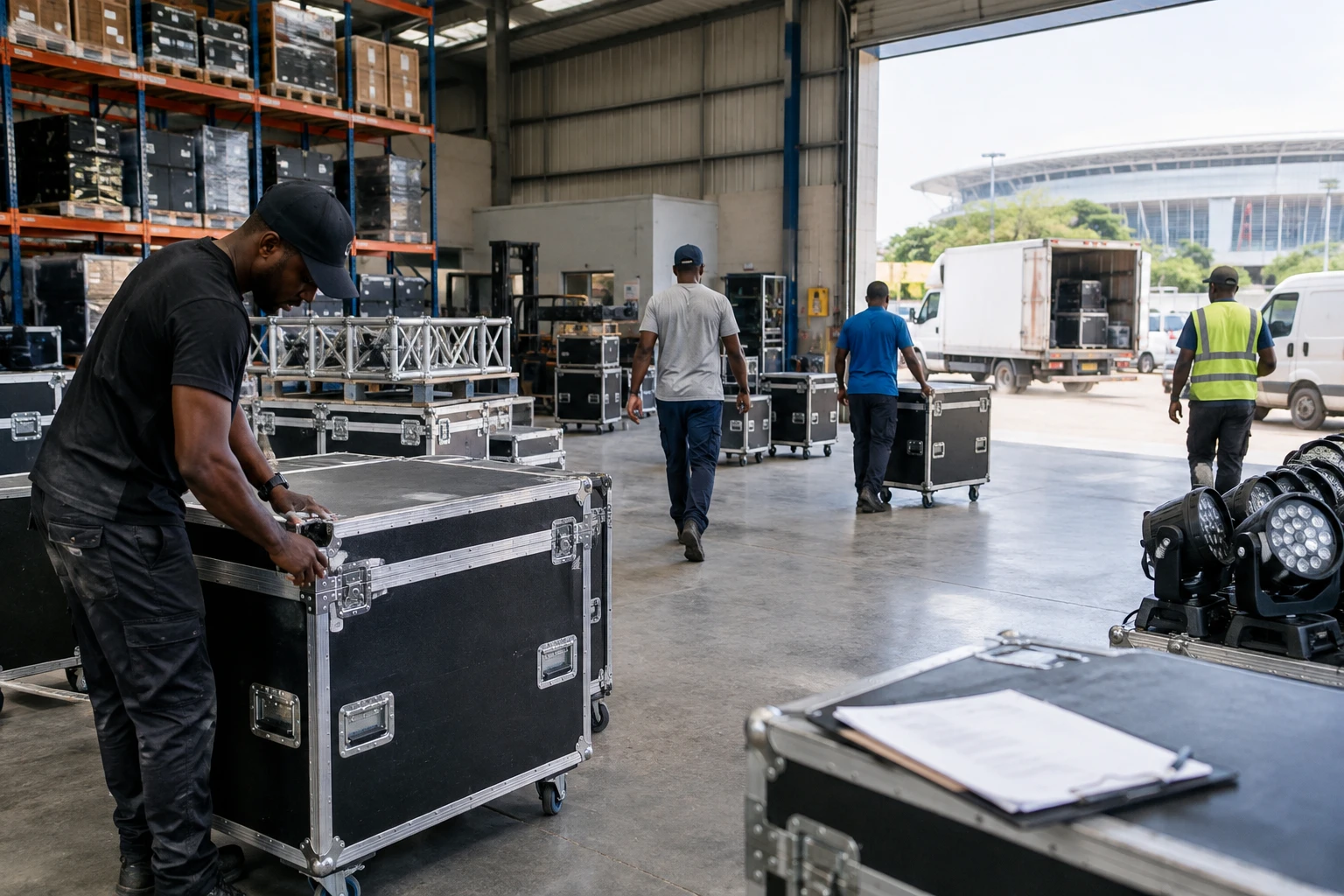
In Dakar, preparations for an Olympic ceremony are about more than a stage and a show. They also concern how a country welcomes the world and chooses to tell its story. For Khady Niang, director of ceremonies for the Youth Olympic Games (YOG), the challenge is to make a Senegalese story heard without reducing the occasion to a display of lights.
A first Olympic event for the continent
Senegal will host the YOG from 31 October to 13 November 2026. The opening ceremony is scheduled for 31 October, the first official day of the Games. Dakar, Diamniadio and Saly are due to host competitions and related activities. It will be the first Olympic sporting event held on African soil, according to the International Olympic Committee (IOC). The official Dakar 2026 YOG press kit says around 2,700 athletes are expected.
The event has a particular history. Originally scheduled for 2022, the Games were postponed until 2026. Their timing also places the event close to African Youth Day, celebrated on 1 November. The IOC says the choice of dates took into account, among other things, school calendars and weather conditions. The decision on the dates was made after consultation with the parties concerned.
The YOG are not the Summer Olympic Games. They bring together young athletes and combine competitions with educational and cultural activities. Senegal therefore has to meet several requirements at once: welcome international delegations, ensure events run smoothly and create an experience accessible to young people and the local public.
A ceremony conceived as a story
In her remarks about preparations, Khady Niang describes days shaped by meetings, site visits and discussions with institutions and the IOC. She speaks of days that start early and end late, as well as the pressure of an event that reflects on the country’s image. Ceremony work depends on many partners: artistic teams, public services, organisers and site managers.
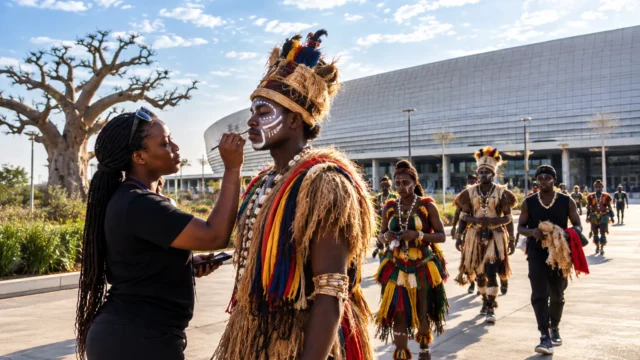
The director says she wants to avoid a show designed only to impress. Instead, she presents the ceremony as an opportunity to tell Senegal’s story and introduce audiences to a dynamic African youth. She promises a production focused on “the human”, in her words, without revealing its artistic elements before the opening.
This ambition involves a real tension. An international ceremony must be understandable to very different audiences while remaining rooted in its location. The challenge is not to represent an entire continent in a few scenes. It is to showcase specific voices, references and artistic forms without claiming to speak on behalf of all African societies.
Khady Niang highlights Senegalese values she wants to associate with this representation: Téranga, often translated as hospitality; Jom, associated with honour; Fulla, with pride; and Fayda, with dignity. These ideas are not simply decorative elements. Their significance will also depend on the role given to Senegalese artists and young people in designing and producing the show.
A career spanning management and creativity
The director describes a career at the intersection of project management and the arts. After studying accountancy, she moved into advertising, events and professional make-up. She went on to found the African Makeup Academy, which she describes as Senegal’s first make-up school, and then an agency bringing together beauty professionals for film, fashion and live performance.
This experience sheds light on the skills involved in staging ceremonies: organising teams, coordinating different professions and turning an artistic vision into a concrete production. It also highlights the role of Senegalese professional networks in preparing an event on this scale. Local careers are not merely a symbol of inclusion; they bring knowledge of the context and the cultural sectors involved.
Niang names several people who have influenced her journey, including fashion designer Adama Paris, Mauritanian film-maker Abderrahmane Sissako and Senegalese artist Youssou Ndour. She also links her career to professional experience in France and Senegal. Her trajectory is a reminder that African cultural careers are often built across disciplines and borders, rather than being confined to a single national scene.
Measuring the impact beyond the show
For Senegalese people, the event will not be judged solely by the ceremony. Its impact will also depend on public access to activities, travel between venues and the role given to local businesses, artists and workers. The benefits expected by organisers — particularly for young people and sport — will need to be assessed against lasting results, not just international visibility.
The Games’ geography also matters. Dakar will attract much of the attention, but Diamniadio and Saly will host activities too. The distribution of infrastructure, temporary jobs and opportunities to participate may therefore vary between areas and groups. The information available does not yet make it possible to quantify these benefits or determine how they will be distributed.
Regionally, the event will give West Africa a platform and test Senegal’s ability to co-ordinate international sporting and institutional partners. But the occasion is neither a summary of African sport nor a reflection of the continent’s realities. Its value lies instead in what it could open up: greater co-operation, more visibility for young talent and a larger role for local cultural expertise.
The 31 October ceremony will offer the first public glimpse of the story imagined by its teams. Attention will then shift to the Games’ progress through 13 November and to what remains once the delegations have left: how facilities are used, young people’s experiences and the legacy for Senegalese sport. Dakar 2026’s impact will be measured by these factors as much as by the emotion of opening night.