Algeria
 Egypt
 Libya
 Morocco
 Sudan
 Tunisia
 Benin
 Burkina Faso
 Cabo Verde
 Côte d'Ivoire
 Ghana
 Guinea
 Guinea-Bissau
 Liberia
 Mali
 Mauritania
 Niger
 Nigeria
 Sierra Leone
 The Gambia
 Togo
 Cameroon
 Central African Republic
 Chad
 DR Congo
 Equatorial Guinea
 Gabon
 Republic of the Congo
 São Tomé and Príncipe
 Burundi
 Comoros
 Djibouti
 Eritrea
 Ethiopia
 Kenya
 Madagascar
 Malawi
 Mauritius
 Mozambique
 Rwanda
 Seychelles
 Somalia
 South Sudan
 Tanzania
 Uganda
 Angola
 Botswana
 Eswatini
 Lesotho
 Namibia
 South Africa
 Zambia
 Zimbabwe
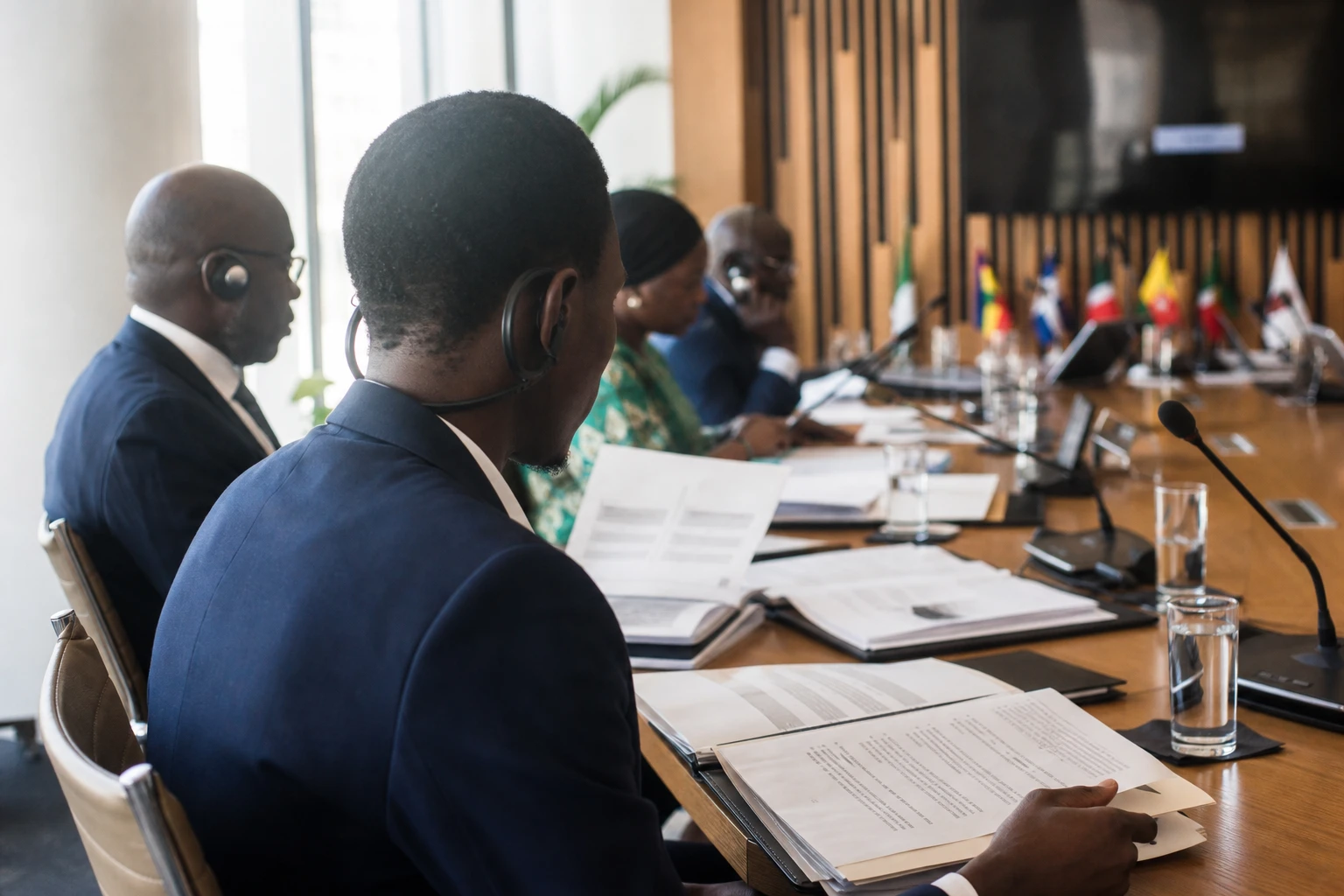
Weeks before the first Olympic event to be held in Africa, Senegal is seeking to make the Dakar 2026 Youth Olympic Games much more than a sporting occasion. An event held in Paris, notably at UNESCO headquarters on 30 September, provided an opportunity to present progress on preparations and reaffirm the central role of young people in the project.
An event that goes beyond the sporting calendar
The Dakar Youth Olympic Games will take place from 31 October to 13 November 2026. They will bring together around 2,700 athletes aged 15 to 17 from many countries. The programme includes 25 competitive sports, as well as introductory disciplines and activities designed to broaden young people’s access to sport.
The event will be spread across three hubs: Dakar, Diamniadio and Saly. This arrangement is intended to prevent the Games from being concentrated solely in the Senegalese capital. It also aims to involve several areas in an event that is expected to leave a lasting mark on the country.
The International Olympic Committee describes Dakar 2026 as the first Olympic event to be held on the African continent. Senegal was selected on 8 October 2018, when Dakar was chosen to host the Games, originally scheduled for 2022. The dates were later postponed to 2026 amid the Covid-19 pandemic.
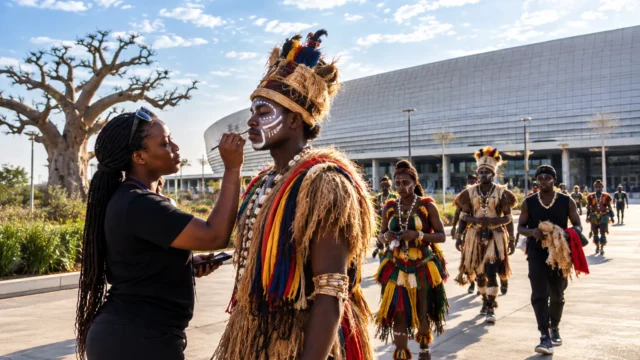
The International Olympic Committee emphasises the educational dimension of the Youth Olympic Games. The competitions will be accompanied by activities focused on health, the environment, equality and understanding between cultures.
Paris, a step in mobilising support
The meeting held in Paris is part of co-operation developed over several years between the Dakar 2026 teams, the Senegalese authorities and several French partners. The aim is to share expertise gained at the Paris 2024 Games, particularly in training, logistics and the management of major events.
In April 2025, the Senegalese Embassy in France said that CFA francs 655 million would be mobilised to train 420 young people for careers in sports event organisation. The scheme is intended to strengthen local expertise in hosting, security, communications, event production and venue management.
This co-operation does not mean Senegal is delegating the organisation of the Games. Rather, it is based on a transfer of experience. The challenge now is to adapt international methods to the realities of Dakar, Diamniadio and Saly.
The presence of a Senegalese delegation in Paris also serves an image-building purpose. A month before the opening, the country wants to show that preparations are entering their final phase. It also aims to rally sporting, diplomatic, cultural and economic partners around an event led by Senegal.
Sport as a space for learning
The message put forward at this Paris event is based on a simple idea: sport is not just about results. It can teach discipline, co-operation and respect for rules. For the organisers, it should also become a means of dialogue between young people from different countries and backgrounds.
This approach is in keeping with the role assigned to the Youth Olympic Games. Participants are still in training. The aim, therefore, is not only to identify winners. It is also to create a setting where young people can discover other cultures, meet athletes their own age and build a shared experience.
In Senegal, this ambition will take on particular significance. The Youth Olympic Games are intended to reach young people beyond foreign delegations and official venues. Community activities, festivals, school initiatives and volunteering will be crucial to ensuring the Games are not seen as an event reserved for sporting elites.
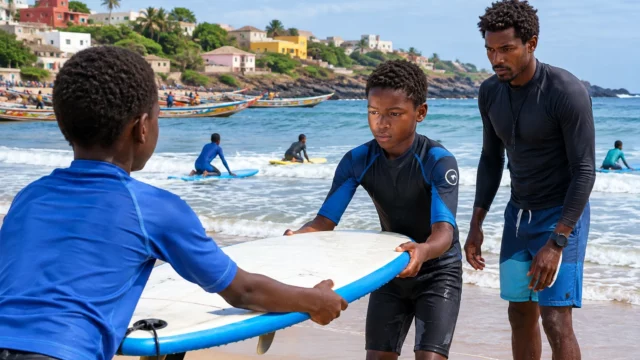
The Dakar en Jeux programme is part of this approach. Launched ahead of the competition, it offers introductory sports activities, cultural events and meetings with communities in the host areas. The aim is to build a link between preparations for the Games and the daily lives of Senegalese people.
Benefits expected across several sectors
For the Senegalese authorities, hosting the Youth Olympic Games represents an institutional and economic test. Expected benefits include vocational training, tourism, transport, hospitality, cultural production and digital services.
However, the benefits will not be automatic. Success will depend on the ability to maintain infrastructure after the competition, open facilities to clubs and schools, and ensure their upkeep. It will also depend on the role given to Senegalese businesses and to workers trained as part of the event.
Territorial balance will also be closely watched. Dakar accounts for a large share of the country’s infrastructure and economic activity. The involvement of Diamniadio and Saly could help spread the benefits, but it will not replace a sports policy accessible to other regions.
Volunteering is another important measure. The project plans to recruit several thousand volunteers from different regions of Senegal. Taking part could give young people their first work experience. However, it will need to be organised transparently, with proper training and clearly defined duties.
A regional reach for West Africa
The Dakar Youth Olympic Games will also have a regional reach. Senegal is a member of the Economic Community of West African States, ECOWAS, which is seeking to strengthen ties between its member countries. An event welcoming young athletes from several continents could help bring new visibility to West African talent.
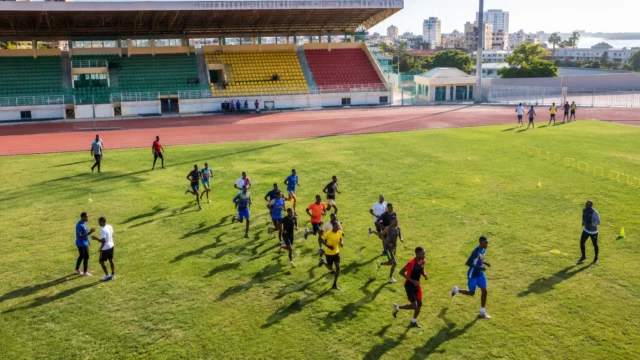
The competition could also showcase sports that receive less media attention than football. It offers an opportunity to develop athletics, swimming, combat sports, skateboarding, 3×3 basketball and breaking among young audiences.
Senegal must now turn its promise into a tangible experience. The coming weeks will be devoted to final tests, welcoming delegations, security, transport and co-ordination between the different venues. For Dakar, the real measure of success will not be limited to the opening ceremony. It will be judged by the place young people are given after 13 November 2026.