Algeria
 Egypt
 Libya
 Morocco
 Sudan
 Tunisia
 Benin
 Burkina Faso
 Cabo Verde
 Côte d'Ivoire
 Ghana
 Guinea
 Guinea-Bissau
 Liberia
 Mali
 Mauritania
 Niger
 Nigeria
 Sierra Leone
 The Gambia
 Togo
 Cameroon
 Central African Republic
 Chad
 DR Congo
 Equatorial Guinea
 Gabon
 Republic of the Congo
 São Tomé and Príncipe
 Burundi
 Comoros
 Djibouti
 Eritrea
 Ethiopia
 Kenya
 Madagascar
 Malawi
 Mauritius
 Mozambique
 Rwanda
 Seychelles
 Somalia
 South Sudan
 Tanzania
 Uganda
 Angola
 Botswana
 Eswatini
 Lesotho
 Namibia
 South Africa
 Zambia
 Zimbabwe
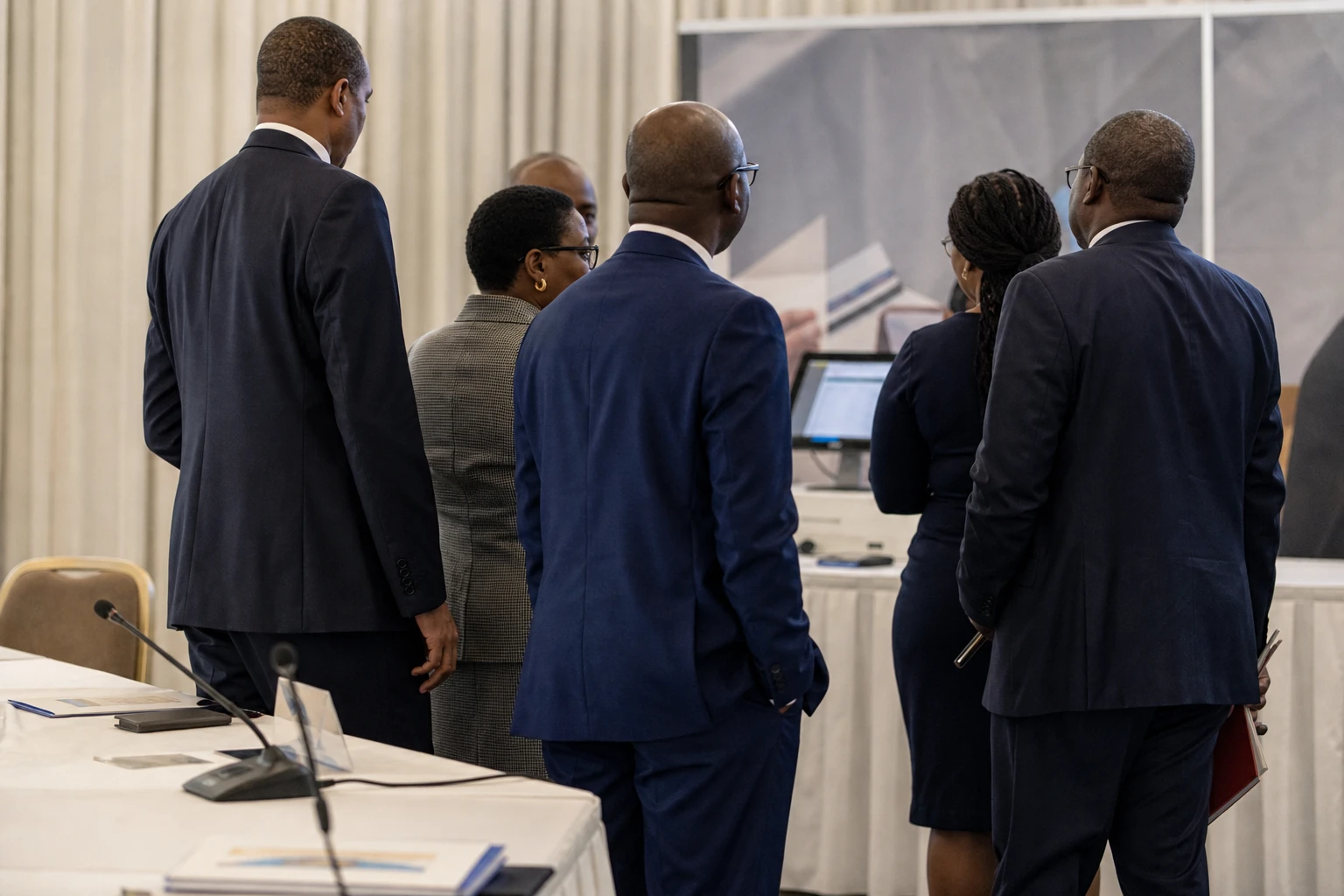
Ticketing that says something about Senegal in 2026
In Dakar, a sports ticket is more than just a numbered seat. It is also a test of confidence, organisation and accessibility in a country preparing to host an unprecedented event: the Youth Olympic Games, scheduled for 31 October to 13 November 2026.
The launch comes as Senegal prepares, alongside Dakar, Diamniadio and Saly, to host the first-ever Olympic event on the African continent. Its significance extends beyond sport. It touches on transport, accommodation, security, urban mobility and the image of a country seeking to demonstrate its ability to welcome visitors without excluding anyone.
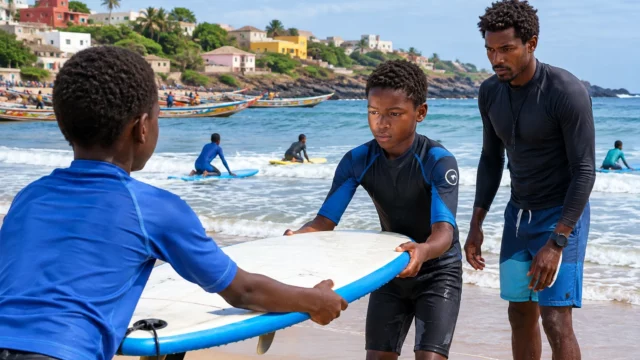
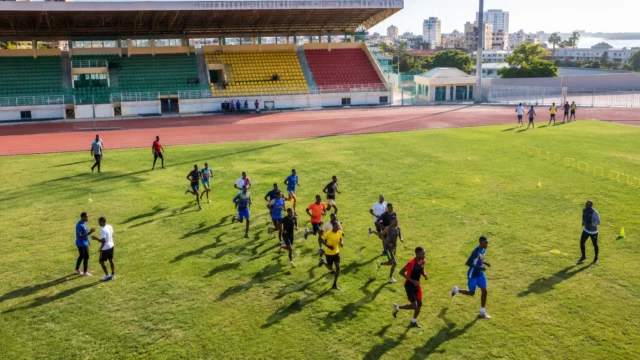
The choice of venues already makes this clear. Competitions will be spread across several hubs, including the Tour de l’Oeuf Complex, the Iba Mar Diop Complex, the Corniche Ouest, Abdoulaye Wade Stadium, the Dakar Exhibition Centre and Saly Plage Ouest. This geography is no accident. It links the Senegalese capital, the new city of Diamniadio and the Petite-Côte in a shared sporting setting.
What the sale opening on 6 August entails
The official ticket office opened on Thursday 6 August 2026, with an initial phase reserved for Visa cardholders until 9 August, ahead of the general sale opening on 10 August. The scheme is based on the commercial partnership between the Olympic movement and Visa, which has become the Games’ official payment method.
The announced volume is substantial. A total of 964 815 tickets are to go on sale. More than 300 000 are included in a solidarity ticketing programme for young people, schools, associations and sports clubs. For an event of this scale, the message is clear: organisers want to broaden the audience beyond the usual circles for major sporting events.
Prices have been set with this in mind. Competition tickets will start at 1 000 FCFA. A Day Pass in Saly will be available from 1 500 FCFA. Fan zones will be free. For the opening ceremony, announced prices start at 2 000 FCFA for people with reduced mobility, 4 000 FCFA in category C and 5 000 FCFA in category B. Purchase limits of 10 or 16 tickets, depending on the sessions, have also been set to prevent purchases from becoming concentrated.
The system is hosted on the official Dakar 2026 ticketing platform, with customer service available every day from 10am to 7pm Senegal time. The approach reflects a straightforward aim: to make access clear, especially for a broad audience that may not be familiar with online sales for major international events.
Accessibility, but also legacy
The sporting message is obvious, but the stakes are broader. At these price levels, ticketing is aimed first and foremost at families, pupils, young registered athletes and local supporters. It also speaks to residents of Dakar and its wider metropolitan area, where the cost of transport and travel time often weigh as heavily as the admission price itself.
In a country where the informal economy remains central, accessibility is measured by more than the advertised price. It depends on how easy tickets are to buy, their actual availability, the clarity of information and how smoothly people can get in on the day. A cheap ticket quickly loses its value if the purchasing process becomes too technical or journeys become difficult.
For the YOGOC, ticketing is therefore as much a tool for shaping the event’s image as a means of encouraging participation. It must show that Dakar 2026 will not be an event reserved for delegations, officials and influential groups. It must also help deliver the legacy promised since the project began: more visible participation in sport, better use of infrastructure and a stronger culture of hospitality.
Abdou Diaw, executive director of operations, summed up the spirit of this stage by describing it as an «invitation to make history». Beyond the phrase, the idea is simple: make the Senegalese public a participant in the event, not a distant spectator. That is an important distinction for a host country.
A signal for Senegal, ECOWAS and Africa
Dakar 2026’s significance extends beyond national borders. In the ECOWAS region, where major sporting competitions often serve as showcases for logistical and diplomatic capability, Senegal is staking its credibility. The organisation of these Games will be closely watched by West African capitals and by continental institutions that follow major events as indicators of a country’s capacity to host.
The choice of three host hubs, the promise of inclusive ticketing and the spread of venues all point to another aim: showing that a global event can be conceived from Africa, with its own priorities, audiences, constraints and practices. This is not simply a copy-and-paste of an external model. It is a demonstration of an approach.
Three things will now need to be monitored. First, the actual pace of sales during the pre-sale. Next, whether the people targeted by the solidarity ticketing programme can access tickets in practice. Finally, movement between Dakar, Diamniadio and Saly, which will show whether the event is truly popular or merely well publicised.
With the general sale opening in a few weeks, Senegal is entering a decisive phase. Success will not depend on medals alone. It will also be determined by queues, digital access, transport and the ability to make these Games a shared experience for Senegalese people and, more broadly, for West Africa.
The promise is ambitious. The real event starts now.