Algeria
 Egypt
 Libya
 Morocco
 Sudan
 Tunisia
 Benin
 Burkina Faso
 Cabo Verde
 Côte d'Ivoire
 Ghana
 Guinea
 Guinea-Bissau
 Liberia
 Mali
 Niger
 Nigeria
 Senegal
 Sierra Leone
 The Gambia
 Togo
 Cameroon
 Central African Republic
 Chad
 DR Congo
 Equatorial Guinea
 Gabon
 Republic of the Congo
 São Tomé and Príncipe
 Burundi
 Comoros
 Djibouti
 Eritrea
 Ethiopia
 Kenya
 Madagascar
 Malawi
 Mauritius
 Mozambique
 Rwanda
 Seychelles
 Somalia
 South Sudan
 Tanzania
 Uganda
 Angola
 Botswana
 Eswatini
 Lesotho
 Namibia
 South Africa
 Zambia
 Zimbabwe
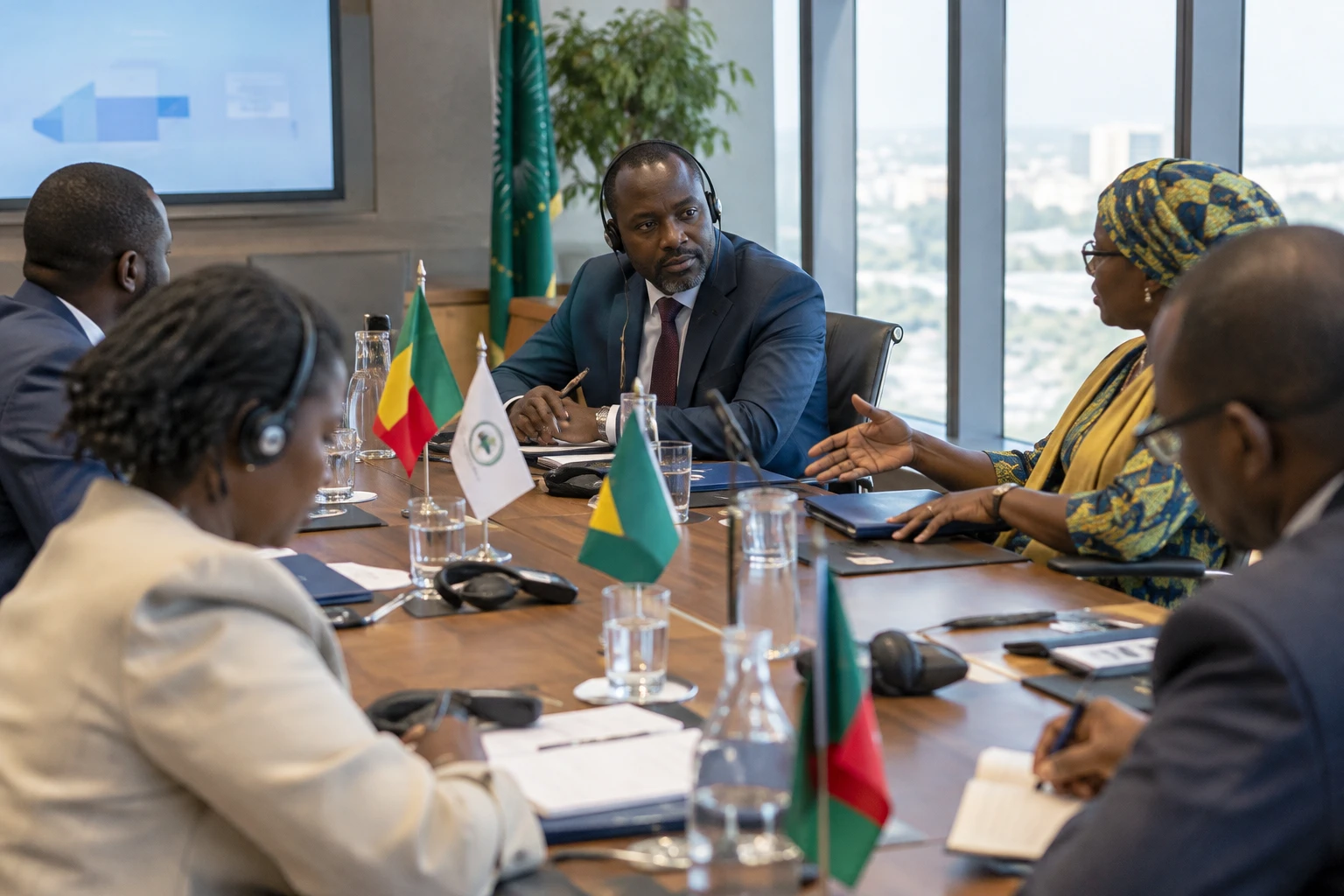
Bringing Sahel countries back into the fold without abandoning democratic principles: this is the delicate balance Coumba Bâ has placed at the heart of her campaign to lead the International Organisation of La Francophonie (OIF). From Nouakchott, Mauritania’s candidate is banking on dialogue as relations between the organisation and several Sahel states have become sharply strained.
A regional break that goes beyond the question of French
In March 2025, Mali, Niger and Burkina Faso announced their withdrawal from the OIF. The three countries, which belong to the Alliance of Sahel States (AES), had already been suspended following military coups. The Senegalese Press Agency and APA reported the announcements, which extend a regional realignment marked by tensions with the Economic Community of West African States (ECOWAS), the West African integration organisation.
The departure cannot be reduced to a debate about language. For the AES authorities, it is part of a broader challenge to institutions and sanctions they consider contrary to their sovereignty. For the OIF, it raises a practical question: how can it maintain channels of cooperation while defending the democratic principles set out in its mission?
Mauritania occupies a distinctive position in this debate. A member of the OIF since 1980, it lies between the Maghreb and West Africa and maintains links with Sahel countries. The country also belongs to the Arab Maghreb Union, but not to ECOWAS. This political geography gives Coumba Bâ’s candidacy regional reach, without guaranteeing that she can bring the different positions closer together.
Coumba Bâ’s proposal: keep dialogue open
In an interview published on 16 October 2026, the ministerial adviser to President Mohamed Ould Cheikh El Ghazouani made the case for a unifying candidacy. She says she has presented her vision in more than 40 of the 53 countries whose leaders take part in the selection. This campaign tally remains her own claim. She says she favours consensus, while being ready for a vote if heads of state and government decide to hold one.
Her stated aim is to make the return of the three Sahel countries a priority. But she is not proposing to gloss over democratic ruptures. She argues that the OIF must defend the rule of law and freedoms while helping the countries concerned emerge from unconstitutional situations. The approach, then, is to maintain dialogue without presenting reintegration as automatic.
This position will need to be translated into specific mechanisms. The organisation’s texts and decisions govern its relations with member states in crisis. In the reported remarks, the candidate did not set out the steps, guarantees or criteria that would enable a return. The distinction between diplomatic openness and institutional reintegration therefore remains to be clarified.
The leadership race is also shaped by tensions between the Democratic Republic of the Congo and Rwanda. Two African candidates are involved: Rwanda’s Louise Mushikiwabo, the outgoing secretary-general, and Congolese candidate Juliana Lumumba. Former Romanian prime minister Dacian Cioloș is also standing. The vote is scheduled to take place at the OIF summit in Cambodia in November 2026, according to reports published by African media.
A multilingual Francophonie beyond the campaign
The place of French in Mauritania adds another dimension to the debate. Arabic is the country’s official language, alongside the national languages Pulaar, Soninke and Wolof. French remains present in some educational pathways and professional settings, but it does not sum up the linguistic practices of Mauritanian women and men. The OIF classifies French as a foreign language in Mauritania and describes its school system as multilingual.
Coumba Bâ thus presents the Francophonie as a space that should defend French without erasing other languages. This is an issue of access as well as representation: educational choices affect pupils, families and teachers, while the use of French in administration and the economy also concerns workers and businesses. The question is whether the organisation can support language policies tailored to each country rather than a one-size-fits-all model.
The candidate also points to the OIF’s funding difficulties. She advocates better use of resources and partnerships with private companies, provided programmes deliver measurable results. This approach raises a question of governance: diversifying funding can create opportunities, but requires transparent rules to preserve the independence of the organisation’s priorities.
November summit, the next political test
The decision will rest with heads of state and government who are full members of the OIF, not with all its members and observers. The summit scheduled for November in Phnom Penh will therefore be the next decisive meeting. It will also show what place African states want to give debates on governance, languages and regional cooperation.
For Nouakchott, victory would be a diplomatic success. For Sahel countries, the issue is different: whether the OIF can offer dialogue that is neither mere condemnation nor unconditional reintegration. The substance of Coumba Bâ’s promise will depend less on the language of unity than on the rules and steps she champions after the election.