
 Algeria
 Egypt
 Libya
 Morocco
 Sudan
 Tunisia
 Benin
 Burkina Faso
 Cabo Verde
 Côte d'Ivoire
 Ghana
 Guinea
 Guinea-Bissau
 Liberia
 Mali
 Mauritania
 Niger
 Nigeria
 Senegal
 Sierra Leone
 The Gambia
 Togo
 Cameroon
 Central African Republic
 Chad
 Equatorial Guinea
 Gabon
 Republic of the Congo
 São Tomé and Príncipe
 Burundi
 Comoros
 Djibouti
 Eritrea
 Ethiopia
 Kenya
 Madagascar
 Malawi
 Mauritius
 Mozambique
 Rwanda
 Seychelles
 Somalia
 South Sudan
 Tanzania
 Uganda
 Angola
 Botswana
 Eswatini
 Lesotho
 Namibia
 South Africa
 Zambia
 Zimbabwe
A clean industry, but not yet a ready market
In Kinshasa, the idea of bringing in electric buses and assembling batteries may seem ambitious. Yet the question is no longer solely technological. It is also industrial, energy-related and political. In a country that accounts for a decisive share of the world’s cobalt, the real battle is over who will capture the added value, and where it will be created.
For several years, the Democratic Republic of the Congo has sought to move away from the conventional model of exporting raw minerals and then importing finished equipment. This approach lies at the heart of the official strategy of “local transformation” championed in Kinshasa, particularly in relation to cobalt, copper, lithium and battery value chains. It is also part of a broader regional vision, as the DRC seeks to become more firmly integrated into the industrial and logistics corridors of Central and Southern Africa.
What BYD came to explore in Kinshasa
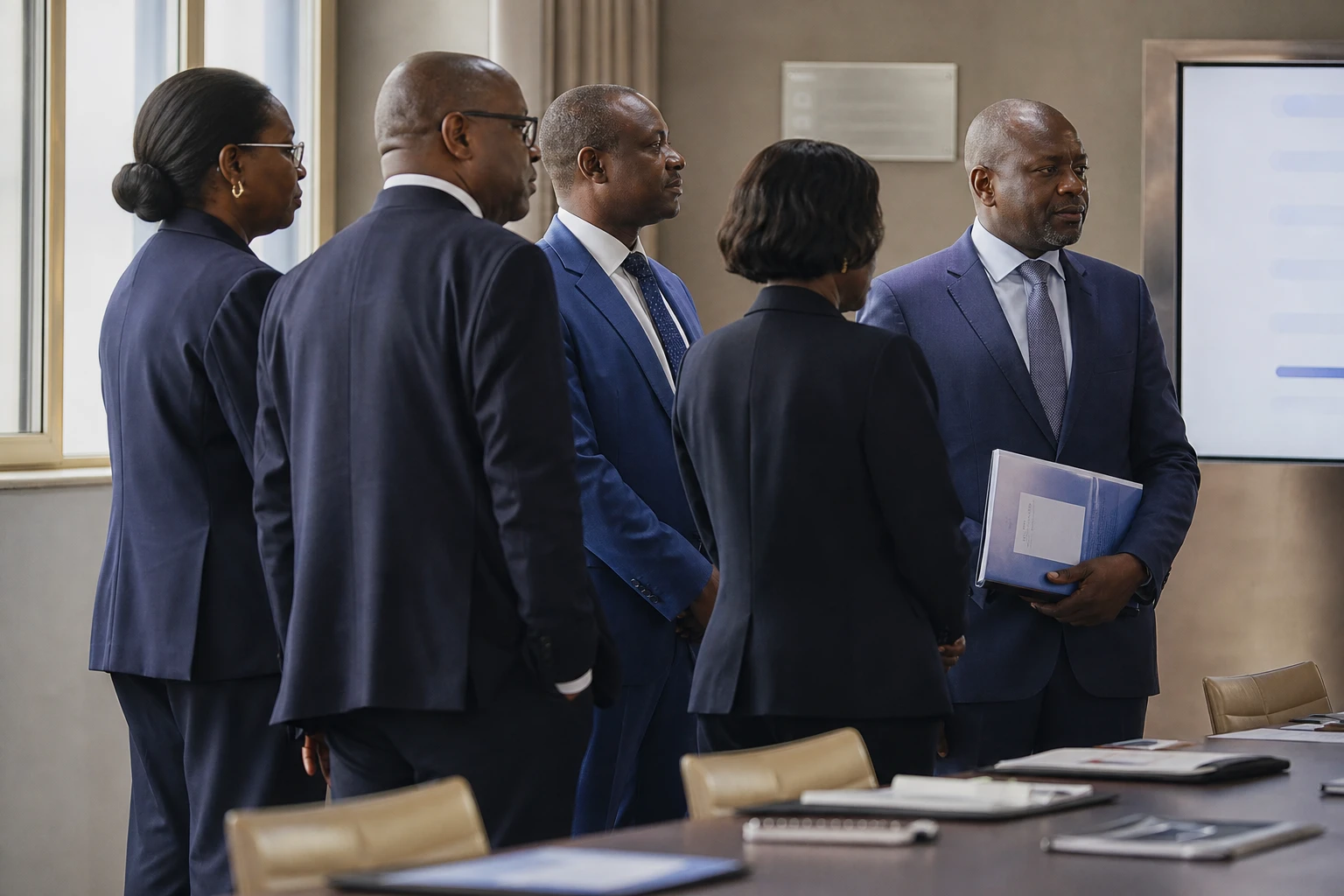
On 11 September, the National Agency for Investment Promotion (ANAPI), in Kinshasa, held talks with a delegation from BYD, one of the world’s major electric vehicle players. Discussions covered several options: introducing electric buses, locally assembling vehicles, manufacturing and assembling batteries, as well as projects related to energy storage and production. The Congolese agency, for its part, highlighted administrative support and the incentives provided for under the investment code.
The timing is no coincidence. The African market remains modest in terms of transport electrification, but it is changing rapidly. According to the International Energy Agency, BYD’s share of African electric car sales rose from 4% in 2023 to 35% in 2025. The same source notes, however, that electric cars still account for less than 1% of the continent’s vehicle sales, illustrating the gap between investment announcements and market realities.
For the DRC, the immediate challenge is therefore not simply to attract an industrial giant. Above all, it is to establish whether the country can offer three basic conditions: reliable electricity, logistics infrastructure and a sufficiently stable regulatory framework for a lasting industrial presence. ANAPI’s own documents point out that inadequate energy supplies, transport difficulties and a weak industrial base continue to weigh on Congolese competitiveness.
Cobalt, batteries and the question of value
The BYD talks come at a strategic moment for the DRC. The country remains the world’s leading cobalt producer. The US Geological Survey estimates that in 2024 the DRC accounted for about 75% of global production and 55% of reserves. This weight gives Kinshasa real industrial leverage, but also greater responsibility for traceability and governance of the sector.
The Congolese strategy is clear: reduce the role of intermediaries, better organise marketing and attract manufacturers capable of processing ore locally or nearby. The government has already highlighted the General Cobalt Company, tasked with overseeing the purchase and sale of artisanal cobalt, as well as moving the battery value chain upmarket. Meanwhile, the presidency is stressing the creation of a local ecosystem around copper, cobalt, lithium and manganese.
But the promise of industrial development cannot obscure the constraints. In February 2025, Kinshasa temporarily suspended cobalt exports in an attempt to address a market glut and weak prices. The decision is a reminder that the DRC no longer wants simply to be at the mercy of global demand: it is seeking to channel it. For an investor such as BYD, this changes the equation. The potential partnership is not solely about vehicles. It also concerns access to raw materials, supply stability and compliance across supply chains.
In this context, a Chinese group’s interest in establishing a presence in the DRC has practical significance. It could bring the manufacturer closer to its resource base, but it could also prompt Kinshasa to demand more than a mere sales outlet or assembly line. The authorities want jobs, skills transfer, locally produced components and, eventually, a more autonomous Congolese electric vehicle industry. The expected benefits will not be the same for everyone: major mining and industrial operators are seeking stability, while urban users are primarily looking for more reliable and affordable transport.
What this development says about the DRC and the region
The talks with BYD go beyond the Congolese capital. They come as several African economies are also seeking to connect mineral extraction, industrial assembly and the energy transition. Africa remains a limited market for electric cars, but it is becoming a battleground for batteries, urban buses, electric two-wheelers and storage systems. With its mining potential and position in Central Africa, the DRC wants to place itself at the heart of this shift.
The regional balance of power also merits attention. The DRC is part of the Southern African Development Community (SADC) and is simultaneously pursuing logistics corridor projects, including the Lobito Corridor, which links the Atlantic to mining areas in Central Africa. Electrified transport will only be industrialised meaningfully if raw materials can move, energy supplies keep pace and regional markets absorb some of the output.
Kinshasa therefore faces a twofold challenge. On the one hand, it must attract investment capable of modernising urban transport and giving shape to a battery industry. On the other, it must ensure that these projects do not amount to a mere commercial presence. The next stage will be technical: investment amounts, a timetable, infrastructure needs, legal arrangements and guarantees of local industrial activity. That is where the credibility of the project will be tested.
Ultimately, this development shows a DRC seeking to stop being seen solely as a strategic source of minerals. Kinshasa is trying to present itself as a country of production, assembly and energy services. If the talks progress, the challenge will not simply be to get a few electric buses on the road. It will be to determine whether Congo can finally turn its mineral wealth into lasting industrial capacity.



