Algeria
 Egypt
 Libya
 Morocco
 Sudan
 Tunisia
 Benin
 Burkina Faso
 Cabo Verde
 Côte d'Ivoire
 Ghana
 Guinea-Bissau
 Liberia
 Mali
 Mauritania
 Niger
 Nigeria
 Senegal
 Sierra Leone
 The Gambia
 Togo
 Cameroon
 Central African Republic
 Chad
 DR Congo
 Equatorial Guinea
 Gabon
 Republic of the Congo
 São Tomé and Príncipe
 Burundi
 Comoros
 Djibouti
 Eritrea
 Ethiopia
 Kenya
 Madagascar
 Malawi
 Mauritius
 Mozambique
 Rwanda
 Seychelles
 Somalia
 South Sudan
 Tanzania
 Uganda
 Angola
 Botswana
 Eswatini
 Lesotho
 Namibia
 South Africa
 Zambia
 Zimbabwe
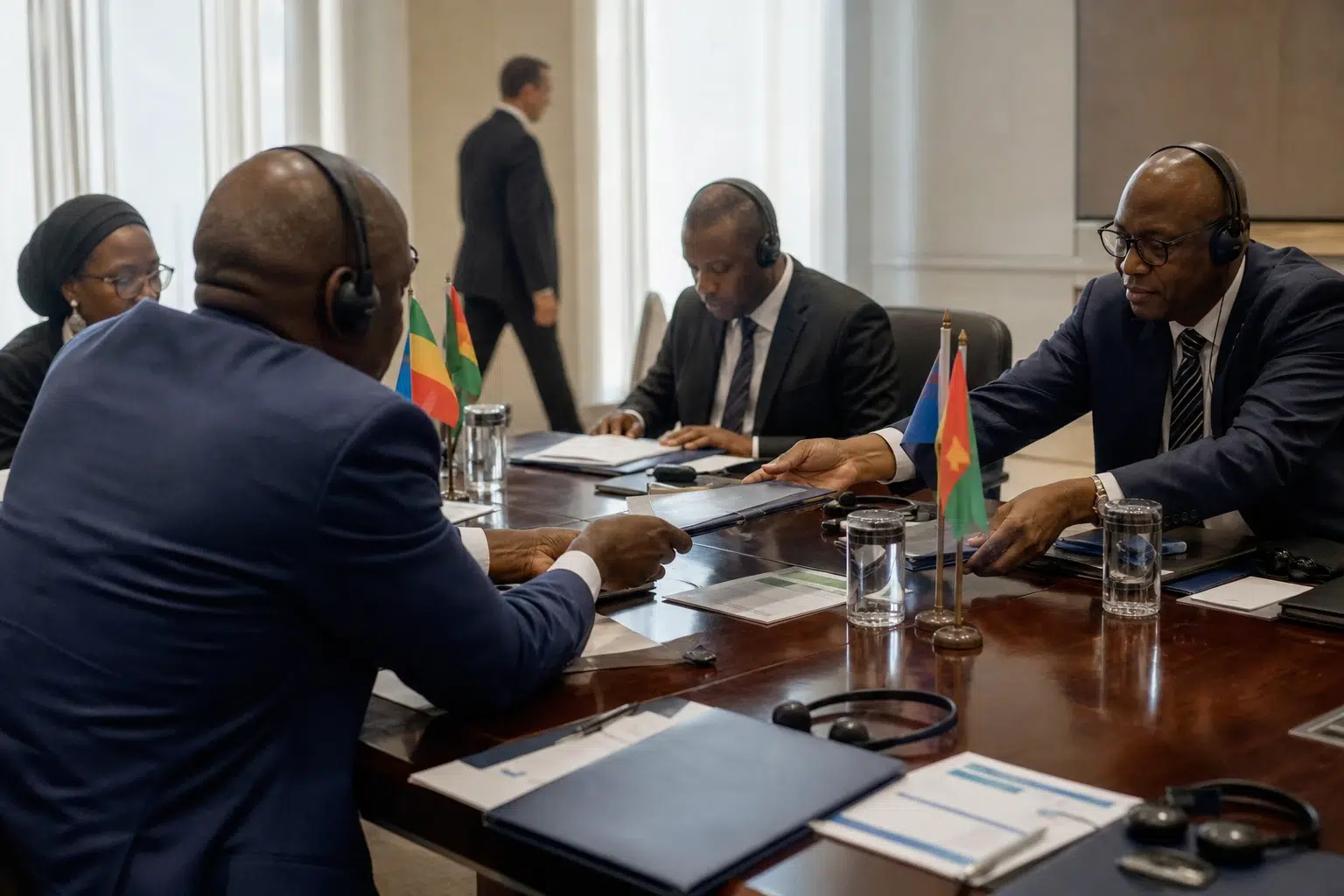
In Conakry, electricity is no longer just a matter of comfort
In Guinea’s capital, a power cut does more than switch off a light bulb. It slows a working day, holds up a cash register, puts a server at risk and even makes it harder to access phones and the internet. In a city where economic activity depends heavily on the energy available at any given moment, every outage weighs on households and small organisations alike.
The situation is all the more surprising because Conakry has benefited in recent years from improved supply, thanks to several hydroelectric dams and support from floating thermal power plants. Public expectations were therefore straightforward: after the progress announced, the capital was supposed to enter a period of lasting stability. Instead, daytime outages have revived a longstanding issue in Guinea: the fragility of the public electricity service.
A strained grid despite work across the sector
At the beginning of August 2026, Guinea’s energy ministry met the management of Électricité de Guinée, the state-owned distribution company. The official message was clear: outages observed in several districts of Conakry were due to work on power plants and the distribution network. The ministry called on the public to be patient, while EDG’s management also cited lower rainfall and constraints on the supply of HFO, a fuel used for thermal power generation.
This explanation comes amid an already busy schedule. In the spring, EDG had announced planned interruptions for preventive maintenance at the Hamdallaye substation, followed by further work on equipment in Conakry, notably in Maneah and Sanoyah. In other words, the outages have not come out of nowhere. They are part of the overhaul of a network facing technical constraints acknowledged by the state-owned company.
But the situation on the ground cannot be understood from statements alone. In several districts, residents say they mainly get electricity at night, from late afternoon until early morning, and then face interruptions during the day. For some people, particularly in the outskirts of Conakry, this pattern remains difficult to manage in daily life.
For small businesses, NGOs and households, the cost is immediate
Those with the least room to manoeuvre are often hit first. Local businesses, workshops, community organisations and NGOs have to choose between suspending operations or running a generator, if they can afford one. The extra costs are immediate: fuel, maintenance, noise and wear on equipment. For a small organisation, a power cut can therefore become yet another unforeseen expense.
The problem is not only economic. It is social too. In areas where incomes are low, buying and maintaining a generator remains beyond reach. The contrast is stark between organisations able to absorb the shock and households that have no backup option and simply endure the outage. In Conakry, the energy divide often mirrors the divide in financial means.
This inequality matters all the more because electricity now underpins everyday services: food preservation, water pumping, ventilation, remote working, digital payments and connectivity. When the power supply falters, it is not just the lights that go out. A part of the urban economy slows down.
Politically, the issue is sensitive. Guinea’s capital concentrates public attention, government offices and businesses. A prolonged disruption there quickly becomes a test of credibility for both the authorities and the state-owned operator. During maintenance work, the challenge is not just to carry out repairs. It is also to explain them, plan them and stick to the announced schedule.
Guinea is making progress, but access to electricity remains unequal
The situation in Conakry is a reminder of a broader reality: Guinea has expanded access to electricity over the past decade, but not eliminated all the weaknesses in its system. The World Bank says access to electricity in the country rose from about 18% in 2013 to 53% in 2024. This is real progress, but it does not yet mean a continuous or reliable service everywhere, particularly in a capital as densely populated as Conakry.
Guinea’s energy agenda is also part of a wider West African effort. For several years, ECOWAS has been working to strengthen interconnections, regional electricity codes and access projects. The idea is simple: when a country lacks capacity, regional power exchanges can help cushion the impact. Guinea, with its significant hydropower potential and major projects under way, is both an energy-hungry consumer and a future player in the West African grid.
National projects are moving in the same direction. The government is pushing ahead with several modernisation projects, including the revival of hydroelectric infrastructure and new investment in generation and transmission. At the same time, the authorities have set out the goal of making supply more stable and competitive. The challenge remains tangible: turning announcements into electricity available every day, in neighbourhoods across Conakry and in the rest of the country.
At regional level, the episode in Guinea illustrates one simple point. Access to electricity is no longer just about connecting new power plants. It also requires maintenance that is better explained, a more robust grid, secure fuel supplies and governance capable of delivering on the promise of a public service. For Guinea and parts of West Africa, that is where the difference between short-term improvement and lasting reliability will be made.