Algeria
 Egypt
 Libya
 Morocco
 Sudan
 Tunisia
 Benin
 Burkina Faso
 Cabo Verde
 Côte d'Ivoire
 Ghana
 Guinea-Bissau
 Liberia
 Mali
 Mauritania
 Niger
 Nigeria
 Senegal
 Sierra Leone
 The Gambia
 Togo
 Cameroon
 Central African Republic
 Chad
 DR Congo
 Equatorial Guinea
 Gabon
 Republic of the Congo
 São Tomé and Príncipe
 Burundi
 Comoros
 Djibouti
 Eritrea
 Ethiopia
 Kenya
 Madagascar
 Malawi
 Mauritius
 Mozambique
 Rwanda
 Seychelles
 Somalia
 South Sudan
 Tanzania
 Uganda
 Angola
 Botswana
 Eswatini
 Lesotho
 Namibia
 South Africa
 Zambia
 Zimbabwe
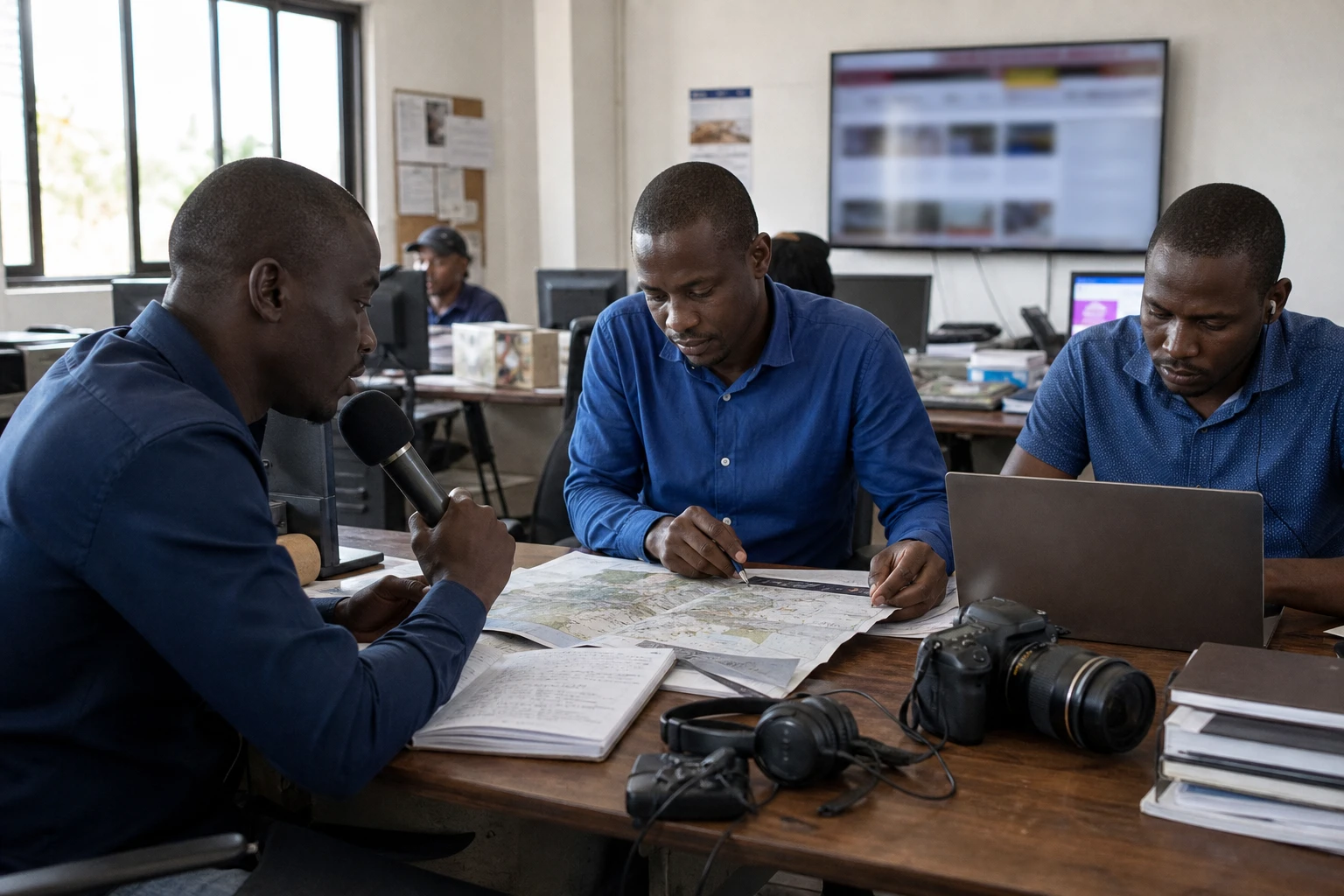
In Conakry, a public health and urban disaster exposes a city under pressure
In the Guinean capital, the shock comes not only from the death toll. It also comes from the location: an open-air landfill, squeezed up against precarious homes, in the heart of a neighbourhood where people already live with little space, little room for manoeuvre and considerable risks. When heavy rain falls in Conakry, it does more than signal the rainy season. It also lays bare the fragility of urban services.
The disaster in the night from Saturday 22 to Sunday 23 August 2026 in Dar-es-Salam, in the commune of Gbessia, is part of a familiar West African context: rapid urban growth, inadequate drainage infrastructure and waste management under strain. Guinea belongs to ECOWAS, the Economic Community of West African States, whose objectives include supporting regional integration and resilience. But in Conakry, everyday reality is shaped first and foremost in neighbourhoods exposed to rain, flooding and overstretched facilities.
The death toll has risen as displaced families seek shelter
According to the Guinean authorities, the landslide was triggered by heavy rain at around 2am. It swept away part of a mountain of rubbish and buried several homes below it. The government initially reported 30 deaths, six serious injuries and 16 minor injuries; several media outlets later reported a toll of 31 dead, while a rescue source cited by APS referred to 32 deaths after another victim was found. The exact figure therefore remains subject to change and should be treated as provisional.
Several hundred residents were evacuated to a school converted into a temporary shelter, while families living around the site were moved to safety. The authorities have announced plans to relocate households still living near the landfill. The incident illustrates a straightforward social reality: when residential areas grow up alongside spaces rejected by the city, it is the same residents who bear the cost of unsanitary conditions, the noise of machinery, fumes and, sometimes, direct physical danger.
This is not the first time Dar-es-Salam has prompted alarm. As early as 2024, the Guinean Prime Minister’s Office had announced that it was considering moving the landfill, which was deemed problematic from a public health and environmental perspective. In 2025, the government again raised the prospect of relocating it. In June 2026, the authorities were still talking about a gradual closure, before operations to clear and secure the site began on the eve of the disaster. In other words, political and technical work on the site was already under way, but the transition had not yet fully eliminated the risk.
Closure announced, but transition still incomplete
The issue extends beyond the commune of Gbessia. In Conakry, a densely populated capital on the ocean coast, waste collection, rainwater drainage and the security of urban land are interlinked. When one of these links fails, the crisis quickly spreads to families, small businesses, transport operators and informal workers based around major rubbish dumps. In such places, a landfill is not merely a technical site. It becomes a source of livelihood for some and a danger to all.
The rainy season weighs heavily on this equation. Guinea’s National Meteorological Agency issued several warnings in August 2026 about heavy showers, thunderstorms and a high risk of flooding in several parts of the country, including Lower Guinea, where Conakry is located. Seasonal bulletins and successive alerts confirm that the authorities are aware of the level of exposure. The issue, then, is not just unpredictable weather. It is also a question of preparedness, evacuating at-risk areas, urban planning enforcement and the continuity of public works.
The Guinean state faces a twofold challenge. It must provide emergency assistance, relocate and compensate residents, while also showing that urban policy can deliver tangible results. For local residents, the questions are more immediate: where can they live while the work is under way, who will pay for relocation, and how can the same households be prevented from settling beside another exposed site? In a capital under persistent demographic pressure, the answer cannot be purely a matter of policing. It must combine urban planning, basic services and local solutions.
At regional level, the incident also speaks to the entire Gulf of Guinea, where coastal cities face the same combination of intense rainfall, rapid urbanisation and incomplete waste management. For Guinea, an ECOWAS member, the implications are clear: urban resilience is no longer a technical issue reserved for engineers. It has become a measure of governance, with very real consequences for everyday life in Conakry and for the credibility of public policy across the sub-region.