Algeria
 Egypt
 Libya
 Morocco
 Sudan
 Tunisia
 Benin
 Burkina Faso
 Cabo Verde
 Côte d'Ivoire
 Ghana
 Guinea-Bissau
 Liberia
 Mali
 Mauritania
 Niger
 Nigeria
 Senegal
 Sierra Leone
 The Gambia
 Togo
 Cameroon
 Central African Republic
 Chad
 DR Congo
 Equatorial Guinea
 Gabon
 Republic of the Congo
 São Tomé and Príncipe
 Burundi
 Comoros
 Djibouti
 Eritrea
 Ethiopia
 Kenya
 Madagascar
 Malawi
 Mauritius
 Mozambique
 Rwanda
 Seychelles
 Somalia
 South Sudan
 Tanzania
 Uganda
 Angola
 Botswana
 Eswatini
 Lesotho
 Namibia
 South Africa
 Zambia
 Zimbabwe
In Conakry, a public health and urban tragedy that goes beyond a mere accident
In Guinea’s capital, disasters linked to waste are no longer isolated accidents. They reveal a deeper tension: a city that is growing quickly, while its essential services are lagging far behind.
In Dar-es-Salam, a Conakry neighbourhood known for its large rubbish dump, the collective burial of the victims has revived a question many families face every day: who protects residents when urbanisation expands without adequate infrastructure?
On 22 and 23 August, heavy rain caused a mass of rubbish to collapse onto homes and shelters near the site, in the municipality of Gbessia. The official death toll was subsequently raised to 36. Around 20 people were also hospitalised, according to information corroborated by local and international media. At the same time, several sources said that 17 of the victims were Sierra Leonean nationals, giving the disaster an immediate sub-regional dimension.
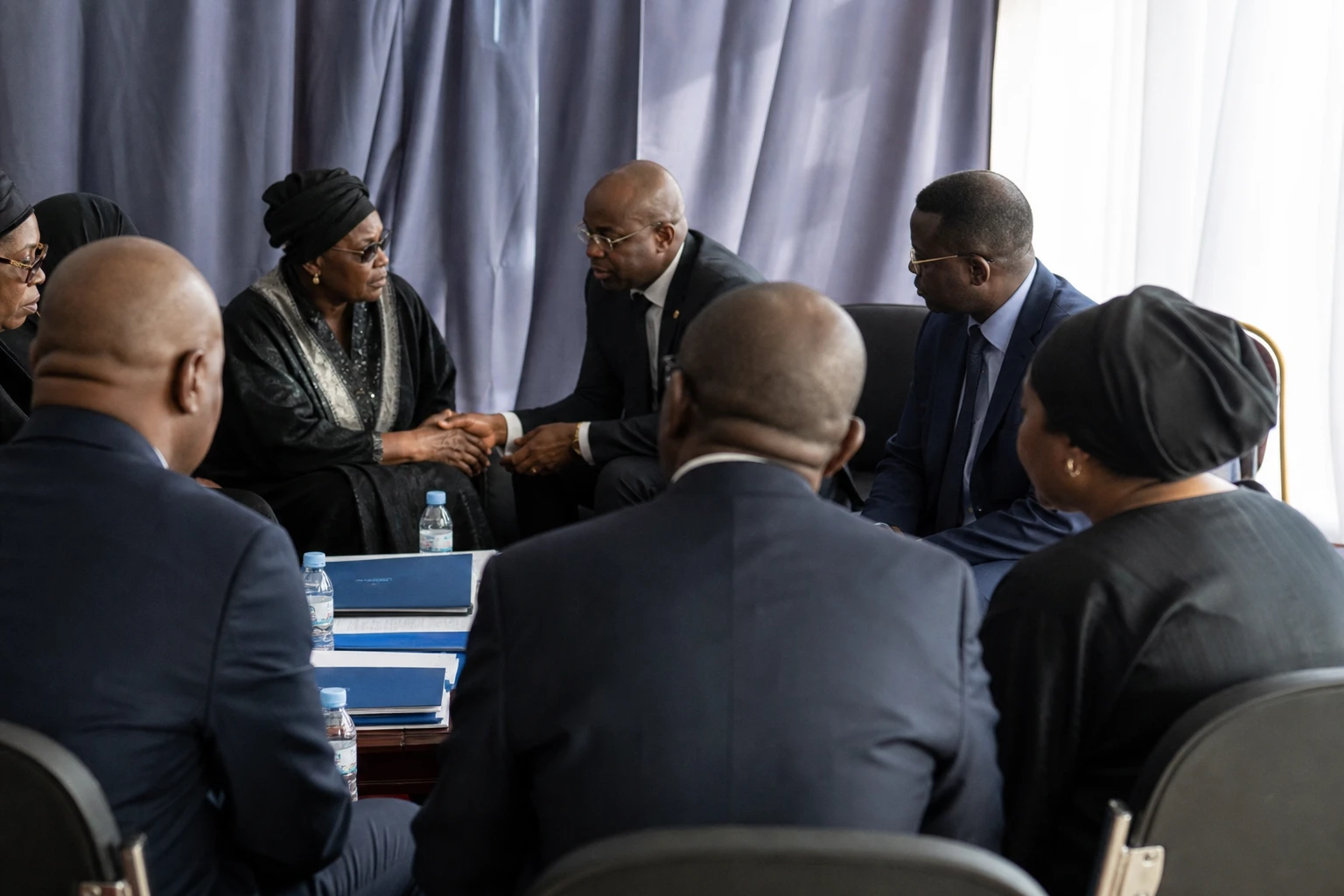
On 4 September, the bodies were taken to Bambeto, in northern Conakry, for funeral prayers before burial at the Martyrs’ Cemetery. The scene recalled the human scale of the tragedy. It also showed the central role played by families, local authorities, religious leaders and neighbours in managing urban crises, often well before the state puts in place a lasting response.
A known site, a known risk, and a response that remains incomplete
The Dar-es-Salam dump is no ordinary site. It lies in an urban area where demographic pressure, precarious housing and waste management create a dangerous mix. Conakry is Guinea’s political and economic capital. It concentrates government offices, commercial routes and a large share of the country’s formal and informal activity.
The city is also part of a wider regional context. Guinea belongs to ECOWAS, the Economic Community of West African States. This matters because urban, health and humanitarian crises there often cross national borders. Population movements, community solidarity and foreign nationals affected by the same event quickly bring neighbouring authorities into the picture.
The Dar-es-Salam site was already known to be dangerous. In August 2017, a previous collapse there killed several people. This recurrence says much about the difficulty of closing, relocating or permanently securing a rubbish dump that has become an unstable boundary between the city and its outskirts.
World Bank documents on urbanisation in Guinea have for several years described poorly managed urban growth, insufficient investment and deficient waste management in Conakry. In another recent study, the institution points to a very high proportion of household waste in the country being poorly managed. In other words, the problem is not merely technical. It is also financial, institutional and territorial.
The facts: 36 dead, people injured and families displaced by grief
The collective funerals took place after the disaster that struck in late August. The coffins were taken to the outskirts of Conakry for funeral prayers before burial in Bambeto. This marked the ritual closure of an episode that devastated entire households, in a neighbourhood where many families live close to the waste site.
According to the information available, the collapse occurred at night, when the rain was making the ground more unstable. Lightweight homes and shelters near the dump were buried. Rescue operations initially focused on finding survivors, after which the authorities arranged care for the bodies, the injured and bereaved relatives.
Families’ accounts have highlighted another aspect of the tragedy: the loss of economic support. In Conakry, many households depend on daily activities, small businesses or informal work. When a family member dies, it is not only a life that ends. An income, a child’s education and the running of a household are also thrown into turmoil.
The fact that Sierra Leonean nationals were among the victims also reflects the cross-border reality of Guinea’s capital. Conakry’s poorer neighbourhoods are home to families from several neighbouring countries. In times of crisis, solidarity therefore goes beyond national borders. Embassies, local authorities, religious communities and neighbourhood networks become frontline actors.
What this tragedy means for the Guinean authorities
In the short term, the challenge is humanitarian: treat the injured, support orphans, compensate families where possible, and secure areas that remain exposed. In the medium term, the challenge is urban: relocate or redevelop the site, reduce construction in high-risk areas and overhaul waste collection in Conakry.
For the Guinean state, the issue touches on the credibility of public action. Waste management is visible, tangible and part of everyday life. It measures the ability of those in power to protect people who often live far from decision-making centres. It also reveals the limits of coordination between the city of Conakry, its municipalities and the central administration.
The tragedy also puts the governance of the capital in the spotlight. When the authorities announce evacuation or safety measures without permanently transforming the site, residents are left with the risk that remains. Repeated landslides then fuel a sense of abandonment, as well as a simple demand: lasting solutions, not just mourning ceremonies.
Guinea nevertheless has room to act. Projects backed by international donors on water, sanitation and urban development show that an urban policy is possible. But it requires consistent choices: investment, land-use planning, enforcement against illegal occupation, regular waste collection and better management of dumps.
A regional warning for West Africa
What happened in Dar-es-Salam resonates with other capitals in the sub-region. Dakar, Bissau, Monrovia, Freetown and Abidjan also face urban pressure, fragile peripheral neighbourhoods and poorly managed waste. Across West Africa, urban growth can become sustainable only if public services keep pace.
The Conakry tragedy also serves as a reminder that an urban disaster can become a diplomatic issue. When foreign nationals are among the victims, the response is no longer only local. It involves relations between neighbours, the movement of people within the ECOWAS area and states’ ability to co-operate swiftly on civil protection.
At continental level, the case also points to an obvious truth that is often overlooked: Africa is not only a continent of crises, but also one of rapidly accelerating urbanisation. The quality of waste management, water, drainage and housing will increasingly affect social stability. Conakry is a stark example, but not an exceptional one.
Guinea’s next challenge, then, will be less about commemoration than prevention. The memory of the 36 Dar-es-Salam victims now places the authorities before a simple demand: to turn a known danger zone into a public safety issue treated as such.