Algeria
 Egypt
 Libya
 Morocco
 Sudan
 Tunisia
 Benin
 Burkina Faso
 Cabo Verde
 Côte d'Ivoire
 Ghana
 Guinea
 Guinea-Bissau
 Liberia
 Mali
 Mauritania
 Niger
 Nigeria
 Senegal
 Sierra Leone
 The Gambia
 Togo
 Cameroon
 Central African Republic
 Chad
 Equatorial Guinea
 Gabon
 Republic of the Congo
 São Tomé and Príncipe
 Burundi
 Comoros
 Djibouti
 Eritrea
 Ethiopia
 Kenya
 Madagascar
 Malawi
 Mauritius
 Mozambique
 Rwanda
 Seychelles
 Somalia
 South Sudan
 Tanzania
 Uganda
 Angola
 Botswana
 Eswatini
 Lesotho
 Namibia
 South Africa
 Zambia
 Zimbabwe
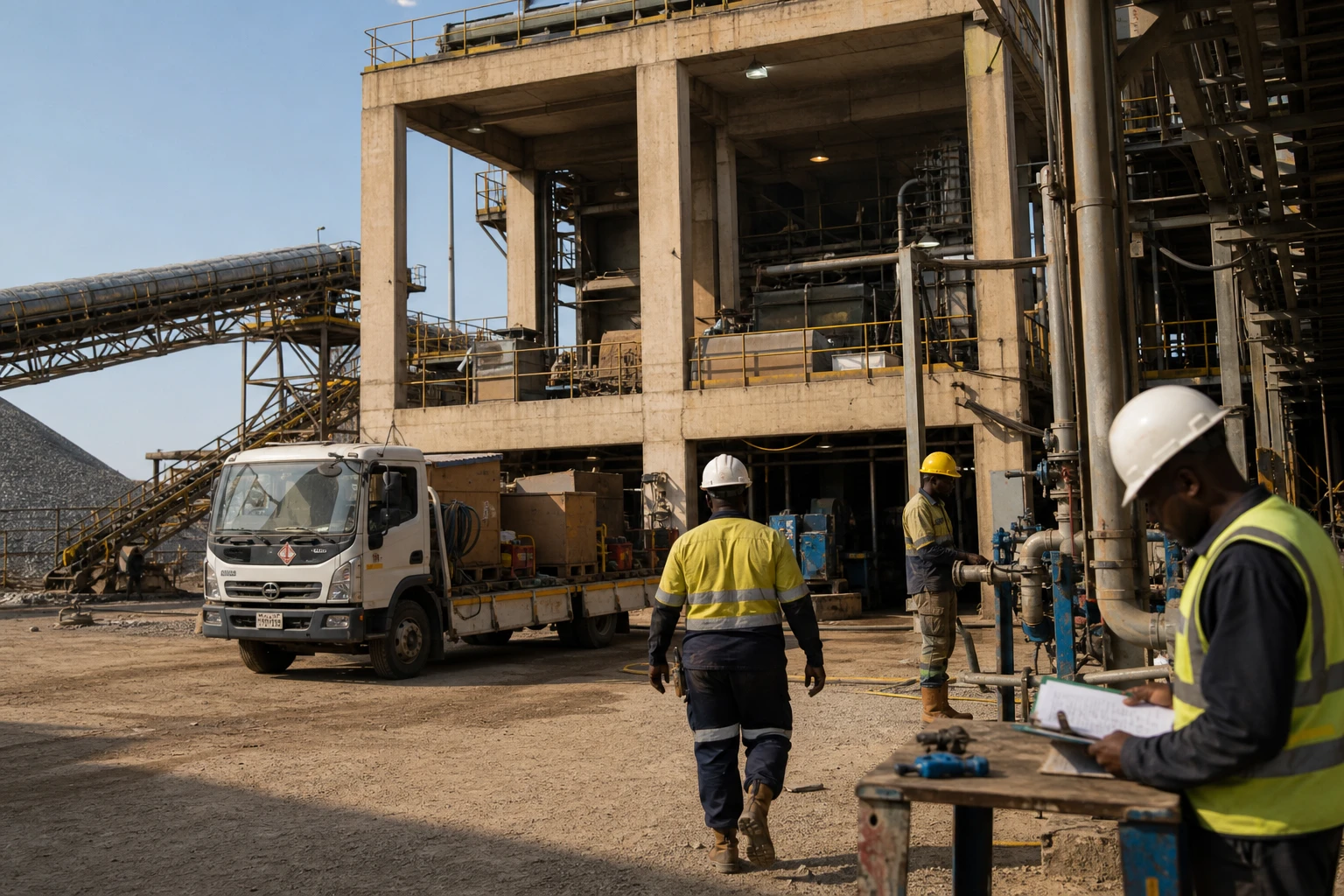
When copper becomes a race for industrial security
On the Copperbelt, the question is no longer simply who extracts the most metal. It is also about who controls new capacity, who finances projects and who captures added value. In this pivotal region shared by the Democratic Republic of the Congo and Zambia, every mine expansion affects exports, local employment, energy and public revenue. The current momentum comes amid a copper market that several players consider likely to remain tight, with demand supported by electrification, power grids and batteries.
For Kinshasa and Lusaka alike, the issue is strategic. The DRC remains Africa’s leading copper producer, with 817,639.17 tonnes in the first quarter of 2025, according to official data from the Congolese Ministry of Mines, while Zambia ended 2025 at about 890,000 tonnes, according to figures presented to parliament and reported by Zambian public institutions. Both countries are targeting a more pronounced increase in output by 2030-2031, as authorities seek to attract capital without relinquishing control of local processing.
CNMC is counting on the Copperbelt to expand its footprint
China Nonferrous Mining Corporation, a Chinese group and subsidiary of a state-owned Chinese non-ferrous metals company, is preparing the next stage of its African expansion. According to its mid-2026 business presentation and several market documents, the company is targeting more than 300,000 tonnes of copper from its own mines by 2030. The goal is based primarily on its assets in Zambia and the DRC, at the heart of the Central and Southern African copper belt.
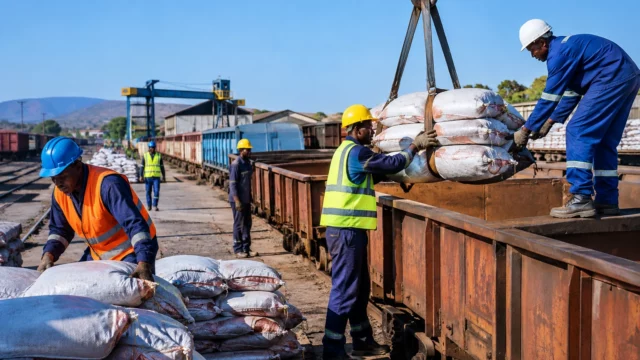
In Zambia, Luanshya is central to the plan. The company is ramping up production in phases, targeting 55,000 tonnes a year by mid-2027, followed by a more ambitious trajectory towards 2030. The group also plans to bring Samba into operation and develop Chambishi Southeast. In the same country, the Luanshya mining project is expected to help restore production after a long period of inactivity, illustrating CNMC’s strategy: restart known deposits, then add further layers of capacity.
In the DRC, the MSESA mine is due to begin production from mid-2028, with an announced capacity of about 15,000 tonnes a year. The group also refers to its activities at Kambove and Huachin Mabende. Its presence is not marginal. Data published by the Congolese authorities show that mining remains one of the country’s major sources of revenue, but also one of the sectors most exposed to international price fluctuations, power cuts and tax decisions.
Financing remains the key hurdle
So far, CNMC has not detailed the total cost of these projects. This is crucial. Investment amounts, construction timelines and technical approvals will determine whether the industrial plan translates into actual production. The group has, however, opened up a financing option. Market documents cited by Reuters indicate that it is preparing a convertible bond issue that could raise up to $300 million, maturing in 2031, to finance the construction and development of its mining projects.
This sequence is telling. In a sector where the costs of land, electricity, pumping and processing are rising rapidly, mining groups are seeking flexible financing to protect their margins. CNMC’s latest interim reports show that the company continues to invest in exploration, infrastructure and processing capacity, with visible work at Chambishi, Luanshya and other sites. In 2026, the group had already said that several projects were entering a more intensive development phase.
Another point merits attention: the share of the group’s total output that comes from its own mines. CNMC says it wants to raise this share to 55.6% by 2030, from 26% in 2025, with the remainder coming from ore bought from third parties for processing. In other words, the battle is not only geological. It is industrial too. The more the group secures its own deposits, the less dependent it becomes on external supplies and the more it locks in its value chain, from extraction to smelting.
What this means for Zambia and the DRC
For both states, the stakes go beyond a simple increase in tonnage. More copper means, in theory, more jobs, exports and tax revenue. But that depends on tangible local benefits. Congolese authorities stress the availability of mining data and the monitoring of operators, while Zambian institutions highlight the sector’s growth as a pillar of the national strategy towards 2031. In both countries, electricity remains central. Without a stable grid, new capacity is held back, costs rise and promises of local industrialisation fade.
The distribution of benefits also needs scrutiny. Direct and indirect jobs can support mining towns, subcontractors, transport and some informal trade. However, tax revenues may take longer to reach the state if investment cycles, depreciation and tax regimes account for the largest share of value. CNMC’s statement that its workforce on the continent is already more than 90% African is significant, but it does not tell the whole story about job quality, training, workplace safety or the role of local suppliers.
Finally, this Chinese strategy is part of a wider competition for African copper. The DRC and Zambia want to remain at the centre of the game as the global energy transition increases pressure on critical metals. In the coming months, three milestones will need watching: whether CNMC secures its financing, progress on work at Luanshya and Samba, and the schedule for MSESA to begin production. If these steps are completed on time, the Copperbelt will further strengthen its position in the global copper economy. If they are delayed, energy and financial constraints will remain the main obstacles to the stated ambition.