
 Algeria
 Egypt
 Libya
 Morocco
 Sudan
 Tunisia
 Benin
 Burkina Faso
 Cabo Verde
 Côte d'Ivoire
 Ghana
 Guinea
 Guinea-Bissau
 Liberia
 Mali
 Mauritania
 Niger
 Nigeria
 Senegal
 Sierra Leone
 The Gambia
 Togo
 Cameroon
 Central African Republic
 Chad
 Equatorial Guinea
 Gabon
 Republic of the Congo
 São Tomé and Príncipe
 Burundi
 Comoros
 Djibouti
 Eritrea
 Ethiopia
 Kenya
 Madagascar
 Malawi
 Mauritius
 Mozambique
 Rwanda
 Seychelles
 Somalia
 South Sudan
 Tanzania
 Uganda
 Angola
 Botswana
 Eswatini
 Lesotho
 Namibia
 South Africa
 Zambia
 Zimbabwe
A dual health emergency in a country already under strain
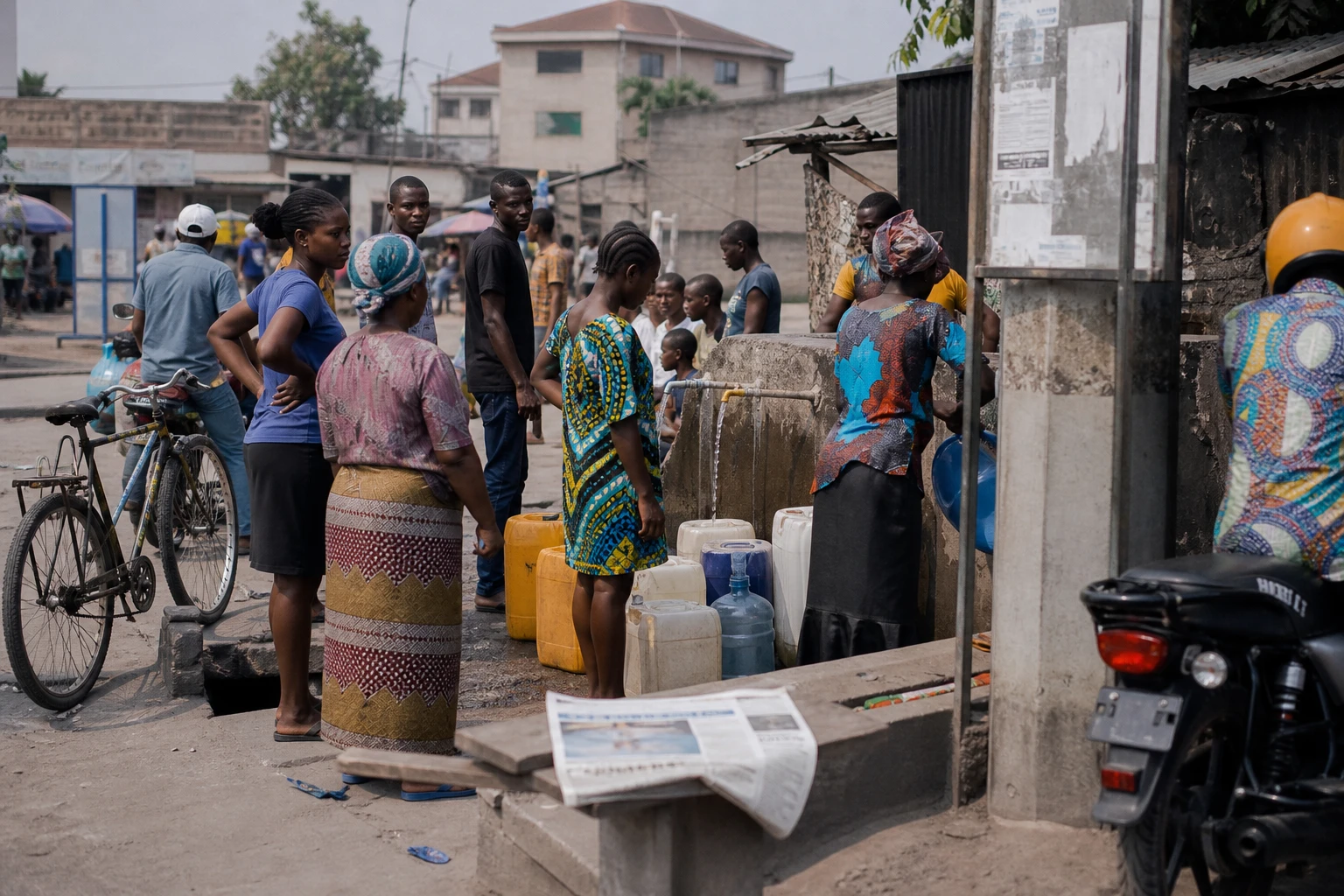
In the Democratic Republic of the Congo, cholera has not gone away. It is now adding to the response to Ebola, in a health system already strained by population displacement, insecurity and difficulties accessing safe drinking water. The challenge goes beyond the immediate medical emergency: it affects family mobility, the organisation of care and the state’s ability to contain several outbreaks at once.
The country is facing this pressure in a complex regional context. In the east, armed activity continues to disrupt care networks. Along rivers and lakes, exchanges between provinces and neighbouring countries are also accelerating the spread of waterborne diseases. The WHO says conflict, mass displacement and flooding encourage cholera transmission, particularly in rural and underserved areas.
High figures, but a wider picture than a single tally
The WHO’s latest regional report says that between 1 January and 31 May 2026, the Democratic Republic of the Congo recorded 28,567 cholera cases and 815 deaths. The same report ranks the country first on the continent for cumulative cases and deaths over this period. In May 2026, the African region reported 14,230 new cases, including 3,651 in the DRC.
This trend confirms an acceleration already visible in the spring. At the end of April, the WHO reported 23,971 cases and 707 deaths in the DRC since the start of the year, with a heavy concentration in North Kivu, South Kivu and Mai-Ndombe. Lakeside areas, isolated communities and informal neighbourhoods in Kinshasa were already among the pressure points.
At the same time, Ebola was declared on 15 May 2026 by the Congolese authorities as part of an outbreak linked to the Bundibugyo virus. The WHO subsequently determined on 17 May that it constituted a public health emergency of international concern. As of 21 May, the organisation reported 746 suspected cases and 176 suspected deaths in the DRC, while confirmed cases continued to rise.
In other words, the DRC is not facing a single epidemic but an overlap of health crises. This complicates surveillance, the prioritisation of medical teams and the delivery of supplies. When a health zone deploys its staff to respond to Ebola, it often remains vulnerable to cholera, especially if water, sanitation and logistics are inadequate.
The east remains at the centre of the crisis, but the west is also sounding the alarm
The main cholera outbreak remains in the east of the country. In the WHO’s data, North Kivu and South Kivu account for a large share of cases, with ongoing transmission in hard-to-reach health zones, particularly around lakes and transport routes. Insecurity makes contact tracing difficult and sometimes delays care.
But the most concerning signal is the spread westwards. In March 2026, the WHO had already described Kinshasa as a worrying epicentre, with outbreaks in densely populated neighbourhoods exposed to flooding, where sanitation remains inadequate. The Congolese capital illustrates a familiar paradox: a better-connected political metropolis that is highly vulnerable when water, sewers and waste services fail to keep up.
In Kwango and South Ubangi, concern also centres on Zongo, a border town on the Ubangi River, opposite Bangui. Its location makes the town a natural transit point for river traffic. Cholera, meanwhile, spreads quickly through water, markets, boats and family movements. The risk is therefore not only local; it is cross-border.
This matters for the DRC, but also for its neighbours in the Congo Basin. Movements between Angola, Congo, the Central African Republic and the DRC show how quickly strictly national responses reach their limits. Regional organisations and river corridors then become areas for health surveillance, not just trade.
What this wave reveals about public health in the DRC
The first challenge is access to safe water. Without drinking water, cholera returns as soon as a neighbourhood, displacement site or riverside village loses its basic safeguards. The second is rapid diagnosis. When cases are detected late, the fatality rate rises. The WHO also points to delays linked to accessibility, surveillance and limited capacity in fragile areas.
The third challenge concerns the daily economy. Urban households lose working days, river transport operators see their journeys slowed, and families in rural areas pay a heavy price for long trips to a health centre. In a country where the informal economy accounts for a large share of incomes, every disruption to mobility has an immediate cost.
For the authorities, the difficulty is clear: they must sustain the Ebola response while stepping up the fight against cholera, without spreading teams too thin or weakening surveillance. The WHO says it is supporting the DRC through one of the world’s most complex health emergencies, where conflict, repeated epidemics and chronic underinvestment are compounding one another.
Across the continent, the situation in the DRC is a reminder of a wider reality. In May 2026, Africa accounted for most new cholera cases worldwide, with the DRC playing a central role. What the country is experiencing today therefore resonates far beyond Kinshasa: it is also a test of regional surveillance, coordination between neighbours and Africa’s ability to respond to health crises that cross borders as quickly as rivers do.



