Algeria
 Egypt
 Libya
 Morocco
 Sudan
 Tunisia
 Benin
 Burkina Faso
 Cabo Verde
 Côte d'Ivoire
 Ghana
 Guinea
 Guinea-Bissau
 Liberia
 Mali
 Mauritania
 Niger
 Nigeria
 Senegal
 Sierra Leone
 The Gambia
 Togo
 Cameroon
 Central African Republic
 DR Congo
 Equatorial Guinea
 Gabon
 Republic of the Congo
 São Tomé and Príncipe
 Burundi
 Comoros
 Djibouti
 Eritrea
 Ethiopia
 Kenya
 Madagascar
 Malawi
 Mauritius
 Mozambique
 Rwanda
 Seychelles
 Somalia
 South Sudan
 Tanzania
 Uganda
 Angola
 Botswana
 Eswatini
 Lesotho
 Namibia
 South Africa
 Zambia
 Zimbabwe
A leadership post, but above all a test for networks
In Chad, a change of managing director is not just a corporate decision. It also says something broader about subscriber confidence, public pressure on operators and the place of digital technology on the government’s agenda. In a country where access to calls and the internet shapes both family communications and economic activity, network quality has become a very tangible, almost daily concern.
It was against this backdrop that Moov Africa Chad presented its new managing director, Mourad Hadraoui, to the Minister of Telecommunications, Digital Economy and the Digitalisation of the Administration in N’Djamena on Wednesday 9 September 2026. The appointment comes as Chad’s market is based on a duopoly with Airtel, under the supervision of the Electronic Communications and Postal Regulatory Authority, ARCEP, which is responsible for monitoring operators and ensuring compliance with service standards.
Chad puts service quality at the centre of the debate
The signal from the authorities is clear. On 4 June 2026, Minister Haliki Choua Mahamat summoned the heads of Moov Africa Chad and Airtel Chad to denounce the deterioration in service quality. The complaints were specific: unreachable numbers, calls dropping, and slow or inaccessible internet. The minister also criticised the gap between the billions of CFA francs announced in investment and the results seen on the ground.
This tough approach has not come out of nowhere. Chad’s regulatory framework already provides for monitoring network quality, and ARCEP says it has real-time monitoring tools. As early as 2019, the regulator had launched a service-quality control centre to measure mobile network performance. In other words, the issue is not new; it is now being treated as a matter of public governance.
Moov Africa Chad plays an important role in this system. In its 2025 universal registration document, Maroc Telecom said that its Chadian subsidiary had 7.6 million mobile customers as at 31 December 2025, almost all of them prepaid. The same document also sets out Chad’s regulatory framework, which defines service-quality obligations and penalties for non-compliance. In a market of this size, a decline in quality quickly affects the most routine activities: calls, mobile money, administrative procedures, retail and transport services.
A management transition under intense regulatory pressure
The replacement of Mohammed Dkhisi by Mourad Hadraoui comes after seven years at the head of Moov Africa Chad, according to available information. Public statements do not explicitly say that the handover was imposed by the state. But the timing gives the appointment particular significance. Three months earlier, the authorities had already spoken of a “zero tolerance” policy towards failings in the telecoms sector, with the replacement of operators’ local managers as a last resort if results did not follow.
The new head therefore takes office in an environment where room for manoeuvre is limited. On the one hand, the government is taking a tougher line. On the other, the company must contend with very real technical constraints: an unreliable power supply, difficult access to some sites, limited international capacity, vandalism and the saturation of some infrastructure. The authorities acknowledge these obstacles, but believe they cannot be used to justify a lasting decline in service. They are asking operators to plan further ahead, notably by diversifying their energy sources.
This tension between public expectations and operational constraints also explains the ministry’s tone. Digital technology in Chad is no longer just a modernisation project. It is part of the strategy to transform the administration and make the state more accessible. The ministry says in its official remit that it leads telecommunications policy, efforts to reduce the digital divide and the digitalisation of the administration. It also places its work within the 2020-2030 strategic plan for digital technology and postal services.
What this means for subscribers, businesses and the state
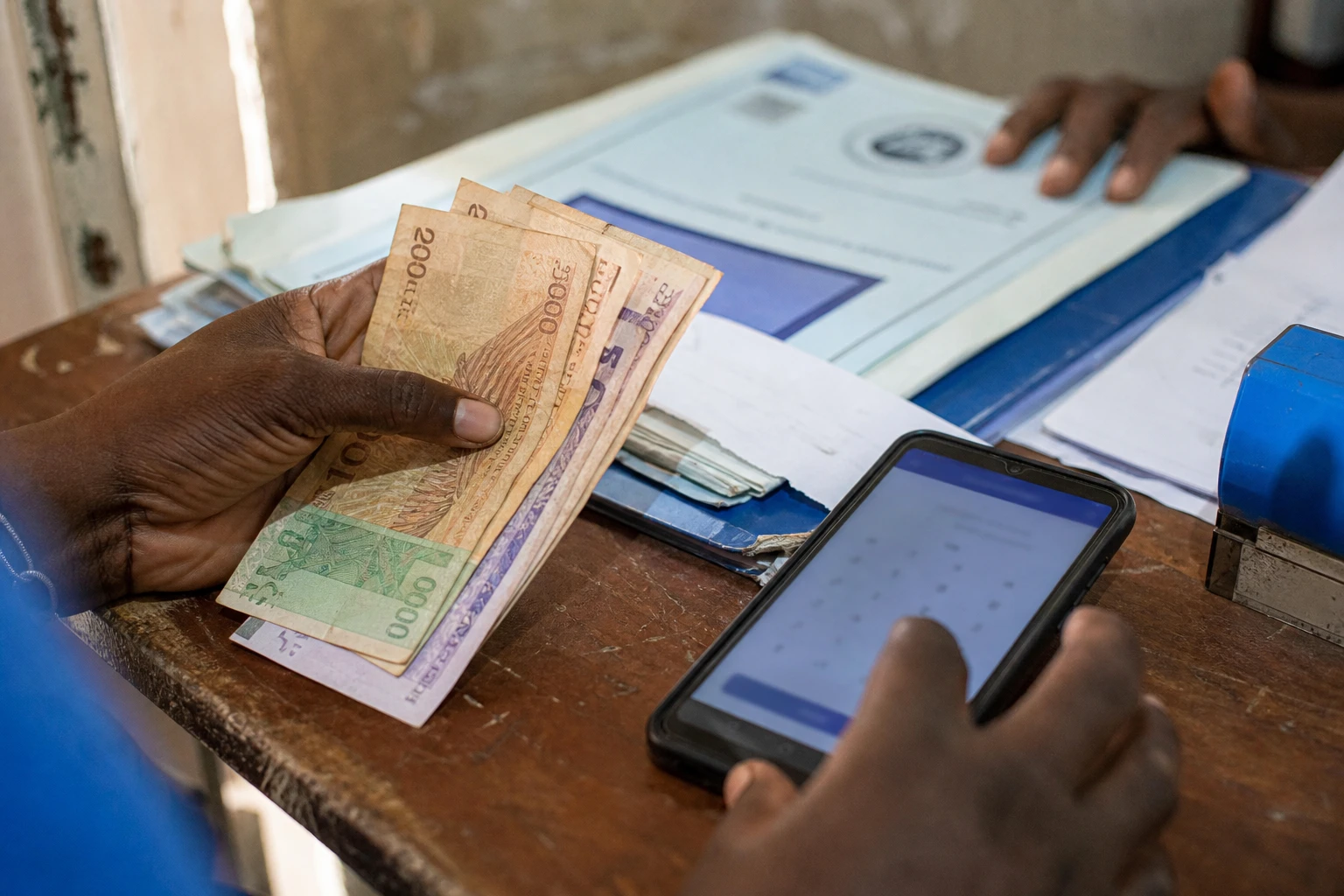
For Chadian subscribers, the core problem is simple: an unstable network costs time and money. A dropped call can hold up a sale, a payment confirmation or family arrangements. Unreliable internet also undermines small businesses, delivery workers, digital service outlets and students. In a country where mobile is often the gateway to digital services, network quality has a direct bearing on economic inclusion.
For operators, the issue is no longer just commercial. It has become political and regulatory. A telecoms company is no longer judged solely on its subscriptions or revenues. It is assessed on its ability to provide a continuous, measurable and compliant service. This shift in approach may seem technical. In reality, it changes the balance of power with the regulator and strengthens the demand for immediate results.
For the state, the question is broader still. The government wants to make digital technology a driver of modernisation and growth. Its 2027 agenda highlights the acceleration of reforms, while the Ministry of Telecommunications presents digital transformation as a central pillar of public policy. In this context, weak networks delay both the digitalisation of services and the credibility of official announcements.
A Chadian issue, but an African signal
The case of Chad goes beyond the interests of Moov Africa Chad alone. It speaks to a broader continental question: how can network quality be improved in markets where operators often cite infrastructure costs, energy and taxation, while regulators demand visible results? Chad is not alone. In several African countries, the authorities are now demanding accountability not for investment pledges, but for concrete service indicators.
The case also highlights the weight of pan-African telecoms groups. Maroc Telecom, the parent company of Moov Africa Chad, operates in several countries across the continent. The performance of Chad’s network therefore matters beyond N’Djamena, as it informs a broader assessment of the governance of African subsidiaries, their ability to meet commitments and the importance given to Central African markets in regional strategies.
What happens next will be measured in very concrete terms: demonstrable improvements in calls, greater availability of mobile internet, uninterrupted mobile financial services and prompt responses to incidents. The new managing director will be judged against these benchmarks, both by the ministry and by Chadian subscribers. In N’Djamena, telecoms are no longer simply a sectoral issue. They have become a measure of the country’s ability to deliver on its digital promise.