Algeria
 Egypt
 Libya
 Morocco
 Sudan
 Tunisia
 Benin
 Burkina Faso
 Cabo Verde
 Côte d'Ivoire
 Ghana
 Guinea
 Guinea-Bissau
 Liberia
 Mali
 Mauritania
 Niger
 Nigeria
 Senegal
 Sierra Leone
 The Gambia
 Togo
 Cameroon
 Central African Republic
 DR Congo
 Equatorial Guinea
 Gabon
 Republic of the Congo
 São Tomé and Príncipe
 Burundi
 Comoros
 Djibouti
 Eritrea
 Ethiopia
 Kenya
 Madagascar
 Malawi
 Mauritius
 Mozambique
 Rwanda
 Seychelles
 Somalia
 South Sudan
 Tanzania
 Uganda
 Angola
 Botswana
 Eswatini
 Lesotho
 Namibia
 South Africa
 Zambia
 Zimbabwe
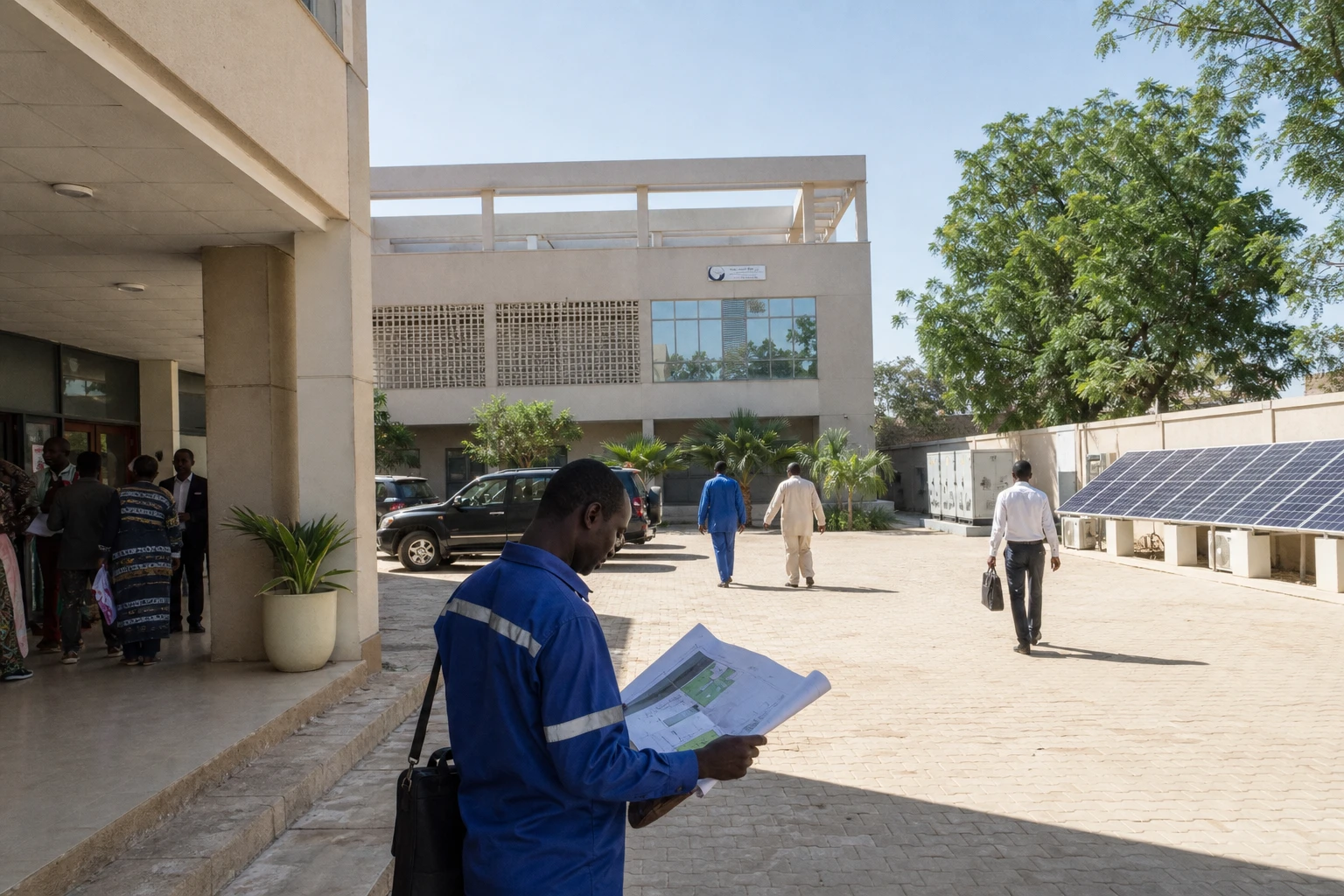
In N’Djamena, economic recovery is not being shaped solely in meeting rooms. It also depends on Chad’s ability to provide reliable electricity, secure contracts and give domestic businesses a role in new projects. After military cooperation with France ended, the two countries are now seeking to redefine their relationship around trade, infrastructure and energy.
A bilateral relationship to rebuild on new foundations
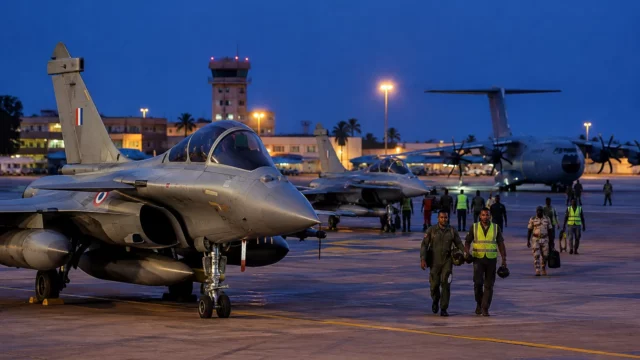
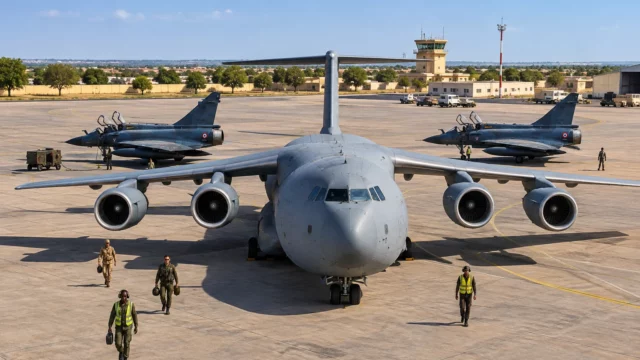
Political tensions escalated towards the end of 2024. Chad ended its defence cooperation agreement with France. The last French forces left the country in January 2025. This development marked the end of a partnership long shaped by security concerns.
Since then, N’Djamena has sought to diversify its alliances. China, the United Arab Emirates, Turkey and several African partners have taken on a growing role in Chad’s strategy. Paris, however, retains economic interests, companies operating locally and longstanding institutional ties.
According to French data available in 2026, around 20 French companies are still operating in Chad, notably in agri-food, construction, logistics, trade and equipment. French investment stock stood at €48 million in 2024, down from €111 million in 2019. French diplomatic service economic data therefore point to a real presence, but one that has declined sharply.
‘Chad Connection 2030’ plan aims to scale up
To attract new capital, the Chadian authorities are highlighting the national development plan ‘Chad Connection 2030’. The programme aims to modernise infrastructure, develop digital services, strengthen local value chains and make the country a regional hub for energy, logistics and digital flows.
The plan’s official document envisages investment of about $30 billion between 2025 and 2030. The private sector is expected to account for nearly 46% of this effort, or about 8,300 billion CFA francs. The authorities also announced investment pledges worth $20.5 billion when the plan was presented in Abu Dhabi in November 2025. The framework report for Chad Connection 2030 nevertheless distinguishes projected investment from funding actually secured.
This distinction matters. An investment pledge does not yet amount to a construction project, a job or tax revenue. The plan’s credibility will depend on contracts being signed, funds disbursed and projects completed within the announced deadlines.
To this end, the Chadian government wants to simplify procedures. The one-stop shop run by the National Agency for Investment and Exports is intended to bring together several formalities required to establish a business. The authorities have also cited the digitisation of public services, targeted tax exemptions and labour law reform.
Electricity remains the clearest test
Administrative reforms will not be enough if businesses continue to face power cuts. In N’Djamena, the reliability of electricity directly affects production costs, the storage of goods, digital services and workshop operations.
The project led by French company Qair illustrates the challenge. Two solar power plants with a combined capacity of 30 megawatts are to be developed in Gassi and Lamadji, in the capital’s districts. The announced financing from Proparco, a subsidiary of the French Development Agency, and the African Development Bank totals nearly €30 million. The facilities are to include batteries to stabilise electricity fed into the grid.
Information published by Proparco confirms the financing structure and the planned connection to N’Djamena’s power grid loop. A document on the national energy pact also refers to two 15-megawatt solar units, in Gassi and Lamadji. The project therefore addresses an immediate need: increasing supply while reducing reliance on costly thermal power.
Its impact will nevertheless remain concentrated in the capital in the short term. Businesses in N’Djamena could benefit from a more stable grid before rural areas, where access to electricity remains far more limited. The energy transition will therefore need to be accompanied by mini-grids, off-grid solutions and investment in electricity transmission.
French companies return to a more open market
French business leaders see opportunities in this new direction in energy, infrastructure, healthcare and services. However, the Chadian market is no longer being approached in the same environment as before 2024. French companies must now contend with more visible competition from Chinese, Turkish, Emirati and African firms.
For N’Djamena, the challenge is not simply to bring French investors back. It is to secure partnerships that create more value in Chad. This means training the local workforce, involving Chadian companies in public contracts and developing subcontracting. Chad’s Ministry of Trade and Industry has recently stressed the importance of participation by domestic businesses and the diaspora. Chad’s Ministry of Economy and Finance presents this requirement as a condition for the next chapter in economic ties with France.
Tax policy will be just as sensitive. Tax exemptions can speed up an investor’s arrival, but they also reduce public revenue if they are too broad or last too long. Chad will therefore have to strike a balance between immediate attractiveness and the sustainable funding of public services.
An issue extending beyond ties with Paris
Chad belongs to the Central African Economic and Monetary Community, or CEMAC, which comprises six countries that share, among other things, the Central African CFA franc and several common economic mechanisms. The success or failure of Chad’s reforms will therefore affect perceptions of the business climate across the sub-region.
The country is also seeking to capitalise on its position between Central Africa, the Sahel, Libya and Sudan. But this ambition depends on the security of transport corridors, stability along the eastern border and the ability of infrastructure to connect production centres with neighbouring markets.
The next stage will be tangible. Observers will need to track the conversion of pledges into contracts, the timetable for the solar plants, the implementation of the new investment framework and the share actually awarded to Chadian companies. For both France and Chad, the relationship can be sustainable only if it delivers visible results beyond diplomatic announcements.