Egypt
 Libya
 Morocco
 Sudan
 Tunisia
 Benin
 Burkina Faso
 Cabo Verde
 Côte d'Ivoire
 Ghana
 Guinea
 Guinea-Bissau
 Liberia
 Mali
 Mauritania
 Niger
 Nigeria
 Senegal
 Sierra Leone
 The Gambia
 Togo
 Cameroon
 Central African Republic
 Chad
 DR Congo
 Equatorial Guinea
 Gabon
 Republic of the Congo
 São Tomé and Príncipe
 Burundi
 Comoros
 Djibouti
 Eritrea
 Ethiopia
 Kenya
 Madagascar
 Malawi
 Mauritius
 Mozambique
 Rwanda
 Seychelles
 Somalia
 South Sudan
 Tanzania
 Uganda
 Angola
 Botswana
 Eswatini
 Lesotho
 Namibia
 South Africa
 Zambia
 Zimbabwe
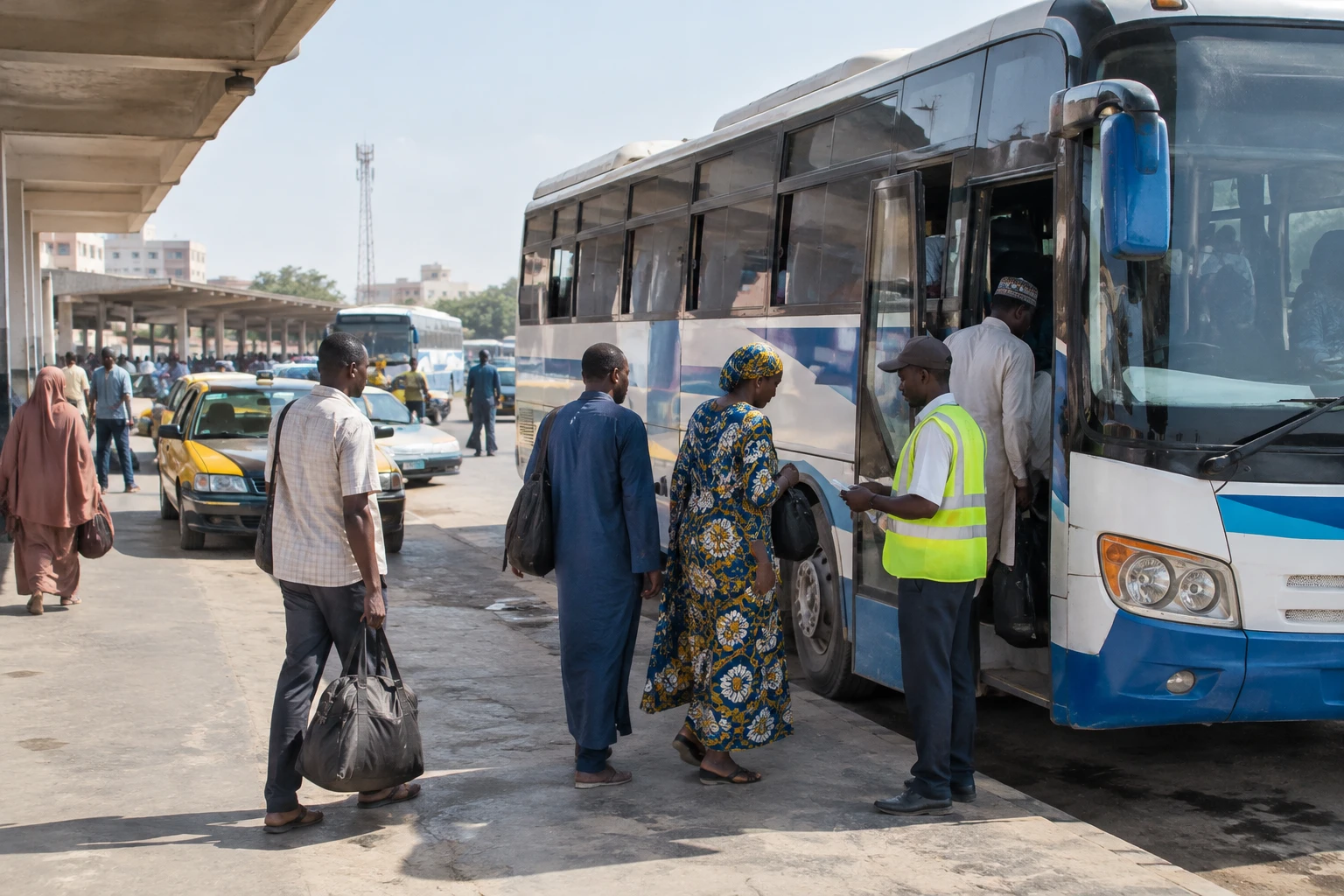
In Chad, cooperation with an external partner is measured less by handshakes than by whether announced projects are delivered. Electricity, gas supplies, transport and security were already on the agenda in talks between N’Djamena and Algiers. Ahmed Attaf’s visit puts a question back at the centre of the debate: how can these commitments be turned into visible results for the people of Chad?
A rapprochement built over time
Chad and Algeria have revived their political dialogue after several years in which their relations were less visible. Chadian President Mahamat Idriss Déby Itno visited Algeria in April 2026. The fourth session of the joint commission, the mechanism that organises their bilateral cooperation, produced several agreements and memorandums.
Published accounts do not give the same total: the African Press Agency lists 27, while an Algerian newspaper refers to 28. The authorities have therefore announced a series of commitments, but the exact figure varies between publications. The sectors mentioned include transport, health, agrifood and energy. The African Press Agency reports on the April agreements; the Algerian press, meanwhile, reports 28 signed texts.
The relationship is developing within a regional landscape whose balances are shifting. Chad belongs to CEMAC, the Economic and Monetary Community of Central Africa, which brings together six countries around a common market and a shared currency. Algeria, north of the Sahara, is not a member. Their cooperation therefore links two regional blocs rather than taking place through a shared institution. CEMAC sets out its six member states and objectives.
A political follow-up mission in N’Djamena
On Tuesday 3 November 2026, Algerian Foreign Minister Ahmed Attaf was received in N’Djamena by President Mahamat Idriss Déby Itno. As a special envoy of President Abdelmadjid Tebboune, he delivered a written message. The contents of the letter were not made public. Attaf also held talks with his Chadian counterpart, Ahmed Kogri.
The two governments discussed the state of their relations, the implementation of commitments made in April and the situation across the Sahelo-Saharan region. The Algerian Press Service reports that Attaf said implementation of the agreements was moving in the right direction. Chadian public broadcaster ONAMA confirms the presidential meeting and discussions on regional issues. The APS reports the Algerian minister’s remarks; ONAMA confirms the meeting in N’Djamena.
No new agreement was announced during the visit. Its purpose is instead to maintain political contact and follow up on texts already signed. The distinction matters: a declaration of cooperation does not, on its own, guarantee funding, a timetable or a project being brought into service.
Energy illustrates the difference between announcements and delivery. The African Press Agency says a 40-megawatt power plant has been built in N’Djamena and refers to an Algerian commitment to supply liquefied petroleum gas. But another Algerian report still describes the power plant’s installation as a project under consideration. In the absence of sufficiently clear independent confirmation of its operational status, it should not be presented as already in service. Follow-up will need to clarify the capacity actually available and the impact on electricity supply.
Regional security and economic interests
Security is also part of the discussions. Chad and Algeria are affected by cross-border movements, armed groups and political tensions across the Sahel and the Sahelo-Saharan region. Both countries have an interest in maintaining direct channels, notably to exchange assessments and coordinate their institutions. Public statements, however, detail neither new measures nor joint operations: it would be premature to infer a specific security agreement.
For Algiers, closer ties with N’Djamena complement dialogue with several Sahelian countries. For Chad, diversifying its partnerships could open up markets, training and investment while preserving its own room for decision-making. The relationship is therefore not simply an Algerian strategy: it also depends on Chad’s priorities and its ability to negotiate projects that serve the country.
The tangible benefits will not be the same for everyone. An air route or new commercial exchanges may make things easier for businesses and government bodies already connected to the capitals. By contrast, households, small informal businesses and remote regions will benefit from an energy or logistics partnership only if services and infrastructure extend beyond urban centres. Information made public so far does not specify how these benefits will be distributed.
The next step: measuring implementation
The rapprochement comes as Chad has moved beyond its transition period following the May 2024 presidential election and the establishment of the Fifth Republic. This trajectory remains an important reference point for understanding N’Djamena’s diplomacy: the government is seeking to strengthen regional relations while pursuing domestic priorities. The African Union had previously stressed the conditions for a return to constitutional order, a reminder of the continent-wide body’s political role in this period. The African Union had clarified its position on Chad’s electoral process.
At the continental level, the relationship between Algeria and Chad shows how states can pursue bilateral agreements when regional mechanisms do not cover all their shared interests. But a growing number of meetings is no substitute for institutions or transparency about projects. The next measure will be progress on the April commitments: which projects are funded, which have begun, and which services are actually reaching the population? For now, Attaf’s visit is keeping dialogue alive; the results remain to be documented.