Algeria
 Egypt
 Libya
 Morocco
 Sudan
 Tunisia
 Benin
 Burkina Faso
 Cabo Verde
 Côte d'Ivoire
 Ghana
 Guinea
 Guinea-Bissau
 Liberia
 Mali
 Mauritania
 Niger
 Nigeria
 Senegal
 Sierra Leone
 The Gambia
 Togo
 Cameroon
 Chad
 DR Congo
 Equatorial Guinea
 Gabon
 Republic of the Congo
 São Tomé and Príncipe
 Burundi
 Comoros
 Djibouti
 Eritrea
 Ethiopia
 Kenya
 Madagascar
 Malawi
 Mauritius
 Mozambique
 Rwanda
 Seychelles
 Somalia
 South Sudan
 Tanzania
 Uganda
 Angola
 Botswana
 Eswatini
 Lesotho
 Namibia
 South Africa
 Zambia
 Zimbabwe
For a small business in the Central African Republic, securing a loan depends on more than the strength of its business plan. It must also be able to prove its income, present clear accounts and provide collateral. Yet many businesses still operate without formal accounting. This gap between entrepreneurs’ realities and banks’ criteria is holding back investment and job creation.
Active businesses that are difficult to assess
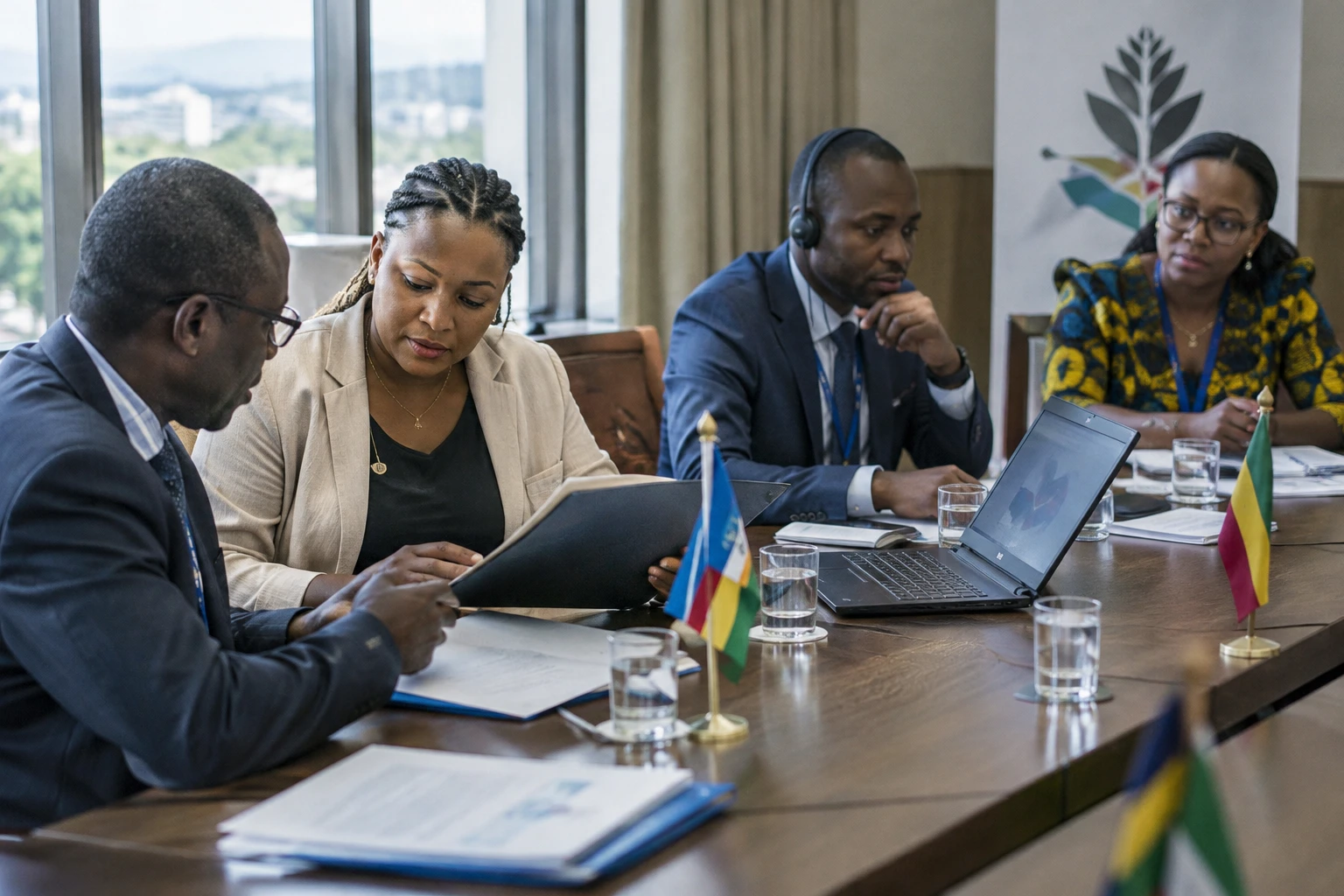
The issue was discussed in Bangui at the Bangui Financial Days, an event devoted to the economic and financial challenges facing the Central African Republic. Aliou Maïga, regional manager at the International Finance Corporation (IFC), the World Bank Group’s branch dedicated to the private sector, highlighted the role of financial statements in assessing a credit application.
Without accounting documents, banks have less information to gauge a company’s income and ability to repay. They therefore often rely on physical collateral, such as land or a building. Entrepreneurs who do not own such assets can be left without access to credit, even when their businesses are operating.
The IFC believes digital tools could complement this assessment. Payment flows and certain trading patterns, for example, can help provide a better picture of a business’s activity. This approach does not, however, replace transparent accounts or risk analysis. It also requires reliable, accessible and protected data.
Benois Mandogo, head of the company OR Rouge, described the obstacles he faced in producing palm oil at Bossongo Café, about 50 kilometres south-west of Bangui. He said he had worked informally for several years, with little infrastructure and manual equipment. Under these conditions, obtaining bank financing was difficult.
After receiving training and professional support, he says he formalised his business, secured a loan and bought production machinery. His experience points to one possible path, but cannot on its own measure the scale of such progress across the country. The challenge is to make this support available to more businesses.
Formalising without excluding small businesses
In the Central African Republic, a large share of economic activity and employment takes place in the informal sector. A report by the United Nations Development Programme estimates that it accounts for 96.7% of employment and 57% of gross domestic product, drawing on earlier data. These figures indicate its significance, but do not necessarily describe the current situation in every sector or region. The UNDP report on the informal economy in the Central African Republic also highlights the link between the weakness of the formal private sector and the scale of informality.
Formalisation can help a business open a business bank account, build a financial track record and access larger markets. But it also brings procedures and costs. If the rules are too onerous or poorly explained, small businesses risk being left out rather than gradually joining the formal economy.
The legal framework is therefore part of the financing equation. In 2025, the government said several reforms were being prepared, including measures concerning the business climate, the commercial code and public-private partnerships. At the time, the draft code was expected to be submitted to the National Assembly in the fourth quarter of that year. The information consulted does not make it possible to confirm the outcome of this deadline. The IMF’s May 2025 report on the Central African Republic also mentions a proposed support project for young entrepreneurs and plans to establish a national guarantee and investment fund for small businesses.
The challenge of jobs and regional development
Improving access to credit is not enough if businesses cannot produce consistently. Electricity, transport, security of supply and access to markets also affect their costs. These constraints do not affect every business in the same way: a company based in Bangui does not necessarily face the same difficulties as a processing unit located far from major routes.
In agribusiness, modern equipment can increase the volumes processed locally and create markets for producers. But such investment must be accompanied by a stable supply, technical skills and creditworthy customers. For banks, shared guarantees and financing mechanisms tailored to small businesses can help reduce risk, provided their rules are clear and their implementation is monitored.
Youth employment is another central issue. The article on which this material is based states that more than 60% of young people are unemployed or underemployed, without specifying the indicator or reference period. In the absence of an identified independent source confirming this specific figure, it should be treated with caution. At regional level, the IMF nevertheless notes that informality, low productivity and a lack of formal jobs remain persistent challenges in CEMAC countries, the Economic and Monetary Community of Central Africa. The IMF’s analysis of inclusive growth in CEMAC highlights, in particular, the mismatch between available skills and businesses’ needs.
An issue extending beyond Bangui
For the Central African Republic, better business financing also means strengthening trade within CEMAC and preparing local companies to access wider markets. The bloc brings together six countries under common economic and monetary institutions, including the Bank of Central African States. Regional rules, infrastructure and financial services therefore shape some of the opportunities available to Central African businesses.
In May 2026, the United Nations Economic Commission for Africa also held a workshop in Bangui on the financing difficulties faced by SMEs and the opportunities offered by regional value chains and the African Continental Free Trade Area. The initiative focuses on bringing businesses’ needs closer to the criteria applied by financial institutions. The Economic Commission for Africa outlines the workshop on financing Central African SMEs.
What happens next will depend less on announcements than on practical mechanisms: guarantees that can actually be used, accounting support, simplified procedures and access to finance beyond the capital. Entrepreneurs need to be able to invest without being denied credit from the outset because they lack documents or property assets. Financial institutions need to assess risk using tools that take local realities into account, while protecting savings and the stability of the system.