Algeria
 Egypt
 Libya
 Morocco
 Sudan
 Tunisia
 Benin
 Burkina Faso
 Cabo Verde
 Côte d'Ivoire
 Ghana
 Guinea
 Guinea-Bissau
 Liberia
 Mali
 Mauritania
 Niger
 Nigeria
 Senegal
 Sierra Leone
 The Gambia
 Togo
 Cameroon
 Chad
 DR Congo
 Equatorial Guinea
 Gabon
 Republic of the Congo
 São Tomé and Príncipe
 Burundi
 Comoros
 Djibouti
 Eritrea
 Ethiopia
 Kenya
 Madagascar
 Malawi
 Mauritius
 Mozambique
 Rwanda
 Seychelles
 Somalia
 South Sudan
 Tanzania
 Uganda
 Angola
 Botswana
 Eswatini
 Lesotho
 Namibia
 South Africa
 Zambia
 Zimbabwe
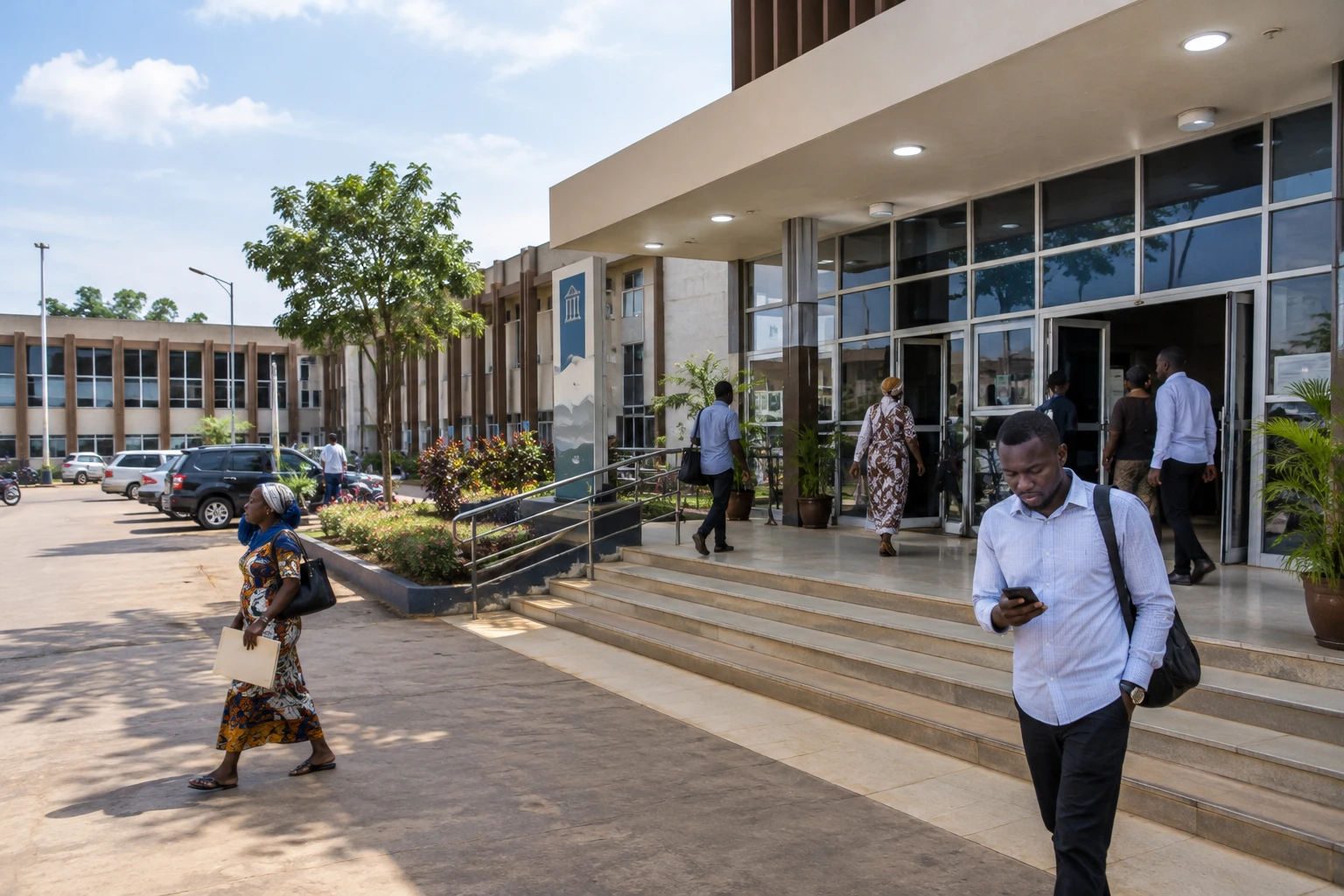
An online administrative procedure brings the state closer to citizens only if they can connect, understand the service and use it to completion. In the Central African Republic, a new public portal promises to simplify several formalities. But internet access remains limited enough that the promise does not yet benefit the entire population.
A digital service hub for multiple procedures
The portal brings together information and services related to various aspects of everyday life. It lists procedures concerning transport, justice, education and health, as well as services for businesses, NGOs and financial sector stakeholders. The platform includes, among other things, applications for driving licences, criminal record certificates, certificates of nationality and baccalaureate certificates.
This one-stop portal serves a practical purpose: sparing users the need to search separately for contact details and procedures for each government department. Some procedures can be prepared or requested online. This can reduce travel and waiting times, especially when the relevant services are far from home.
However, the directory of services should be distinguished from their full online processing. The available information does not establish that every procedure can be completed online, without paper documents or a visit in person. The portal’s actual reach will therefore also depend on whether its content is kept up to date, how well government departments function and how quickly they respond.
Internet access is far from guaranteed
The main challenge is network access. According to DataReportal’s Digital 2026 report on the Central African Republic, about 670,000 people used the internet in October 2025. That represented 12% of the population. An estimated 4.89 million people therefore remained offline at the end of the year.
The report also counts 2.49 million active mobile connections at the end of 2025. This figure does not correspond to the number of people connected: one person may own several SIM cards, and some connections are used only for calls or text messages. These indicators describe a situation measured in 2025, not an exact count of current users.
Network coverage is another obstacle, particularly outside the main urban centres. Data from the GSMA’s Mobile Connectivity Index for 2024, cited by operator Telecel when it announced its 4G rollout, indicated 2G and 3G coverage for about 60% of the population. This figure measures the population living in a covered area, not those who have regular or affordable access.
4G, which generally allows faster data transfers, began its commercial rollout in 2025. But expanding it will not by itself remove the obstacles: people need a compatible phone, a network available where they live and a plan they can afford. Electricity, signal quality and digital literacy also matter.
Digitalisation must retain a human point of access
For residents of Bangui, a digital service can save some trips to government offices. But the benefits vary by neighbourhood and income. In smaller towns and rural areas, distances, uneven coverage and the cost of data can make access more difficult. People without a smartphone of their own may depend on a relative, a shared phone or an intermediary.
Sharing a device can make it easier to complete a procedure, but it is no substitute for safe, independent access. It also raises questions about privacy when documents relate to identity, health or legal status. To be accessible, a digital public service must therefore protect data, explain each step clearly and offer assistance to users who need it.
The portal of the Central African Ministry of Digital Economy, Posts and Telecommunications presents improved connectivity and equitable access to digital services as public objectives. Achieving this ambition means maintaining alternatives: physical service counters, in-person assistance and supported access points. Digital services can simplify public administration, but they must not become an additional condition for obtaining a document or appointment.
A national and regional challenge
The issue is part of the country’s development strategy. The National Development Plan of the Central African Republic lists access to quality digital services across the country among its objectives. Setting up a portal is a visible step; its usefulness will also be measured by network availability, the capacity of government departments to process requests and citizens’ ability to track their cases.
At regional level, the Central African Republic belongs to the Economic and Monetary Community of Central Africa (CEMAC), which brings six countries together for economic and monetary co-operation. Administrative services remain primarily a national responsibility, but digital exchanges, infrastructure and the movement of skills cross borders. CEMAC and continental institutions can help align standards and networks, without replacing the investment needed in each country.
The next indicator to watch will therefore not simply be the number of procedures listed online. It will be necessary to know how many can actually be completed remotely, how many are successful and whether access is improving beyond Bangui. As long as a large majority of the population remains without internet access, according to data available for 2025, the portal’s success will depend as much on digital inclusion as on administrative modernisation.