Algeria
 Egypt
 Libya
 Morocco
 Sudan
 Tunisia
 Benin
 Burkina Faso
 Cabo Verde
 Côte d'Ivoire
 Ghana
 Guinea
 Guinea-Bissau
 Liberia
 Mali
 Mauritania
 Niger
 Nigeria
 Senegal
 Sierra Leone
 The Gambia
 Togo
 Cameroon
 Central African Republic
 Chad
 DR Congo
 Equatorial Guinea
 Gabon
 Republic of the Congo
 São Tomé and Príncipe
 Burundi
 Comoros
 Djibouti
 Eritrea
 Ethiopia
 Kenya
 Madagascar
 Malawi
 Mauritius
 Rwanda
 Seychelles
 Somalia
 South Sudan
 Tanzania
 Uganda
 Angola
 Botswana
 Eswatini
 Lesotho
 Namibia
 South Africa
 Zambia
 Zimbabwe
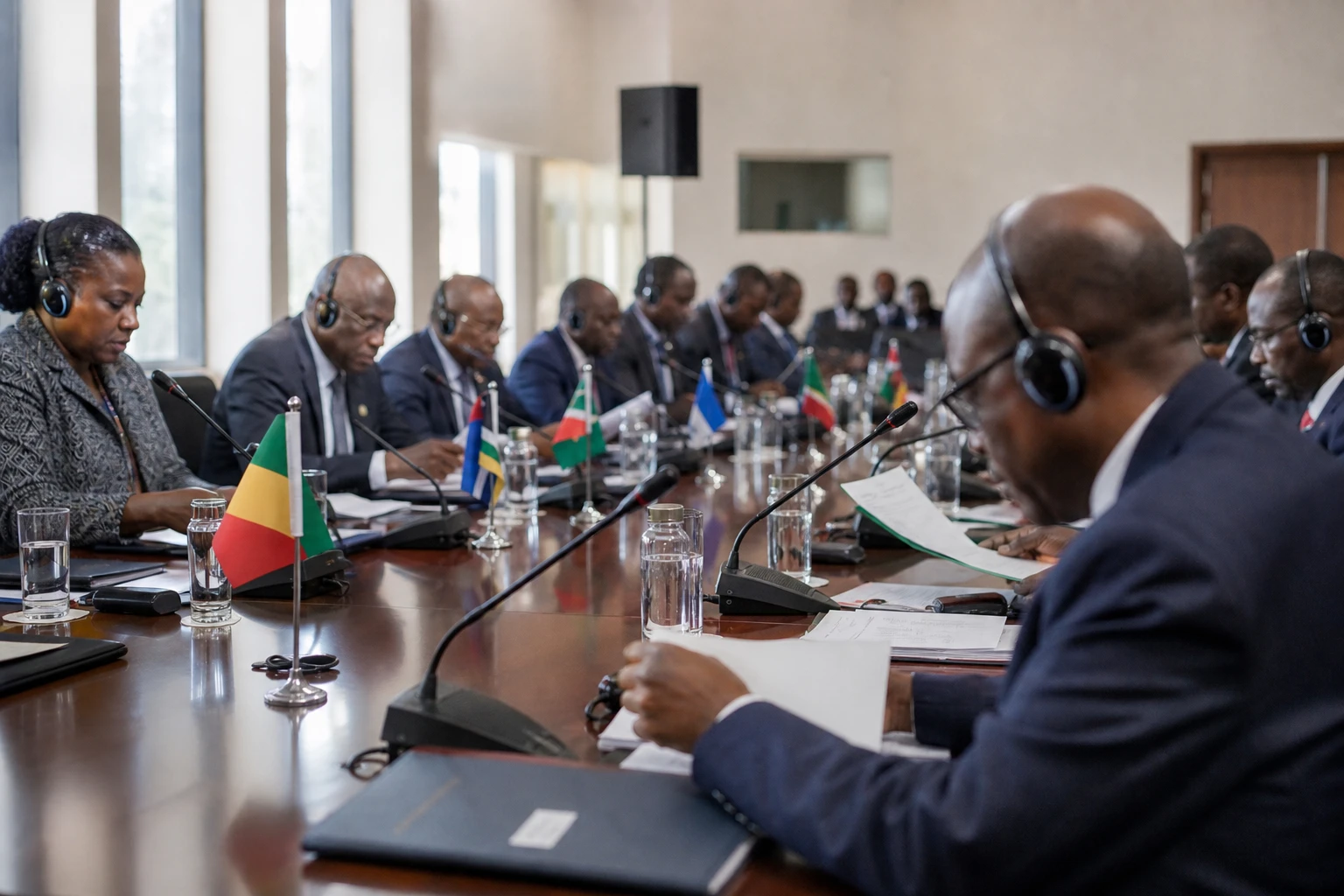
A Zambezi giant at the heart of a Mozambican balancing act
At Cahora Bassa, the question is not just how to generate electricity. It is also how to make the same infrastructure an industrial engine, a source of public revenue and an asset for territorial development in Mozambique. In Tete province, the Zambezi reservoir creates a spectacular landscape. Above all, however, it is home to infrastructure that is vital to Maputo, businesses and southern Africa’s electricity networks.
The dam forms part of a wider complex, the Cahora Bassa hydroelectric complex, operated by HCB, which is based in Songo, in Cahora Bassa district, Tete province. The facility has been operating since 1975 and has an installed capacity of 2,075 MW. The company describes it as one of the main power generation, transmission and marketing complexes in the southern African region.
From dam to regional grid
Cahora Bassa’s value extends far beyond the site itself. Its electricity supplies the Mozambican market and feeds into the Southern African Power Pool, the SADC electricity pool, established in 1995 to organise regional interconnections. HVDC lines link Songo to Apollo in South Africa, while other infrastructure serves central and northern Mozambique via Matambo.
This regional role has a long history. Cahora Bassa’s hydropower was initially conceived for uses extending beyond Mozambique’s borders. Today, HCB says it still supplies electricity to customers such as EDM, Eskom and ZESA, the operators in Mozambique, South Africa and Zimbabwe. The facility’s role in regional energy security therefore remains tangible, even as hydrological conditions become more unstable.
Recent figures also illustrate the dam’s financial importance. In 2024, HCB reported production of 15,753.52 GWh and net profit of 14.1 billion meticais, the highest in its history, according to the company. For 2025, it subsequently reported production of 10,921 GWh amid a hydrological crisis. These figures reflect a simple reality: Cahora Bassa remains a strategic asset, but its performance depends directly on rainfall, upstream reservoirs and the careful management of the Zambezi.
What Cahora Bassa brings to Mozambique
For the Mozambican state, the site has a dual value. First, there is energy production. Second, there is public revenue from operating a major asset. HCB says it paid more than 23.172 billion meticais into the state budget over the past three years in various taxes, as well as more than 9.696 billion meticais in concession fees. In 2024, the company was also described by the Mozambican authorities, in its own communications, as the leading contributor in two tax categories.
This fiscal weight is particularly significant in a country where investment in energy remains a lever of economic sovereignty. Cahora Bassa supplies households and services, as well as some extractive and industrial activities. It also bolsters Mozambique’s standing as a regional supplier, as electricity demand continues to grow across southern Africa. The dam does not solve every problem, but it secures a crucial share of the national energy mix.
For communities along the reservoir, the impact is more mixed. The reservoir has boosted fishing, local transport, some agricultural activities and the development of services around Songo and the Zambezi valley. But water governance remains a sensitive issue. A large reservoir alters the river’s rhythms, people’s mobility, riverside activities and the ecological balance. The area therefore depends on management that balances power generation, water safety and ecosystem protection.
Tourism: real potential, but still scattered
Lake Cahora Bassa is also one of Tete’s major tourist attractions. The official Visit Mozambique portal describes the reservoir as part of a landscape of hills, islands and biodiversity, offering opportunities for river cruises, ecotourism and water sports. The national airline adds that tourism is already developing there and can draw on other nearby sites, including the thermal waters of Boroma, Tete’s fortresses and the landscapes of the Zambezi.
Tete province has a rare advantage. It brings together historical heritage, economic corridors, riverside wildlife and major energy infrastructure. Mágoè National Park, on the banks of the Zambezi and the reservoir, reinforces this territorial appeal. In other words, Cahora Bassa is more than an engineering curiosity. It is a gateway to a broader offering that can combine nature, local history and the service economy.
But this potential remains partly untapped. Institutional sources point to assets, not yet a mature market. The challenge lies less in the beauty of the site than in organising access, accommodation, signage, water-based services and environmental protection. In a province known both for its mineral resources and its links with the SADC, tourism could provide useful diversification, provided it does not conflict with the dam’s energy and water uses.
What Cahora Bassa says about Mozambique and southern Africa
Cahora Bassa encapsulates a development choice that is distinctly African in both its tensions and its promise: making energy sovereignty, regional integration, public revenue and the development of local areas work side by side. In a country often viewed from abroad through the lens of its vulnerabilities, the facility is instead a reminder of its capacity to project influence. It shows a Mozambique that exports electricity, shapes networks and possesses a leading industrial asset in the southern African region.
This position is strategic for the SADC, where electricity interconnections remain central to economic stability. It also matters to the African Union, which promotes integration through infrastructure and continental markets. Cahora Bassa is therefore more than a Mozambican dam. It is a regional hub. Its future will depend on three factors to watch: water availability, the modernisation of the facilities and the ability to turn an industrial site into a space for balanced territorial development.