
 Algeria
 Egypt
 Libya
 Morocco
 Sudan
 Tunisia
 Benin
 Burkina Faso
 Cabo Verde
 Côte d'Ivoire
 Ghana
 Guinea
 Guinea-Bissau
 Liberia
 Mali
 Mauritania
 Niger
 Nigeria
 Senegal
 Sierra Leone
 The Gambia
 Togo
 Cameroon
 Central African Republic
 Chad
 Equatorial Guinea
 Gabon
 Republic of the Congo
 São Tomé and Príncipe
 Burundi
 Comoros
 Djibouti
 Eritrea
 Ethiopia
 Kenya
 Madagascar
 Malawi
 Mauritius
 Mozambique
 Rwanda
 Seychelles
 Somalia
 South Sudan
 Tanzania
 Uganda
 Angola
 Botswana
 Eswatini
 Lesotho
 Namibia
 South Africa
 Zambia
 Zimbabwe
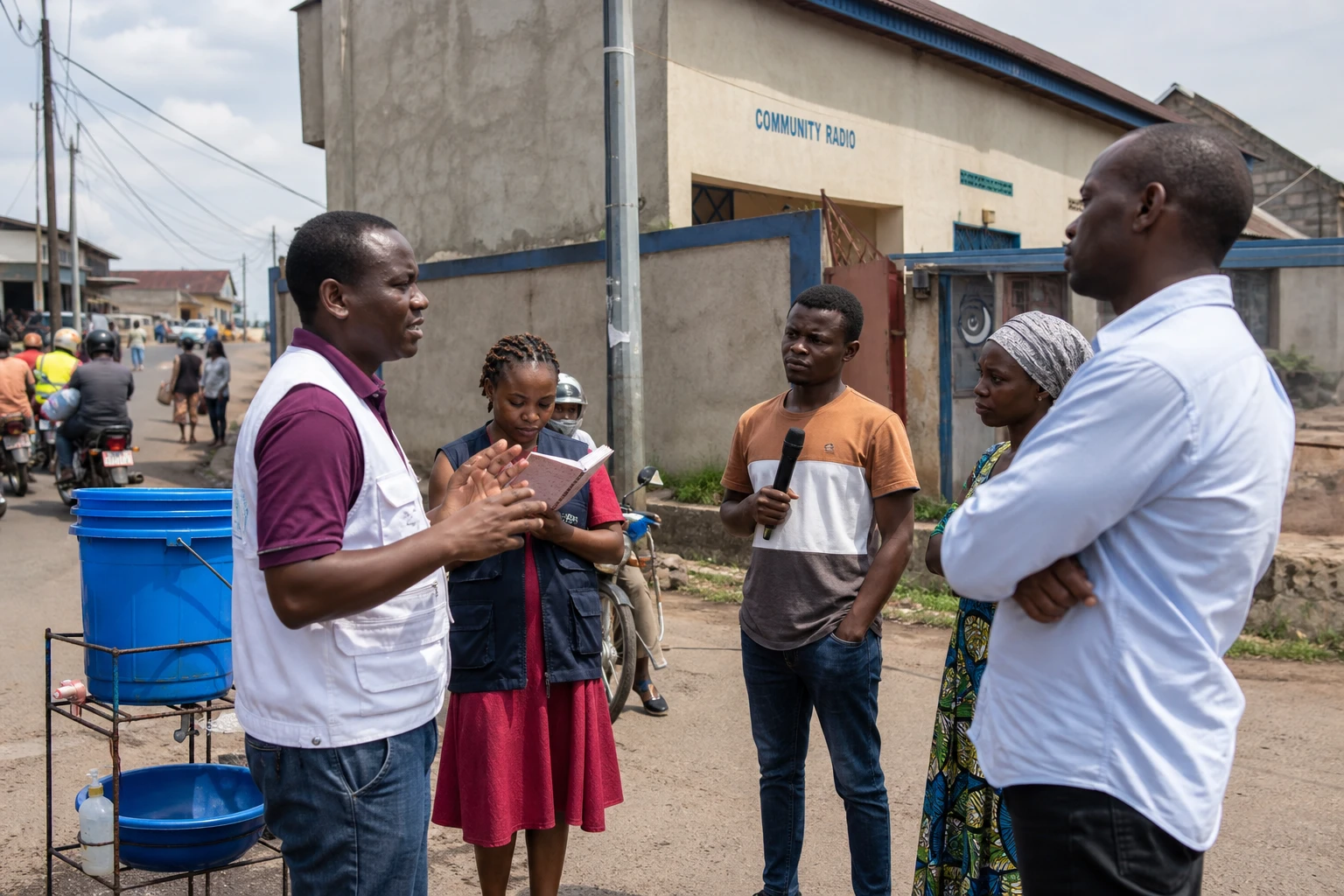
In Butembo, the fight against Ebola has become the centre of a political and public health tragedy. Marie-Célestin Karondwa Mwanaweka Bytaty, an official with the UDPS/Tshisekedi, died after being violently assaulted on his way home from a programme devoted to disease prevention. His death comes as North Kivu remains one of the main fronts in the Democratic Republic of the Congo’s seventeenth Ebola outbreak.
Assault after an awareness-raising programme
The incident took place on Sunday 27 September 2026, in the Vulindi neighbourhood, north of Butembo. According to the local UDPS/Tshisekedi federation, Marie-Célestin Karondwa had just taken part in a programme on Radio Mwangaza. He had defended prevention measures and stressed that Ebola virus disease posed a real threat to the population.
The political official was acting president of the UDPS’s Federal Permanent Electoral Commission in Butembo. He was also described as a communications officer and spokesperson for the presidential party in the city.
In a statement, the local federation said that people from his neighbourhood assaulted him, before looting some property and setting fire to his home. He later died of his injuries, according to several Congolese media outlets that reported the party’s announcement.
These details must, however, be distinguished from the facts already established. The identity of the attackers, their exact number and their motive remain unknown. The UDPS federation links the attack to its official’s remarks about Ebola. This interpretation must be confirmed by an independent investigation.
The call for an investigation is particularly significant in a city where public health, security and political tensions overlap. A credible inquiry will need to establish exactly how the assault unfolded, identify the alleged perpetrators and determine whether the remarks made on the radio were indeed the motive for the attack.
North Kivu faces a new outbreak
The Democratic Republic of the Congo is currently facing an outbreak caused by the Bundibugyo Ebola virus. This strain differs from the Zaire virus associated with previous outbreaks in the country. Prevention tools and treatments available therefore cannot automatically be transferred from one outbreak to another.
The Congolese health ministry has launched a revised 180-day plan with support from the World Health Organization, Africa CDC and other partners. The aim is to strengthen surveillance, patient care, contact tracing and dialogue with communities.
According to the WHO’s figures as of 7 September 2026, the DRC had 6,757 confirmed cases and 3,267 deaths linked to the outbreak. Cases had been recorded in 61 health zones across six provinces. North Kivu then had 16 affected health zones, behind Ituri, the main focus of transmission.
These figures remain subject to change. They may rise as testing expands, active case-finding continues and provincial data are consolidated. They nevertheless show the scale of the health crisis and the difficulty of stopping transmission in areas marked by population displacement, insecurity and dense commercial activity.
The situation in Butembo is especially sensitive because the city was heavily involved in previous Ebola responses. Between 2018 and 2020, treatment centres and health teams there were attacked. The violence disrupted patient care and undermined trust in response workers.
Trust, a decisive public health issue
An epidemic is fought not only in laboratories and treatment centres. It also plays out in neighbourhoods, markets, families and at handwashing stations. When people doubt that the disease exists or fear medical facilities, patients may delay seeking care. This delay increases the risk of transmission.
Distrust cannot, however, be reduced to simple opposition to public health messages. It is rooted in several local experiences: interventions perceived as imposed, rumours about safe burials, unequal access to care, fatigue after years of crises and distrust of the authorities.
In this context, community radio stations play a major role. They allow information to be shared quickly in languages understood by local people. They also give a voice to local leaders, health professionals, religious leaders and neighbourhood associations.
Marie-Célestin Karondwa’s death nevertheless highlights the risks faced by people delivering public health messages in tense areas. The Congolese authorities will need to protect medical teams, community health workers and journalists, without turning awareness-raising into an operation of coercion.
The public health response must also remain attentive to the outbreak’s everyday consequences. Control measures can disrupt travel, trade, schooling and access to routine healthcare. People in Butembo and neighbouring areas need reliable information, but also accessible services and respectful treatment.
A case that extends beyond the DRC’s borders
The crisis directly concerns Central Africa and the Great Lakes region. North Kivu shares trade routes and population movements with Uganda, Rwanda and Tanzania. The WHO says informal border crossings complicate surveillance and may facilitate the export or import of the virus.
Regional coordination is therefore essential. It must involve the DRC, Uganda and other neighbouring countries, as well as border communities. Health checks cannot be effective without cooperation with transport operators, traders, local leaders and healthcare facilities.
The follow-up to this case will hinge on two developments. The first is the investigation into the assault on Marie-Célestin Karondwa and any prosecutions of those responsible. The second is whether the response can sustain dialogue in the areas of Butembo, Katwa, Musienene and Kayna.
For the DRC, the stakes go beyond the epidemiological toll. The challenge is to protect communities, restore trust and show that a public health response can be carried out with people rather than against them.



