Algeria
 Egypt
 Libya
 Morocco
 Sudan
 Tunisia
 Benin
 Cabo Verde
 Côte d'Ivoire
 Ghana
 Guinea
 Guinea-Bissau
 Liberia
 Mali
 Mauritania
 Niger
 Nigeria
 Senegal
 Sierra Leone
 The Gambia
 Togo
 Cameroon
 Central African Republic
 Chad
 DR Congo
 Equatorial Guinea
 Gabon
 Republic of the Congo
 São Tomé and Príncipe
 Burundi
 Comoros
 Djibouti
 Eritrea
 Ethiopia
 Kenya
 Madagascar
 Malawi
 Mauritius
 Mozambique
 Rwanda
 Seychelles
 Somalia
 South Sudan
 Tanzania
 Uganda
 Angola
 Botswana
 Eswatini
 Lesotho
 Namibia
 South Africa
 Zambia
 Zimbabwe
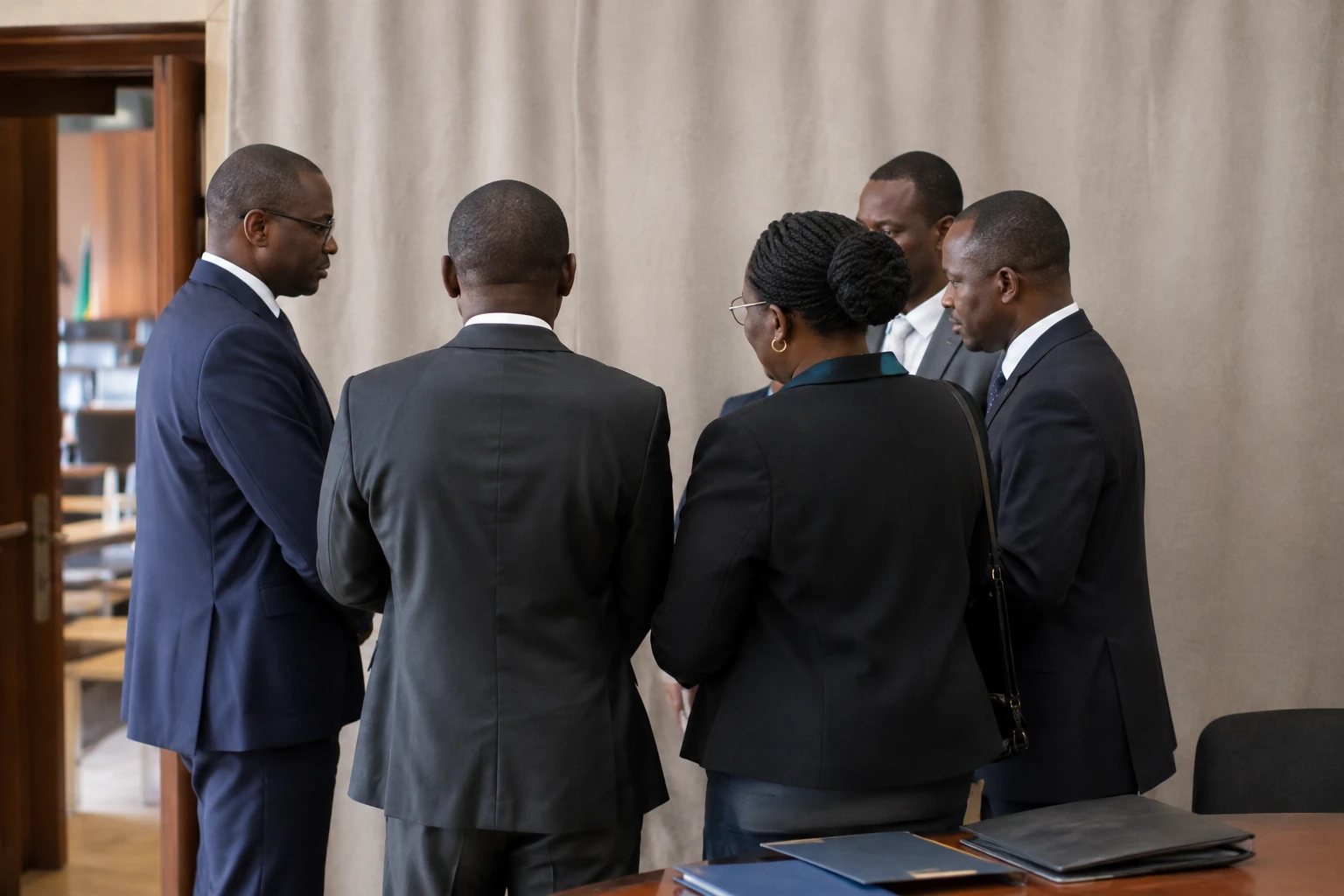
In Ouagadougou, the criminal justice response to the security crisis is changing course. Burkina Faso is reintroducing capital punishment for several offences, a decision that revives a central question: how far can justice toughen penalties without undermining judicial safeguards?
A break with the course of judicial reform
On Tuesday 20 October 2026, all 71 members of the Legislative Assembly of the People (ALP) adopted the new Penal Code, according to the Burkinabè authorities. The text reinstates the death penalty for certain acts linked to terrorism, as well as for espionage, treason and parricide. It also provides for the sanction in cases involving the import of expired or banned products that have caused deaths. The account of the vote and the offences included was corroborated by Burkinabè outlet Espoir Info.
Justice Minister Edasso Rodrigue Bayala defended the reform as a way to strengthen the fight against armed groups. He said perpetrators and accomplices in terrorist acts would be covered. The draft was approved by the Council of Ministers on 4 December 2025, before parliamentary consideration. The government plans to publicise the new text, including through translations into national languages.
The change breaks with the Penal Code adopted in 2018, which abolished the death penalty for ordinary crimes. The last recorded execution in the country took place in 1988. Capital punishment had therefore not been carried out for decades, even before its legal abolition. Amnesty International recalls the 2018 milestone and the last known execution.
Security, justice and the regional context
The reform comes as the authorities seek to regain control of territories affected by violence. But Burkina Faso’s ranking in international indices must be dated precisely: the Global Terrorism Index 2025 placed the country first for the previous year, while its 2026 edition ranks it second for 2025. This fall in the rankings does not mean the crisis has been resolved. The 2025 edition of the report and its 2026 edition give these two reference years.
The regional framework has also changed. Burkina Faso, Mali and Niger have left the Economic Community of West African States (ECOWAS), with their withdrawal taking effect on 29 January 2025. They have formed the Alliance of Sahel States (AES), a partnership between the three countries. This new structure has implications for regional security and justice coordination. ECOWAS confirmed the effective date of the withdrawal.
The security priority is also reflected in public finances. Burkina Faso’s 2026 budget allocates CFA francs 707.89 billion to the “Defence and Security” sector, or 24.87% of the state’s own-source revenue, according to the finance ministry. This allocation indicates the importance attached to security efforts; on its own, it cannot determine their effectiveness or their impact on public services. The finance ministry details the approved appropriations.
A severe penalty, questions over safeguards
For the authorities, capital punishment should increase the criminal cost of terrorist acts. The minister has also argued that armed groups use the prospect of life imprisonment to recruit. This is the government’s explanation. The evidence consulted does not establish that reinstating the death penalty will reduce recruitment or attacks.
The text’s practical impact will depend on its implementation: how offences are defined, the quality of investigations, access to a defence, the independence of courts and appeal procedures. These safeguards are particularly important when the penalty is irreversible. Residents of areas affected by violence, people suspected of complicity and their families could be directly affected by how the authorities apply the law.
The government intends to distribute the Code in national languages. This could help citizens understand the rules, provided the translations are accessible and faithful to the legal text. It does not, however, replace information about the right to a defence or the possibility of challenging an accusation in court.
A signal watched in the Sahel and across the continent
Burkina Faso’s decision will be watched in a Sahel where states facing armed groups are reorganising their security policies and alliances. It also comes amid wider debates about the place of capital punishment in African judicial systems. Burkina Faso followed a legal abolitionist course in 2018; the new Code reverses that choice for specific categories of offence.
The next step will be implementation of the text and publication of its full provisions. In particular, it will be necessary to examine how judges interpret the offences covered and what procedural safeguards accompany prosecutions. At regional level, the withdrawal from ECOWAS and closer ties within the AES will also continue to shape institutional exchanges between Ouagadougou, Bamako and Niamey.