Algeria
 Egypt
 Libya
 Morocco
 Sudan
 Tunisia
 Benin
 Cabo Verde
 Côte d'Ivoire
 Ghana
 Guinea
 Guinea-Bissau
 Liberia
 Mali
 Mauritania
 Niger
 Nigeria
 Senegal
 Sierra Leone
 The Gambia
 Togo
 Cameroon
 Central African Republic
 Chad
 DR Congo
 Equatorial Guinea
 Gabon
 Republic of the Congo
 São Tomé and Príncipe
 Burundi
 Comoros
 Djibouti
 Eritrea
 Ethiopia
 Kenya
 Madagascar
 Malawi
 Mauritius
 Mozambique
 Rwanda
 Seychelles
 Somalia
 South Sudan
 Tanzania
 Uganda
 Angola
 Botswana
 Eswatini
 Lesotho
 Namibia
 South Africa
 Zambia
 Zimbabwe
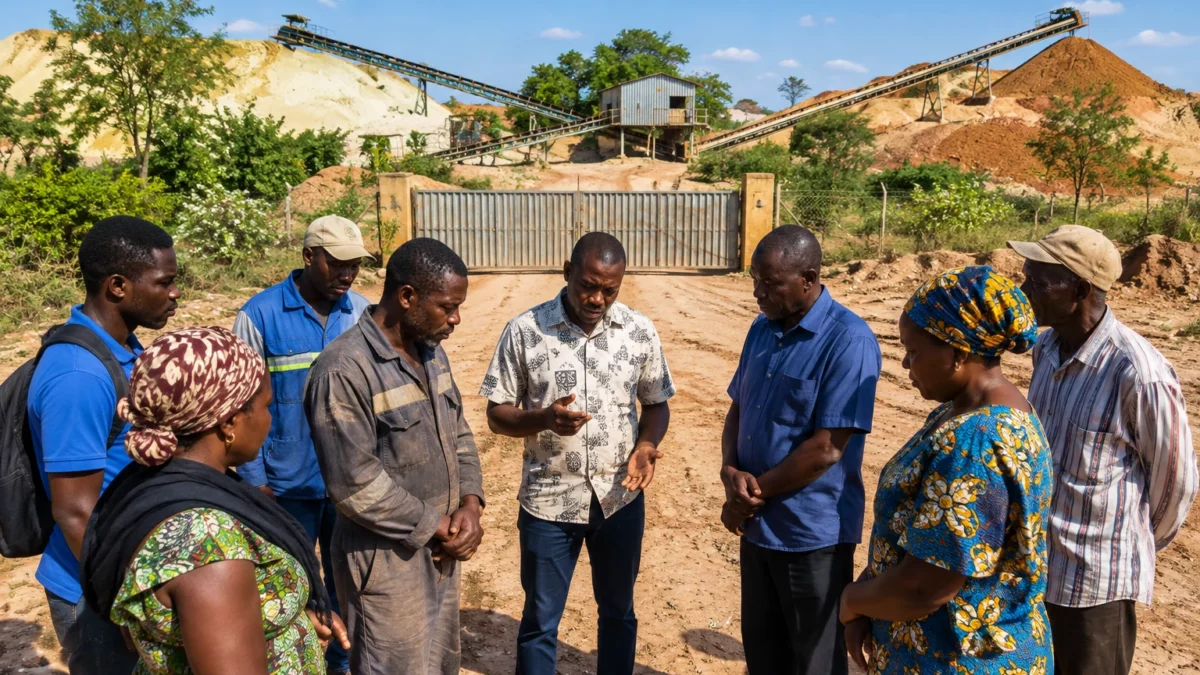
At Perkoa, restarting a mine is not measured solely in tonnes of zinc. It also involves worker safety, the economic future of neighbouring communities and the Burkinabe state’s ability to manage a site marked by disaster.
The deposit, near Réo in Sanguié province, was the only operating zinc mine in Burkina Faso. Its closure in 2022 halted production. The country is now seeking to take back control of a strategic asset in a mining sector largely built around gold.
A site taken over after a disaster and liquidation
On 16 April 2022, flooding inundated the underground galleries at Perkoa. Eight workers lost their lives. The death toll was confirmed after search operations, while initial reports said eight people were trapped underground. The mine was then operated by Nantou Mining, 90% owned by Canadian company Trevali.
The disaster halted operations. Nantou’s financial difficulties then complicated any restart. The company applied for judicial liquidation in October 2022. In November 2023, the Burkinabe state revoked its operating permit. The site thus passed into public ownership ahead of the restart plan. Reports published during the rescue operation at Perkoa and company documents confirm the accident and the mine’s closure.
At its meeting on 19 November 2026, the Council of Ministers granted an industrial mining permit to SOPAMIB Perkoa SA, a subsidiary of the state-owned Société de participation minière du Burkina Faso (SOPAMIB). The permit is for four years. It authorises the project to resume; it is not proof that production has already restarted. The official Council of Ministers’ communiqué places the site in the commune of Réo, in the Nando region.
Major forecasts should not be confused with results
The programme presented by the authorities provides for 37 billion CFA francs in investment and cumulative production of 576,000 tonnes of polymetallic concentrate over four years. This concentrate combines several metals extracted from the ore. Forecast turnover is put at 270 billion CFA francs.
The government estimates that direct and indirect revenues for the state budget will exceed 96 billion CFA francs, according to the official communiqué. This figure differs from the 84.83 billion cited in earlier reports on the project. The two figures should therefore not be confused: the official figure released on 19 November is more than 96 billion, but the published summary does not set out the detailed calculation method.
The project also envisages creating or consolidating 400 direct jobs and about 850 indirect jobs. These positions could benefit Sanguié residents and local businesses, particularly in services, transport and subcontracting. Their delivery will, however, depend on the actual timetable for the work and operations. A jobs estimate is not yet a record of hires.
In July 2026, a CFA franc 20 billion financing agreement for Perkoa was announced under the “Diaspora Bonds” bond issue. This type of borrowing enables the state to raise capital from investors, including members of the diaspora. It represents part of the announced financing, but the public information reviewed does not explain how this sum fits within the total CFA franc 37 billion package.
Geological potential does not replace verification
Before the flooding, Trevali estimated proven and probable ore reserves at 960,000 tonnes as of 31 December 2021, with an average zinc grade of 10.86%. This is a dated estimate, made before the disaster. It is not enough to establish the volume that can be economically mined today, after several years of inactivity and the work required to secure the site.
The production forecasts therefore raise practical questions: what is the current condition of the galleries and equipment? What measures will protect workers from another flooding incident? What updated reserves underpin the mining plan? The authorities have not yet published a detailed restart timetable or this technical data in their summary.
For the victims’ families, the restart cannot erase the tragedy. For future workers, underground safety must be a central condition of operations. For local businesses, the question is whether the promised benefits will translate into contracts, income and lasting jobs, rather than just national projections.
A mining issue in a region undergoing change
The restart is part of a broader shift in Burkina Faso’s mining policy: the state intends to play a greater role in owning and operating assets. The public takeover of Perkoa puts this approach to the test at a site where operational risks and investment needs remain decisive. It does not, by itself, guarantee profitable operations.
The regional context has also changed. Since 29 January 2025, Burkina Faso, Mali and Niger have no longer been members of ECOWAS, the West African regional economic community. The three countries have formed the Alliance of Sahel States. This realignment does not directly determine the Perkoa permit, but it forms part of a regional debate about economic sovereignty, trade and resource management. ECOWAS confirmed the date on which the three countries’ withdrawal took effect.
The next step will be less political than practical: publish a credible timetable, update the deposit data and specify the safety and financing arrangements. These are the measures by which the difference between the granting of a permit and Perkoa’s lasting return to production will be judged.