Algeria
 Egypt
 Libya
 Morocco
 Sudan
 Tunisia
 Benin
 Cabo Verde
 Côte d'Ivoire
 Ghana
 Guinea
 Guinea-Bissau
 Liberia
 Mali
 Mauritania
 Niger
 Nigeria
 Senegal
 Sierra Leone
 The Gambia
 Togo
 Cameroon
 Central African Republic
 Chad
 DR Congo
 Equatorial Guinea
 Gabon
 Republic of the Congo
 São Tomé and Príncipe
 Burundi
 Comoros
 Djibouti
 Eritrea
 Ethiopia
 Kenya
 Madagascar
 Malawi
 Mauritius
 Mozambique
 Rwanda
 Seychelles
 Somalia
 South Sudan
 Tanzania
 Uganda
 Angola
 Botswana
 Eswatini
 Lesotho
 Namibia
 South Africa
 Zambia
 Zimbabwe
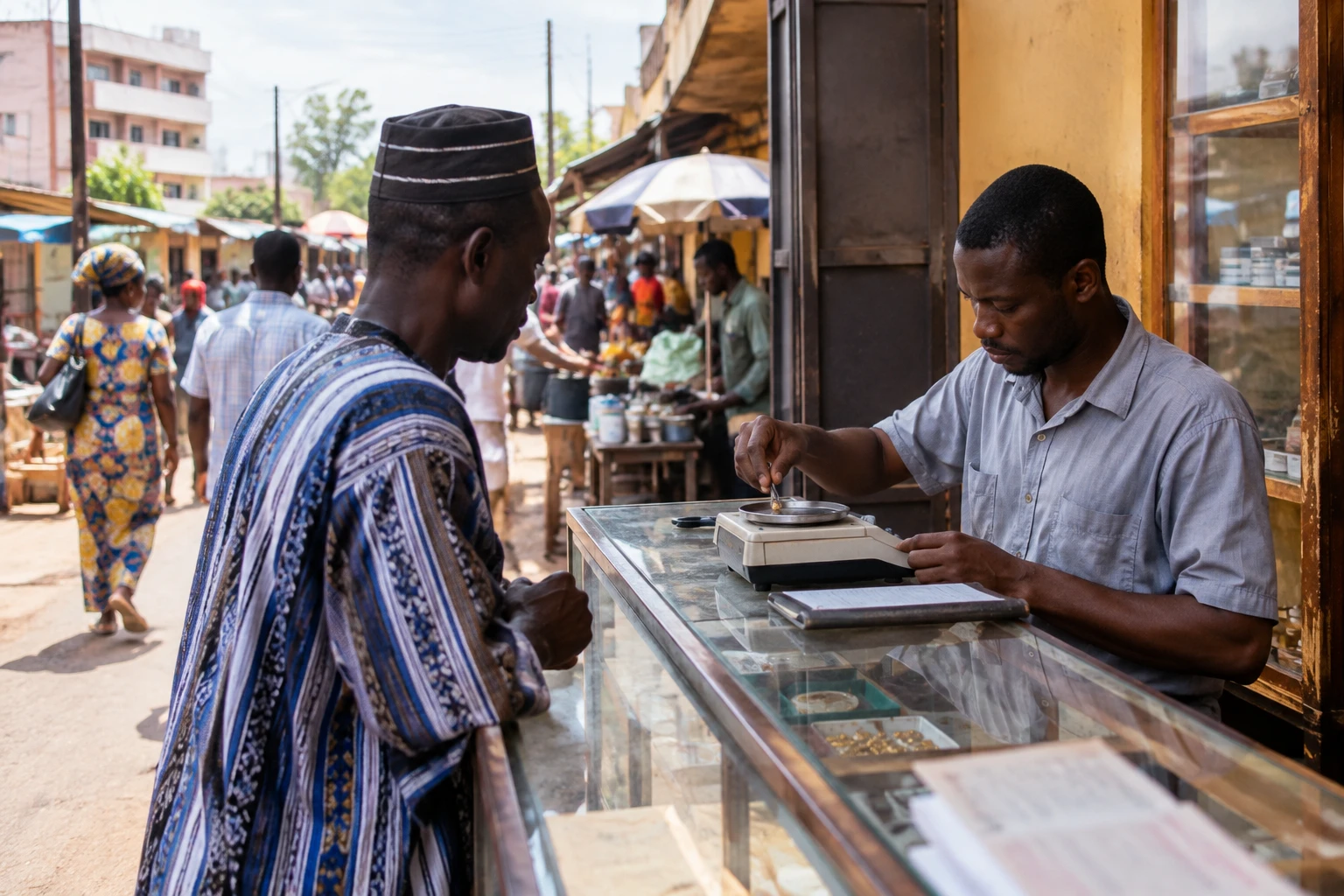
Refining an ounce of gold in Ouagadougou rather than abroad is now a real prospect for mining groups in Burkina Faso. But the new national plant will have to convince operators that its timelines, costs and standards allow them to process their output without disrupting commercial operations.
A new step in Burkina Faso’s mining policy
On 28 September 2026, Burkina Faso inaugurated Raffinor-BF in Ouagadougou, its first national gold refinery. The facility, financed with around CFAF 11 billion from the state and private partners, has an initial theoretical capacity of 164 tonnes a year. It is intended to transform doré — an alloy still mixed with other metals — into fine gold. The authorities have also referred to a future increase in capacity.
The infrastructure is part of a broader strategy to increase the share of mining value created and controlled in the country. The initiative follows the adoption of the 2024 Mining Code and comes as the Burkinabè authorities strengthen their role in the sector. The state also holds stakes in several industrial mines.
The trend extends beyond Burkina Faso’s borders. In West Africa, several governments are seeking to process more of their resources locally. But each country is proceeding under its own rules and with its own capabilities. For Burkina Faso, a member of the Confederation of Sahel States alongside Mali and Niger, the issue is also about control over revenues and export channels.
Endeavour discusses terms, not an announced exemption
A ministerial order dated 12 October 2026 requires holders of industrial permits to send their doré gold to approved refineries in Burkina Faso from 1 November. The text does, however, allow for processing abroad if local refining is technically or materially impossible, subject to ministerial authorisation.
In its results published on 12 November, Endeavour Mining said it was in discussions with Raffinor-BF on how the measure would apply to output from its mines in Burkina Faso. Its statement explicitly named Houndé. The company did not report receiving an exemption. Details of the practical processing arrangements are still awaited.
The matter also concerns Mana, another site operated by the group in Burkina Faso. Houndé and Mana together produced about 430,000 ounces in 2025, or nearly 13.4 tonnes. This gives an indication of what is at stake for the refinery, although output does not automatically equate to the quantities that would be delivered to it.
Iamgold’s case at Essakane shows that the rule’s implementation can be adjusted. The company said it had received a temporary exemption and was continuing discussions with the authorities. It said it would continue sending its doré to a foreign refinery accredited by the London Bullion Market Association (LBMA), an organisation whose standards are widely used in the international gold market. At this stage, this exemption does not establish a general rule for other operators.
The challenge: matching industrial capacity with commercial requirements
Raffinor-BF’s announced capacity far exceeds the combined annual output of Endeavour’s two mines in Burkina Faso. That does not, however, guarantee an automatic supply. A plant’s theoretical capacity says nothing, by itself, about its utilisation rate, actual costs or how quickly the processed gold can be sold.
Refining involves sensitive stages, including weighing, assaying, metal recovery, secure transport, insurance and settlement. For a producer, any additional time between extraction and sale can tie up funds. Iamgold has specifically flagged risks of payment delays and additional costs if Essakane’s gold were to be processed locally. These are an operator’s arguments, not an independent estimate of Raffinor-BF’s future costs.
International accreditation is another point of focus. It facilitates access to certain trading channels, but obtaining it depends on specific criteria and checks. At the time of the companies’ announcements, Raffinor-BF was not on the LBMA list. This does not prejudge its technical ability to refine gold; it means that certification and marketing arrangements will need to be clarified with buyers.
The effects will not be the same for everyone. The state could gain greater visibility over flows and develop a processing industry in Ouagadougou. Mining groups, meanwhile, will have to incorporate the new procedures into their operations. The benefits for workers, local suppliers and public finances will depend on the contracts, the jobs actually created and the value retained in the country.
Agreements awaited to gauge the reform’s real impact
The next indicator will be less the announcement of capacity than the signing of operational agreements: what volumes will be refined, at what price, under what controls and within what timeframe? Discussions with Endeavour and Iamgold will also help clarify how the exemptions provided for in the text will be granted and governed.
At regional level, Burkina Faso is testing a delicate balance between economic sovereignty and integration into international markets. Local refining can strengthen national expertise and infrastructure. For this objective to translate into lasting value, producers and the authorities will also need to ensure clear rules, credible controls and markets for refined gold.