Algeria
 Egypt
 Libya
 Morocco
 Sudan
 Tunisia
 Benin
 Cabo Verde
 Côte d'Ivoire
 Ghana
 Guinea
 Guinea-Bissau
 Liberia
 Mali
 Mauritania
 Niger
 Nigeria
 Senegal
 Sierra Leone
 The Gambia
 Togo
 Cameroon
 Central African Republic
 Chad
 DR Congo
 Equatorial Guinea
 Gabon
 Republic of the Congo
 São Tomé and Príncipe
 Burundi
 Comoros
 Djibouti
 Eritrea
 Ethiopia
 Kenya
 Madagascar
 Malawi
 Mauritius
 Mozambique
 Rwanda
 Seychelles
 Somalia
 South Sudan
 Tanzania
 Uganda
 Angola
 Botswana
 Eswatini
 Lesotho
 Namibia
 South Africa
 Zambia
 Zimbabwe
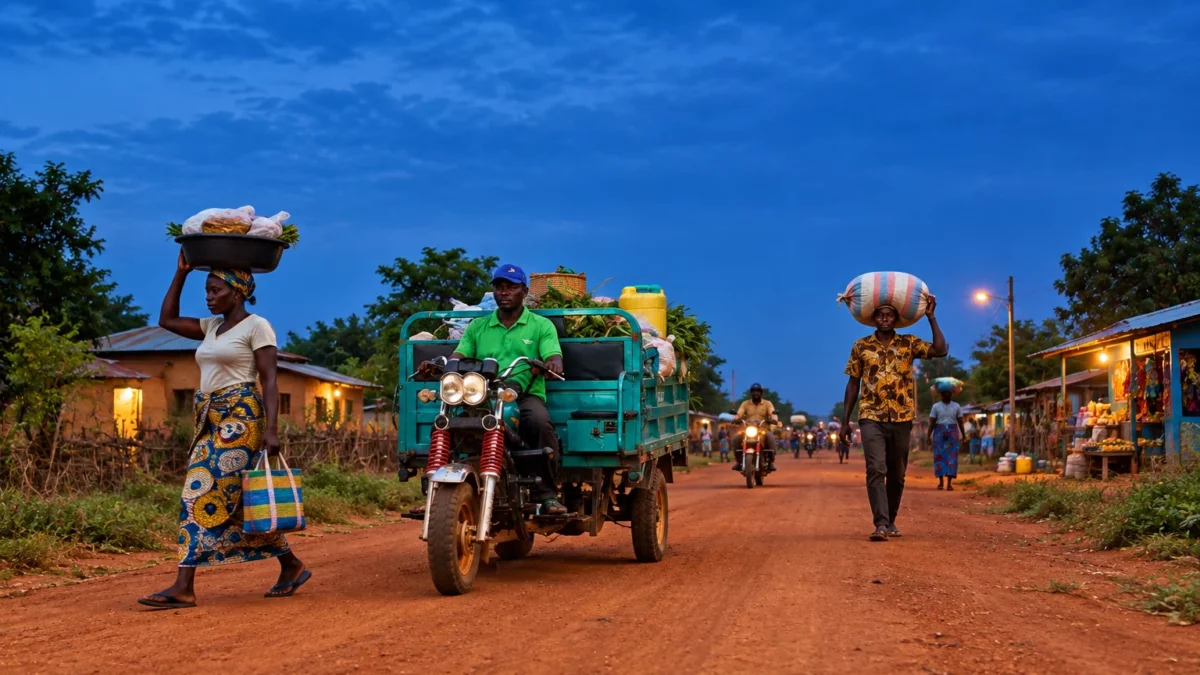
For people in Noumbiel, a few dozen kilometres can determine access to markets, public services or a trade route to Côte d’Ivoire. The planned paving between Batié and Kpuéré could improve this link, provided the project goes ahead and the road remains usable over time.
A local link at the end of a regional corridor
Batié and Kpuéré are in Noumbiel, in south-west Burkina Faso. National Road 11 (RN11) links the area to Gaoua, then to Banfora and Orodara. At its southern end, it reaches the Ivorian border. It is therefore part of a route connecting inland towns to a coastal country, although this does not mean that all trade uses this road.
Burkina Faso has no direct access to the sea. Its foreign trade depends on land links to several West African ports, notably Abidjan, Tema, Lomé and Cotonou. RN11 could help diversify the available routes. Its usefulness will nevertheless depend on traffic conditions along the entire route, infrastructure on the Ivorian side and procedures at border posts.
RN11 has featured for several years in the country’s road development plans. African Development Bank documents describe a route running from Orodara to the Ivorian border via Banfora, Gaoua, Batié and Kpuéré. In 2024, Burkina Faso’s Council of Ministers authorised the updating of feasibility and preliminary design studies for the 61-kilometre Batié-Kpuéré-border section.
Launch announced for 21 November
Burkina Faso’s ministry responsible for construction plans to officially launch work on paving the Batié-Kpuéré-Ivorian border section on 21 November 2026. The date, announced by the ministry and repeated in available reports, could not be corroborated by a second independent announcement at the time of verification. It should therefore be understood as an announced launch, not confirmation that work has already begun.
Such caution also applies to the project timetable. The information reviewed does not specify the cost, the company responsible for the work, its planned duration or the section’s financing arrangements. These details will help assess the announcement’s practical significance and track the project’s progress beyond the launch ceremony.
The planned work would extend construction on RN11. Work on the 68.5-kilometre Gaoua-Batié section began in April 2023. According to information attributed to the Directorate-General for Transport Infrastructure and published by several Burkinabe media outlets, physical completion stood at 87.33% at the end of October 2026. However, more time had elapsed than the initial contractual period. Full delivery therefore cannot be inferred from the progress rate alone.
Further north, work has also been announced on the 42-kilometre Banfora-Orodara section. Upgrading several stretches could eventually improve the route’s continuity. But each project has its own timetable: progress on one does not guarantee the rapid completion or quality of the others.
What the road could change in daily life
A paved road can make travel easier, particularly when heavy rains hamper movement on dirt tracks. For residents, the issue concerns journeys to markets and services as much as travel between municipalities. For transport operators and traders, a more reliable road can make journey times more predictable and limit delays. The actual benefits will nevertheless depend on vehicle conditions, transport costs and safety.
The effects will not be the same for everyone. Businesses able to transport their goods regularly may benefit from better access to markets. Small-scale producers and informal traders, meanwhile, will benefit from the new infrastructure only if transport costs remain affordable and collection points and markets are accessible. A road alone does not automatically generate income or bring services closer to communities.
The Gaoua-Batié section already illustrates some of the challenges of construction. During a site visit reported in late October, the company is said to have raised concerns about pressure on the road corridor from gold-mining activities. This highlights a practical issue: protecting the space needed for construction and maintenance without ignoring existing economic activities. The quality of the surface, drainage and maintenance will matter as much as the initial paving.
Cross-border continuity will also be crucial. A road in good condition on the Burkinabe side is not enough if the connection in Côte d’Ivoire, inspections or waiting times slow vehicles down. The corridor’s operation will therefore depend on co-ordination between the authorities of both countries and predictable border procedures. For communities along the route, local access must remain a priority, beyond the transit of heavy goods vehicles alone.
A test for West African integration
The project primarily concerns Burkina Faso and its relations with Côte d’Ivoire. It is also part of a regional area where roads link landlocked countries, production centres and coastal ports. ECOWAS, the Economic Community of West African States, is the relevant regional framework for trade and co-operation between the two countries. The quality of this integration is measured by the effective movement of people and goods, not just by maps of corridors.
RN11 will not replace Burkina Faso’s other routes to ports in the sub-region. It could provide an additional link and strengthen trade between the country’s south-west and Côte d’Ivoire. For now, the next milestones will be the actual start of work announced for 21 November 2026, the release of cost and timetable data, and progress on nearby projects. These will show whether the road project turns an announcement into more reliable access for Noumbiel’s residents and businesses.