
 Algeria
 Egypt
 Libya
 Morocco
 Sudan
 Tunisia
 Benin
 Cabo Verde
 Côte d'Ivoire
 Ghana
 Guinea
 Guinea-Bissau
 Liberia
 Mali
 Mauritania
 Niger
 Nigeria
 Senegal
 Sierra Leone
 The Gambia
 Togo
 Cameroon
 Central African Republic
 Chad
 DR Congo
 Equatorial Guinea
 Gabon
 Republic of the Congo
 São Tomé and Príncipe
 Burundi
 Comoros
 Djibouti
 Eritrea
 Ethiopia
 Kenya
 Madagascar
 Malawi
 Mauritius
 Mozambique
 Rwanda
 Seychelles
 Somalia
 South Sudan
 Tanzania
 Uganda
 Angola
 Botswana
 Eswatini
 Lesotho
 Namibia
 South Africa
 Zambia
 Zimbabwe
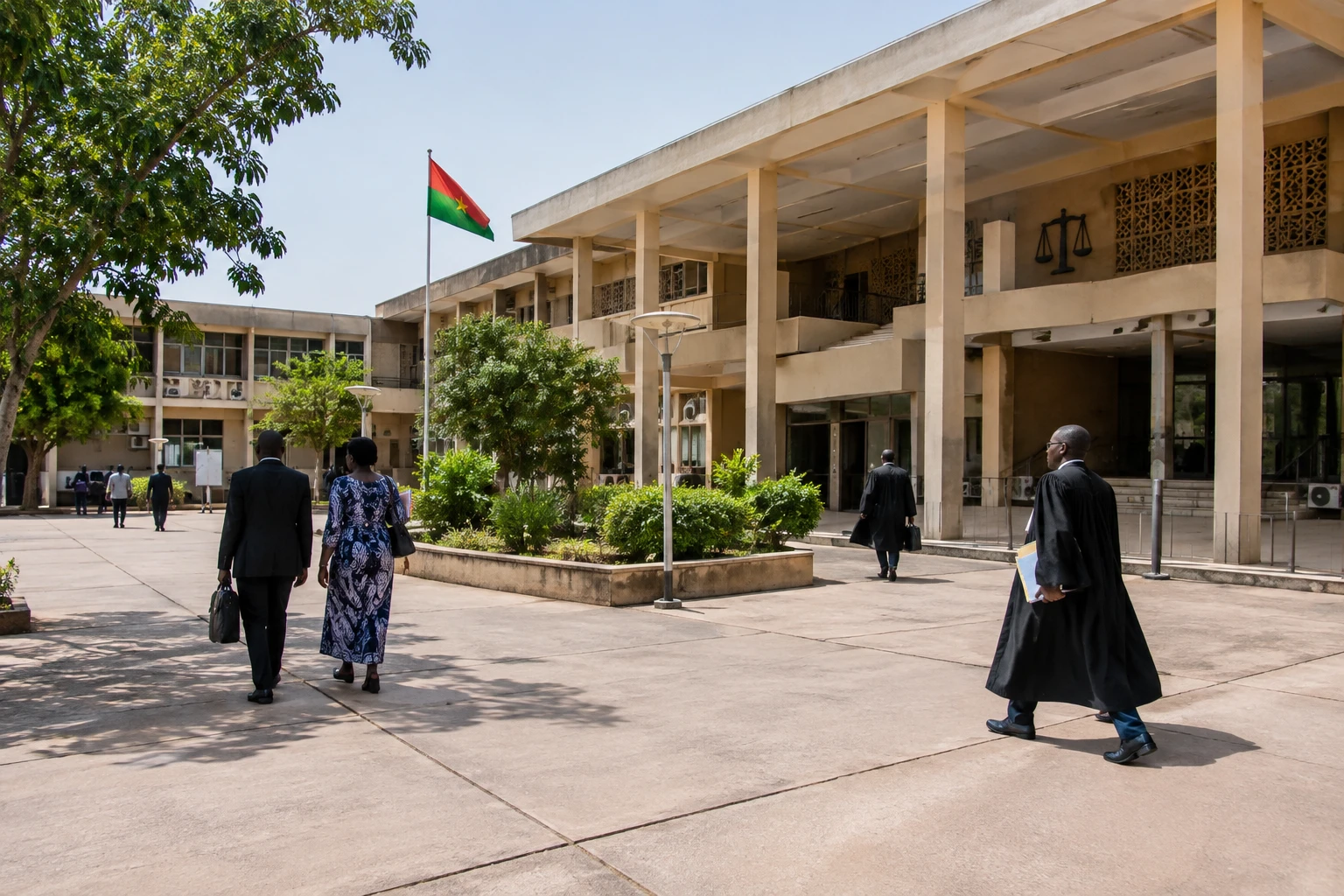
An international arrest warrant is not a conviction. In Burkina Faso, the announcement of proceedings targeting public figures based abroad has put a crucial question centre stage: how can alleged offences be prosecuted without confusing accusation, evidence and judgement?
Proceedings announced, allegations to be established
Prosecutor General Désiré Sawadogo said at a press conference in Ouagadougou that around 40 people were being targeted by proceedings linked to terrorism. The information released refers to 45 people in addition to former transition leader Paul-Henri Sandaogo Damiba. The exact breakdown could not be cross-checked against the public sources consulted; it should therefore be reported as an announcement by the prosecutor’s office.
Those named include former ministers Djibril Bassolé and Alpha Barry, journalists Issaka Lingani, Inoussa Ouédraogo and Abdoulaye Barry, as well as Adama Ouédraogo, known as “Damiss”. Former officer François Zoungrana and François Compaoré, brother of former president Blaise Compaoré, are also named. These people are accused, but no guilt can be inferred from the existence of proceedings or a warrant.
The prosecutor is also reported to have mentioned international arrest warrants and requests for extradition or mutual legal assistance sent notably to Côte d’Ivoire, France and the United States. The available information does not make it possible to independently verify, for each person, whether a warrant was issued, the precise nature of the charges or whether the requests were received by the authorities concerned. These details therefore remain attributed to the prosecutor’s office.
Damiba, who led the transition from January to September 2022, was handed over to Burkina Faso by Togo on 17 January 2026, following extradition proceedings. Burkinabè authorities then announced proceedings concerning, among other things, financial offences and alleged threats to state security. The proceedings now mentioned by the prosecutor include, according to the summary of his press conference, charges linked to terrorism. These are legal classifications, not facts established by a court.
Judicial cooperation amid regional tensions
The Damiba case shows that national proceedings do not necessarily end at the border. Togo said the handover of the former leader was in response to an official Burkinabè request and followed consideration of the case by the Lomé Court of Appeal. This precedent does not, however, mean that the countries approached in the new cases will automatically accept Ouagadougou’s requests: each depends on their law and the safeguards presented.
The regional context has changed. Burkina Faso, Mali and Niger’s withdrawal from the Economic Community of West African States (ECOWAS), the West African integration organisation, took effect on 29 January 2025. The three countries have also strengthened their cooperation within the Alliance of Sahel States (AES). Bilateral judicial cooperation mechanisms and international agreements therefore remain essential to handling cross-border requests.
Extradition involves more than a political exchange between governments. The authorities receiving a request examine its legal grounds, the case documents and the safeguards relating to the rights of the person concerned. The Damiba case also highlights the importance of specifying the charges brought before foreign courts: Togolese authorities set out financial allegations, while the proceedings cited in Burkina Faso also encompass security-related offences.
Journalists, exile and the presumption of innocence
The presence of journalists and commentators among those named makes transparency in the proceedings particularly important. A terrorism accusation is serious, but it is not enough to demonstrate that journalistic activity constitutes an offence. The alleged acts, the evidence and the opportunity to respond before a judge must be distinguished from public statements or media analysis.
The announcement comes amid an environment in which professional and human rights organisations have already reported pressure on Burkina Faso’s media. The Association of Journalists of Burkina Faso denounced a deterioration in working conditions for the profession in 2025. The Media Foundation for West Africa, for its part, has documented the difficulties faced by West African journalists forced into exile. This context does not allow us to conclude that the new proceedings are unfounded; it nevertheless heightens the need for verifiable procedures and effective judicial safeguards.
For those targeted who live abroad, an extradition request can have immediate consequences for their liberty and safety. For media outlets still in the country, the case could also encourage editorial caution, especially if the boundaries between criticism, commentary and an offence are not clearly set out. Publication of the judicial documents and access to an independent defence would be crucial to clarifying these issues.
The test will be the actions taken and the safeguards provided
What happens next will depend on concrete decisions: confirmation of the warrants, transmission of the case files, responses from the states approached and developments in the investigation in Burkina Faso. The prosecutor’s announcements will need to be assessed against available judicial documents and responses from the people concerned. At this stage, no ruling on the merits has been reported establishing the guilt of those named.
For West Africa, the case illustrates a broader challenge: cooperation against transnational offences must function despite the reshaping of regional alliances. Its credibility will depend as much on the ability to prosecute alleged crimes as on respect for the rights of the defence, the presumption of innocence and judicial independence.



