Algeria
 Egypt
 Libya
 Morocco
 Sudan
 Tunisia
 Benin
 Burkina Faso
 Cabo Verde
 Côte d'Ivoire
 Ghana
 Guinea
 Guinea-Bissau
 Liberia
 Mali
 Mauritania
 Niger
 Nigeria
 Senegal
 Sierra Leone
 The Gambia
 Togo
 Cameroon
 Central African Republic
 Chad
 Equatorial Guinea
 Gabon
 Republic of the Congo
 São Tomé and Príncipe
 Burundi
 Comoros
 Djibouti
 Eritrea
 Ethiopia
 Kenya
 Madagascar
 Malawi
 Mauritius
 Mozambique
 Rwanda
 Seychelles
 Somalia
 South Sudan
 Tanzania
 Uganda
 Angola
 Botswana
 Eswatini
 Lesotho
 Namibia
 South Africa
 Zambia
 Zimbabwe

When an epidemic crosses several borders, the speed of alerts matters as much as the availability of vaccines. In the Democratic Republic of the Congo (DRC), the Bundibugyo virus disease outbreak is testing surveillance and healthcare capacity. It also exposes the limits of medical tools designed for other Ebola strains.
An emergency extending beyond the DRC
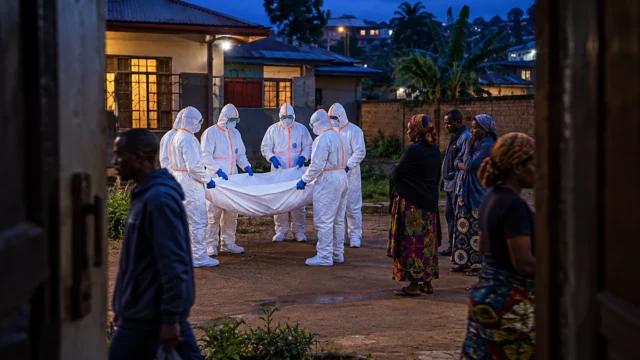
Bundibugyo virus disease is a form of Ebola distinct from the Zaire strain. This difference has practical consequences: Ervebo, the vaccine deployed against the Zaire strain, has no confirmed efficacy against Bundibugyo. As of 23 October 2026, no vaccine or specific treatment had been approved for this strain, according to the World Health Organization (WHO).
The outbreak, declared in the DRC on 15 May, has spread beyond Central Africa. Kenya reported an imported case in early October, followed by infections among the same group of contacts. Nigeria confirmed an imported case in Abuja on 20 October, in a person who had arrived from Uganda. Uganda, where the virus had been detected during an earlier outbreak, was not reporting any active cases from this outbreak at the time.
This expansion involves countries connected by regional travel and regular exchanges. It calls for coordination beyond national borders, without conflating the distinct public health situations in each country. The DRC is notably part of the Southern African Development Community (SADC) and the East African Community (EAC), two important regional frameworks for health co-operation and information-sharing.
High figures, but totals need to be dated
As of 20 October, the WHO had recorded 9,704 confirmed cases and 4,687 deaths in the DRC, across 66 health zones in eight provinces. The total included Ituri, North Kivu, South Kivu, Haut-Uélé, Bas-Uélé, Tshopo, South Ubangi and North Ubangi. These figures, published on 23 October, were also cited in the situation update from US health authorities, which gave a reference date of 21 October.
Counts change as investigations proceed and cases are confirmed. They should therefore be read with their date, rather than as a final total. The WHO also noted that several hundred recent deaths had occurred in communities before patients were taken to treatment centres. This highlights the challenges of early detection and timely access to care, but does not in itself establish all the causes.
In Kenya, nine cases, including one death, had been recorded as of 20 October. The other eight cases were linked to the initial imported case, with no wider community transmission identified by that date. In Nigeria, 44 contacts were being monitored after the Abuja case was confirmed. The time between the onset of symptoms and diagnosis complicates contact tracing: Nigerian authorities said the patient had tested positive on 20 October, after developing symptoms on 7 October.
These figures describe different situations. In the DRC, transmission is widespread and sustained. In Kenya, the reported cases formed a single known group of contacts. In Nigeria, investigations were continuing around an imported case. Portraying all three countries as equally affected would obscure the distinct priorities of each response.
Vaccines: a scientific gap and a debate over investment
Africa CDC director-general Jean Kaseya has condemned the lack of investment in diseases that primarily affect African populations. He said that if the Bundibugyo strain had struck Western countries, vaccines would already be available. The statement expresses criticism of unequal research priorities; it is not evidence that vaccine development would already have succeeded elsewhere.
Vaccine candidates against Bundibugyo are in development, but remain at early stages. In the meantime, authorities are relying on surveillance, diagnosis, isolation of infected people and contact tracing. These measures require staff, laboratories, protective equipment and sufficient trust for exposed people to come forward and access care.
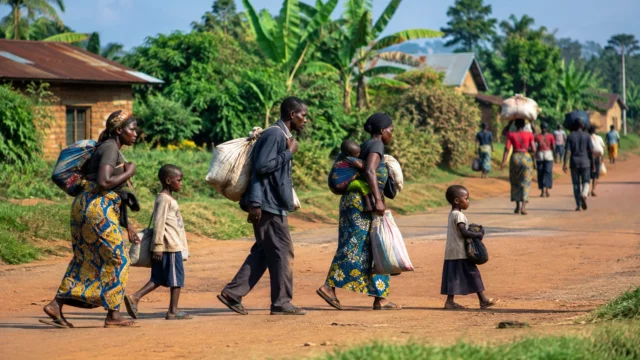
The response therefore depends on more than a medical product. In areas where distance, insecurity or a lack of facilities make travel difficult, detecting symptoms and arranging prompt care can be particularly challenging. Needs differ between Kinshasa, urban centres in the east and the rural communities affected. Healthcare workers and families exposed to the virus also need appropriate information and protective resources.
Africa CDC has convened African health ministers for a virtual meeting on 28 October to assess the outbreak and strengthen co-ordination. The agency has also called for emergency funding to support interventions in the DRC, Kenya and Nigeria. The challenge will be to turn co-ordination announcements into resources available on the ground, while clearly tracking how they are allocated.
Regional co-ordination put to the test
Cross-border spread is a reminder that surveillance cannot stop at border posts. Countries need to be able to share alerts and useful data rapidly, while continuing to screen and support people identified as contacts. The WHO stresses the need for co-ordinated surveillance and recommends against imposing general restrictions on travel or trade with the countries concerned.
For the Congolese authorities, the priority remains containing transmission in a country where several provinces are affected. For neighbouring countries, the task is to identify imported cases quickly and prevent them from triggering chains of transmission that are difficult to trace. For populations, the response will also be judged by practical access to diagnosis, dignified care and reliable information, rather than simply by the number of official announcements.
The ministerial meeting on 28 October will be an initial opportunity to compare needs and organise support between states. What follows will depend in particular on the ability to fund local teams and laboratories sustainably, and to advance research into Bundibugyo. The outbreak thus raises a regional and continental question: how can health tools be developed to address the risks present in Africa, rather than relying solely on vaccines developed for other strains?
The situation figures and information mentioned in this article are dated between 20 and 23 October 2026. They may change as health authorities complete their investigations.