
 Algeria
 Egypt
 Libya
 Morocco
 Sudan
 Tunisia
 Benin
 Burkina Faso
 Cabo Verde
 Côte d'Ivoire
 Ghana
 Guinea
 Guinea-Bissau
 Liberia
 Mali
 Mauritania
 Niger
 Nigeria
 Senegal
 Sierra Leone
 The Gambia
 Togo
 Cameroon
 Central African Republic
 Chad
 Equatorial Guinea
 Gabon
 Republic of the Congo
 São Tomé and Príncipe
 Burundi
 Comoros
 Djibouti
 Eritrea
 Ethiopia
 Kenya
 Madagascar
 Malawi
 Mauritius
 Mozambique
 Rwanda
 Seychelles
 Somalia
 South Sudan
 Tanzania
 Uganda
 Angola
 Botswana
 Eswatini
 Lesotho
 Namibia
 South Africa
 Zambia
 Zimbabwe
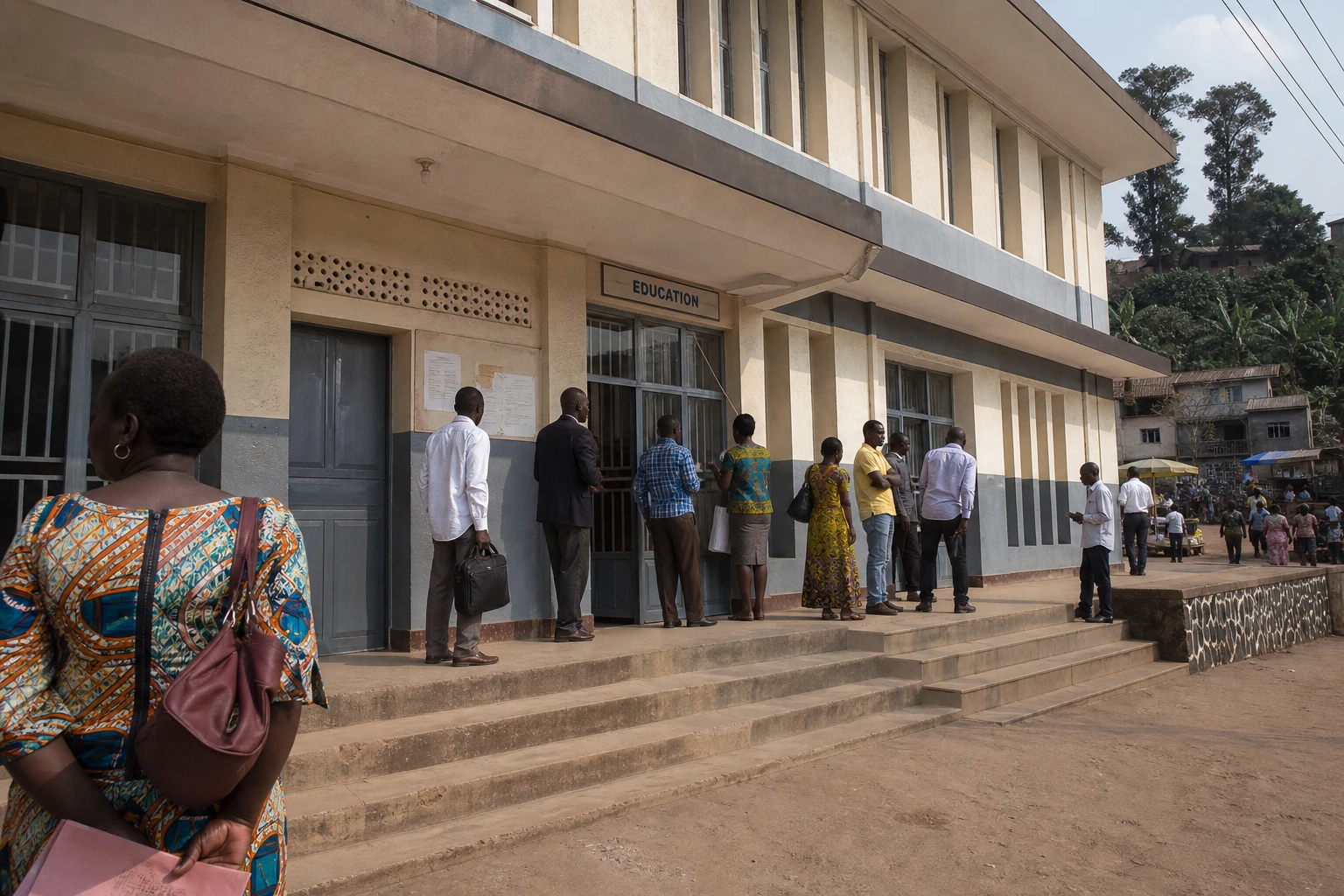
A city in mourning, a vulnerable school environment
In Bukavu, the start of the school year was marked not only by grief. It was a brutal reminder that, within minutes, a school can become a place of flight, panic and loss of life when urban development is dense, access routes are narrow and emergency services are difficult to mobilise. On 10 September, a fire that started in a neighbouring house affected two schools, Furaha and Ujamaa, before triggering a deadly crush. UNICEF later confirmed that at least 26 children had died and reported 25 injured.
In this part of the east of the Democratic Republic of the Congo, every school tragedy resonates far beyond the institution concerned. Bukavu, the capital of South Kivu, is a densely built urban environment exposed to fires and service disruptions, while the city has been under AFC-M23 control since February 2025, according to the latest dispatches. This reality weighs on the organisation of emergency response, the movement of authorities and the day-to-day management of working-class neighbourhoods.
The 10 September tragedy, followed by funerals at Ruzizi cemetery
The funerals took place on Monday 14 September at Ruzizi cemetery, after several days of grief and uncertainty over the exact death toll. Radio Okapi reported that 27 pupils were buried, while other accounts put the number of dead at at least 26, or even higher according to provincial services and local actors. This discrepancy illustrates a sensitive issue in the east of the country: in an emergency, figures circulate quickly, but official confirmations are often incomplete or delayed.
Accounts of what happened nevertheless agree on the essentials. The fire is believed to have started in a home before spreading to neighbouring schools. In the panic, pupils tried to flee through exits that were too narrow. Witnesses interviewed at the scene described children being shoved, trampled or suffocated. The neighbourhood administration cited by AP said that some pupils had been trapped inside the building.
At the cemetery, the families’ grief gave a human face to the death toll. Relatives accompanied the coffins, alongside Red Cross workers and members of M23, the armed force that has administered the city since taking control. One of the victims, Célestine, was the eldest of a family already struck by an earlier bereavement, her father having died previously, according to testimony reported by the media. Her story captures the social dimension of the tragedy: entire families are losing their balance, not just numbers on a tally.
What the fire says about Bukavu and child protection
Beyond the grief, the fire highlights three very concrete vulnerabilities. First, dense and often flammable housing in some parts of Bukavu. Second, inadequate access routes for emergency services. Finally, the particular vulnerability of schools located in areas where homes, shops and classrooms almost touch, with little clear separation. These factors are not a matter of an isolated accident; they point to urban planning, building controls and risk prevention.
The Ministry of National Education and New Citizenship expressed its solidarity with the affected families and education communities, while promising to consider the measures needed to support those affected and ensure the continuity of classes. On the ground, the issue is straightforward: a school can protect children only if it has usable exits, walls suited to a densely built urban environment and surroundings that emergency services can reach quickly.
In Kasha and several neighbourhoods of Bukavu, residents already say they fear further tragedies if the rains worsen the condition of homes and slopes. This concern matters because it shows that the disaster is not confined to the fire itself. It is prolonged by the fear of a collapse, another crush, another failure of emergency services. In other words, the population is living with accumulated risk, not a single, concluded event.
A local warning with regional and continental significance
For the Democratic Republic of the Congo, this tragedy is part of a broader pattern of urban and institutional vulnerabilities in the east of the country. In a city such as Bukavu, children’s safety depends on education authorities, urban services, civil protection mechanisms and the wider security environment. When any one of these links weakens, a school ceases to be merely a place of learning and also becomes a space of exposure to risk.
The regional implications are real. In the Great Lakes region, densely populated cities, informal neighbourhoods and inadequate emergency infrastructure often turn a local incident into a collective tragedy. For the African Union, the East African Community and humanitarian actors, the challenge is less to comment on the shock than to strengthen prevention: construction standards, ambulance access, school safety and prompt treatment for the injured. Protection policies, not communications, will make the difference when the next incident occurs.
In Bukavu, mourning has now given way to a broader question: how can schoolchildren be protected in cities where demographic pressure, precarious housing and the security crisis overlap? The answer involves the municipality, South Kivu, Kinshasa and regional partners. It will determine whether this tragedy remains one more episode in a series of avoidable disasters, or the starting point for a genuine change in approach.



