Algeria
 Egypt
 Libya
 Morocco
 Sudan
 Tunisia
 Benin
 Burkina Faso
 Cabo Verde
 Ghana
 Guinea
 Guinea-Bissau
 Liberia
 Mali
 Mauritania
 Niger
 Nigeria
 Senegal
 Sierra Leone
 The Gambia
 Togo
 Cameroon
 Central African Republic
 Chad
 DR Congo
 Equatorial Guinea
 Gabon
 Republic of the Congo
 São Tomé and Príncipe
 Burundi
 Comoros
 Djibouti
 Eritrea
 Ethiopia
 Kenya
 Madagascar
 Malawi
 Mauritius
 Mozambique
 Rwanda
 Seychelles
 Somalia
 South Sudan
 Tanzania
 Uganda
 Angola
 Botswana
 Eswatini
 Lesotho
 Namibia
 South Africa
 Zambia
 Zimbabwe
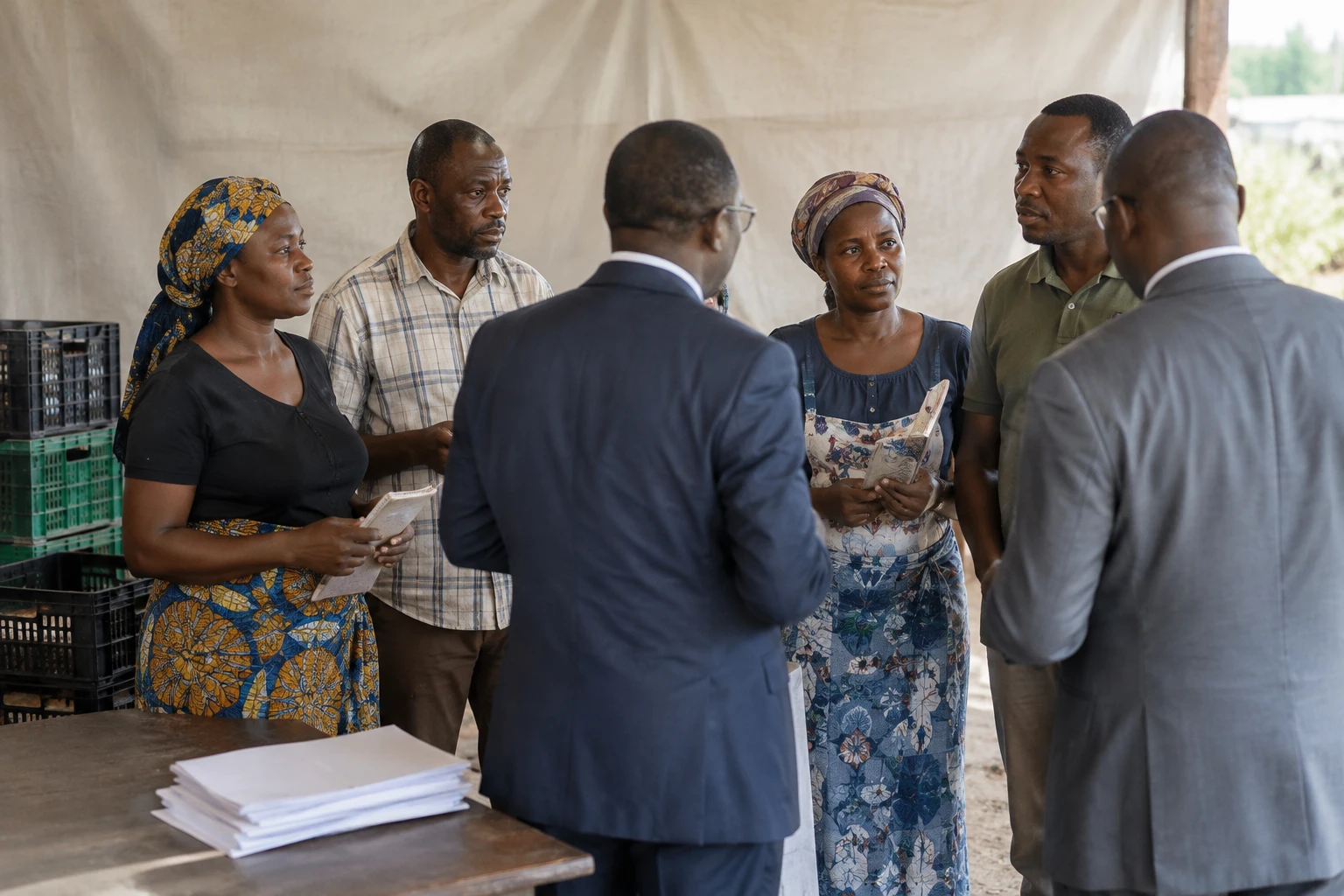
In Bondoukou, reopening a shop is not enough to win back customers. Since the fire at the grand market, traders have been trying to rebuild their businesses at a temporary site, while the questions of relocation and reconstruction remain unresolved.
A central market for Gontougo
Bondoukou is in north-eastern Côte d’Ivoire, in the Gontougo region, near the Ghanaian border. Its grand market supplies part of the region and provides a livelihood for women and men traders, suppliers and transporters. For these people, the destruction of the site means more than the loss of a building: it weakens a daily network of exchanges.
The fire occurred against a wider backdrop of urban markets’ vulnerability to fires. Combustible goods, electrical installations and obstructed access routes can complicate both prevention and the response by emergency services. In Bondoukou, the traders’ president specifically cited water points that had become inaccessible. This explanation is attributed to her and does not, by itself, constitute an investigative finding.
Côte d’Ivoire is a member of ECOWAS, the Economic Community of West African States, which brings together countries connected by trade and regional mobility. In this context, the continuity of local markets also matters for supply chains beyond the commune itself.
Heavy losses, with figures to be distinguished
The fire ravaged the main building on the night of 12 to 13 July 2026. The Ivorian Press Agency and the Journal d’Abidjan reported the market fire. The official toll announced in September puts the number of affected traders at 779.
Published financial assessments give different amounts. An initial estimate put losses at more than 2.3 billion CFA francs. In September, Trade Minister Ibrahim Kalil Konaté put the damage at more than 7 billion. These figures are based on different assessments and should not be presented as a consolidated amount.
For those affected, the consequences are immediate. Mamadou Vagne Diabaraté, a household goods seller, estimated the value of his destroyed stock at five million CFA francs. Other traders lost their goods, equipment and, in some cases, their customers. The losses also affect family incomes and upstream activities, particularly those of suppliers.
The authorities gave 32.5 million CFA francs to traders affected by the fire at a meeting held on 20 September. The Ministry of Solidarity also says it provided food aid after the fire. This public funding is a one-off form of support; the available information does not specify how much each beneficiary received or the total cost required to resume trading.
Resuming business does not automatically bring customers back
A temporary site set up nearby has allowed several traders to start selling again. But moving the stalls disrupts established habits. Customers who still go to the historic site may not know where to find their sellers. Alassane Oumarou, who sells mobile phones, estimates that he has recovered only 30 to 35% of his customers. This figure reflects his testimony, not a measurement covering the entire market.
The recovery therefore depends as much on relocation as on commercial visibility. Sellers have to rebuild their stocks and make their new location known, sometimes without having the contact details of their former customers. For small businesses, whose activity often depends on daily sales, several months of disruption can have a lasting impact on cash flow.
According to accounts gathered, the temporary site could remain in use for several months or even longer. At this stage, no reconstruction date has been announced in the available information. This uncertainty complicates decisions: investing in new equipment or stock becomes risky if the location and timetable could still change.
Preventing the next fire
Beyond emergency response and aid, the fire has put the market’s physical layout back on the agenda. Clear access routes, usable water points and inspected electrical installations can reduce risks and help firefighters respond. Traders and the authorities will also need to clarify how the temporary site is managed, the safety rules and arrangements for returning to a rebuilt market.
The Trade Ministry has announced measures to improve market management, although the official announcement consulted did not specify their detailed terms. Their impact will depend on how they are implemented in practice and whether traders are involved in decisions. Reconstruction will only fully meet needs if it also makes it possible to work in safer conditions.
The Bondoukou case thus raises a question that reaches beyond Gontougo: how can places essential to the everyday economy be protected without undermining the livelihoods that depend on them? The answer will be measured by the timetable for the work, the transparency of the aid and traders’ ability to rebuild their businesses on a lasting basis. For now, the recovery remains gradual, and a return to normal is uncertain.
Details cross-checked with the Ivorian Press Agency, the Journal d’Abidjan and the Ivorian Ministry of Solidarity.