Algeria
 Egypt
 Libya
 Morocco
 Sudan
 Tunisia
 Benin
 Burkina Faso
 Cabo Verde
 Côte d'Ivoire
 Ghana
 Guinea
 Guinea-Bissau
 Liberia
 Mali
 Mauritania
 Niger
 Nigeria
 Senegal
 Sierra Leone
 The Gambia
 Togo
 Cameroon
 Chad
 DR Congo
 Equatorial Guinea
 Gabon
 Republic of the Congo
 São Tomé and Príncipe
 Burundi
 Comoros
 Djibouti
 Eritrea
 Ethiopia
 Kenya
 Madagascar
 Malawi
 Mauritius
 Mozambique
 Rwanda
 Seychelles
 Somalia
 South Sudan
 Tanzania
 Uganda
 Angola
 Botswana
 Eswatini
 Lesotho
 Namibia
 South Africa
 Zambia
 Zimbabwe
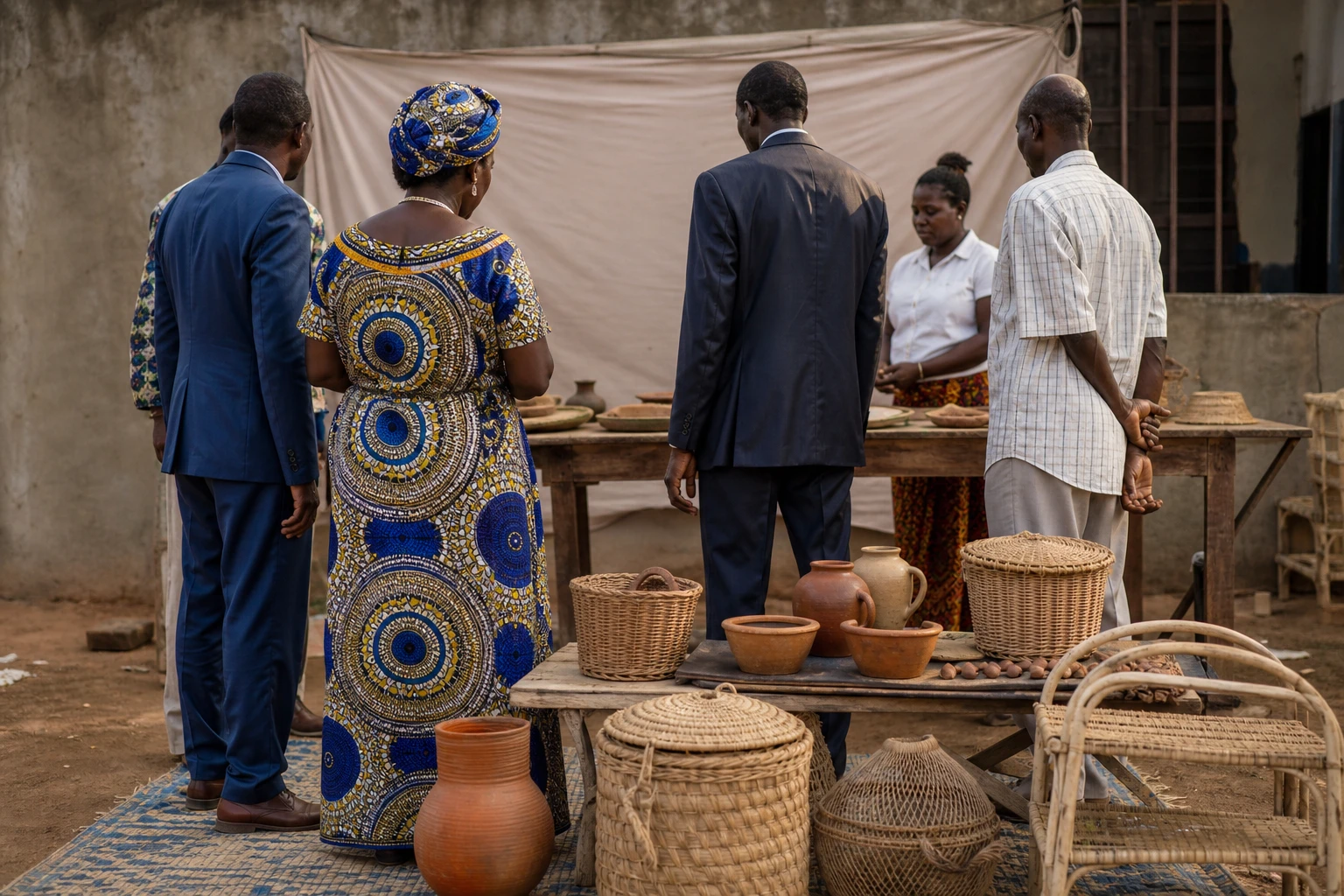
In the far north-east of the Central African Republic, Birao is defined by more than its remoteness and difficult roads. In this town in Vakaga, traditional skills, clothing, everyday objects and commercial activities form a living heritage. They also enable many families to earn a living despite the region’s isolation.
A town at the crossroads of north-eastern travel routes
Birao is the capital of Vakaga prefecture. It lies in a Sahelian-Sudanian zone, close to the borders with Chad and Sudan. This location leaves it far from the Central African Republic’s main economic centres, particularly the capital, Bangui.
In this part of the country, trade depends heavily on the condition of tracks and security. The rainy season can slow travel. Transport costs then drive up the prices of food, building materials and essential goods.
The Central African Republic is a member of the Economic and Monetary Community of Central Africa, CEMAC, which brings together six countries that share, among other things, the Central African CFA franc. Yet regional integration is uneven on the ground in areas far from capital cities. For Birao, trade links with border areas often matter as much as connections with Bangui.
Trades passed down through generations
At dawn, work begins under the trees, near water points and in the town’s neighbourhoods. Artisans work with rattan, leather, wood, plant fibres and other locally available materials.
Cyriack-Moustapha, a 32-year-old craftsman, makes chairs, beds, clothes and shoes, among other things. He also produces components for houses built with bamboo. His work is based on techniques learnt within the family and adapted to the needs of the local market.
This work is not simply about preserving a tradition. It is also a source of income. In a town where formal jobs remain scarce, craftspeople can sell useful items, fulfil orders from residents and keep small sums of money circulating in neighbourhoods.
Accessories worn by residents are also part of this cultural expression. The loose-fitting boubous offer protection from the hot climate. Bracelets, necklaces and ornaments made from wood, bark or plant materials express a sense of belonging and personal taste, and sometimes tell a family story.
Marita, a resident of Birao, says these adornments are more than decorative objects. They combine elegance and memory. Some women also make perfumes from plants, flowers and tree essences. These preparations draw on detailed knowledge of the local environment.
Pottery: practical use and collective memory
Pottery has a special place in this local economy. First and foremost, it meets a practical need: storing water and keeping it cool in a region where temperatures can be high.
Ali Mahamat has practised this trade for several decades. In his workshop, the clay is selected and cleared of stones before being worked and shaped. The vases and pots made in Birao are used in homes, but they also reflect the stages of social life.
Earthenware accompanies births, ceremonies, difficult times and moments of hope. Its value, therefore, is not measured solely by its price. It also lies in its use, durability and the stories it passes on.
Across the Central African Republic, pottery, basketry, woodwork and jewellery-making are among the practices found in several regions. Their forms vary according to available resources, communities and uses. This diversity is a reminder that Central African culture is not limited to a single model.
Travel shaped by donkeys and carts
In Birao, daily travel still relies largely on simple means. Residents use donkeys, carts and bicycles to get around the neighbourhoods, transport harvests and deliver goods.
The donkey plays a central economic role. It carries water, agricultural produce, materials and sometimes goods destined for the market. For families without a motor vehicle, the animal is an accessible and durable working tool.
This way of organising life does not mean residents reject modernity. Rather, it reflects adaptation to an environment where public transport is scarce and roads remain difficult. The problem is not the existence of traditional practices, but the lack of alternatives and infrastructure.
Available demographic data do not all give the same estimate for Birao’s population. Some sources put it at several tens of thousands, while more recent census data suggest a lower figure. The discrepancy is explained in part by different counting methods and population movements in a border area.
Isolation puts pressure on households and traders
Birao’s difficulties are primarily material. The poor state of the road network makes transport more expensive. Traders then pass some of these costs on to customers. Urban households are the first to feel the impact, but livestock farmers and agricultural producers are also affected when they have to transport their output.
Women play an important role in the informal sector, selling food, clothes, handicrafts and locally made products. In doing so, they help supply families and circulate income through the town.
Livestock farming, agriculture and trade underpin the local economy. Their balance, however, depends on several factors: access to markets, water availability, the security of routes and the ability to maintain trade with neighbouring areas.
Insecurity adds another constraint. In Vakaga, it can restrict travel, reduce market opportunities and complicate access to essential services. It does not put an end to local initiatives, but it increases the risks borne by producers and traders.
An issue that extends beyond Birao
Birao’s situation raises a broader question for the Central African Republic: how can remote regions be connected without undermining their identities and local economies ?
Improvements to roads, markets, healthcare services, water access and communications could strengthen existing activities. They would enable craftspeople to sell more, farmers to reach new markets and livestock farmers to better organise their journeys.
The priority, however, is to start from local realities. A development plan designed solely in Bangui could overlook the customs, climate-related constraints and trade relations specific to the country’s north-east.
In Birao, traditions are not frozen in time. They evolve with residents’ needs. Rattan becomes furniture, clay becomes a vessel, the donkey becomes a means of transport and adornments become markers of identity. In this town in Vakaga, culture is at once a memory, an economic activity and a way of organising everyday life.