Algeria
 Egypt
 Libya
 Morocco
 Sudan
 Tunisia
 Benin
 Burkina Faso
 Cabo Verde
 Côte d'Ivoire
 Ghana
 Guinea
 Guinea-Bissau
 Liberia
 Mali
 Mauritania
 Niger
 Nigeria
 Senegal
 Sierra Leone
 The Gambia
 Togo
 Cameroon
 Central African Republic
 Chad
 Equatorial Guinea
 Gabon
 Republic of the Congo
 São Tomé and Príncipe
 Burundi
 Comoros
 Djibouti
 Eritrea
 Ethiopia
 Kenya
 Madagascar
 Malawi
 Mauritius
 Mozambique
 Rwanda
 Seychelles
 Somalia
 South Sudan
 Tanzania
 Uganda
 Angola
 Botswana
 Eswatini
 Lesotho
 Namibia
 South Africa
 Zambia
 Zimbabwe
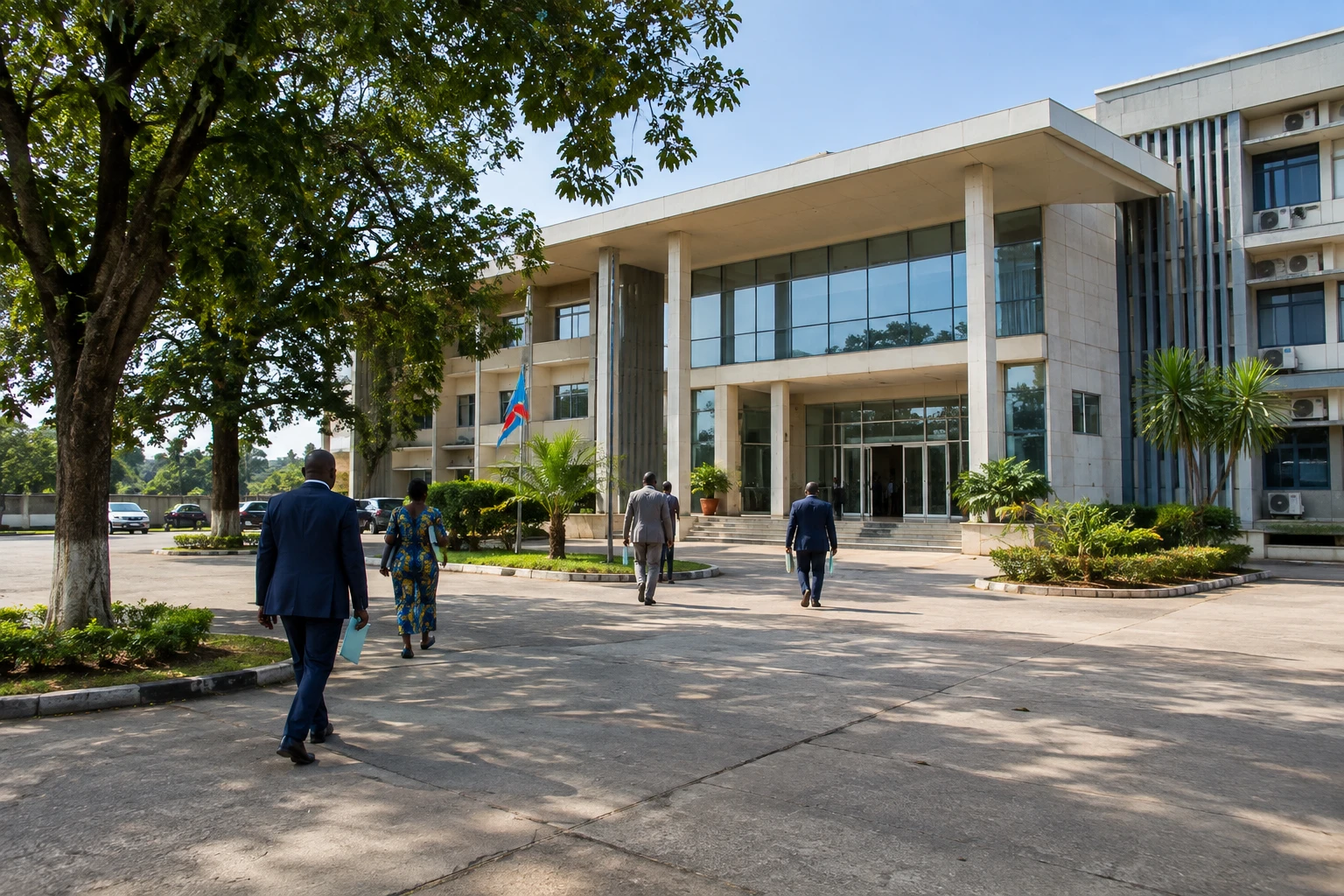
Minerals from south-eastern DR Congo feed global industrial supply chains. But who controls their extraction, and where does the value created go? An inquiry opened in Belgium has placed these questions at the heart of proceedings involving people close to the Congolese president, without prejudging their guilt.
A judicial inquiry, not a verdict
The Belgian federal prosecutor’s office confirmed that searches were carried out on 14 October 2026 in Brussels and several municipalities in Flemish Brabant and Walloon Brabant. They form part of a money-laundering investigation opened after complaints were filed in July 2025. The prosecutor’s office has not made public the names of those targeted or details of the operations, citing the secrecy of the investigation and the presumption of innocence.
Congolese and international media report that the inquiry concerns nine people described as members of the family or associates of Félix Tshisekedi. The president himself is not directly targeted by these searches, according to published reports. At this stage, no convictions have been handed down and the allegations remain contested.
The complaint was filed on 8 July 2025 by Belgian lawyer Bernard Maingain, on behalf of Katangese civil society organisations and four former officials of Gécamines, the Congolese state-owned mining company. The complainants allege irregular takeovers of sites and financial offences in Haut-Katanga and Lualaba. These allegations will have to be examined by investigators and the competent courts.
Katanga: mineral wealth and governance challenge
The case points to a longstanding question in DR Congo: how can mineral resources be turned into public revenue, jobs and services for residents? Haut-Katanga and Lualaba account for a significant share of copper and cobalt production. Gécamines has historically played an important role in the sector, while the state oversees concessions and mining activities.
In April 2025, the DESC/RDC platform published a report alleging that people close to those in power had taken control of mineral resources. The complainants draw in particular on these reports. Their claims do not, however, in themselves constitute judicial proof. The specific details of the Belgian inquiry have not been made public.
The potential repercussions extend beyond political circles. For workers, communities near mining sites and small local businesses, mining governance affects incomes, safety and compliance with environmental rules. For the state, the issues include the collection of taxes and royalties and the credibility of the institutions responsible for overseeing concessions.
Conflicting accounts, facts yet to be established
The complainants say they chose Belgium because several of the people named are Belgian nationals and because they believe their efforts in DR Congo did not lead to progress in the case. This is their explanation; it does not in itself demonstrate a failure of the judicial system.
Figures close to the Congolese government denounced the complaint in 2025 as politicised and baseless. This challenge is part of the public debate, but does not settle the allegations. The complainants’ lawyer, for his part, says he is respecting the secrecy of the investigation and cannot say whether documents or property have been seized.
The distinction is essential: a search is an investigative measure, not a declaration of guilt. What happens next will depend on the evidence gathered, its examination in adversarial proceedings and the decisions of the magistrates. Neither the complainants’ statements nor those of their critics can replace this judicial process.
A case followed beyond DR Congo
The proceedings are taking place in Belgium, but their implications also concern DR Congo and its regional partners. DR Congo is a member of both the Southern African Development Community (SADC), a framework for regional cooperation, and the African Union. Mineral traceability, revenue sharing and the fight against money laundering transcend national borders, particularly because trade and financial networks are international.
For Kinshasa, the case could revive debate about public oversight of the mining sector and trust in institutions. For residents of the provinces concerned, the practical question is whether mining activities also benefit the communities living near the sites. The Belgian courts will have to establish the alleged facts; the Congolese authorities, for their part, remain responsible for enforcing their laws on their territory.
The next known step is the continuation of the investigation in Belgium. The prosecutor’s office has announced neither a timetable nor further details. Future judicial decisions, along with any responses from Congolese institutions, will show whether the proceedings lead to established facts or the allegations are dismissed.