
 Algeria
 Egypt
 Libya
 Morocco
 Sudan
 Tunisia
 Benin
 Burkina Faso
 Cabo Verde
 Côte d'Ivoire
 Ghana
 Guinea
 Guinea-Bissau
 Liberia
 Mali
 Mauritania
 Niger
 Nigeria
 Senegal
 Sierra Leone
 The Gambia
 Togo
 Cameroon
 Chad
 DR Congo
 Equatorial Guinea
 Gabon
 Republic of the Congo
 São Tomé and Príncipe
 Burundi
 Comoros
 Djibouti
 Eritrea
 Ethiopia
 Kenya
 Madagascar
 Malawi
 Mauritius
 Mozambique
 Rwanda
 Seychelles
 Somalia
 South Sudan
 Tanzania
 Uganda
 Angola
 Botswana
 Eswatini
 Lesotho
 Namibia
 South Africa
 Zambia
 Zimbabwe
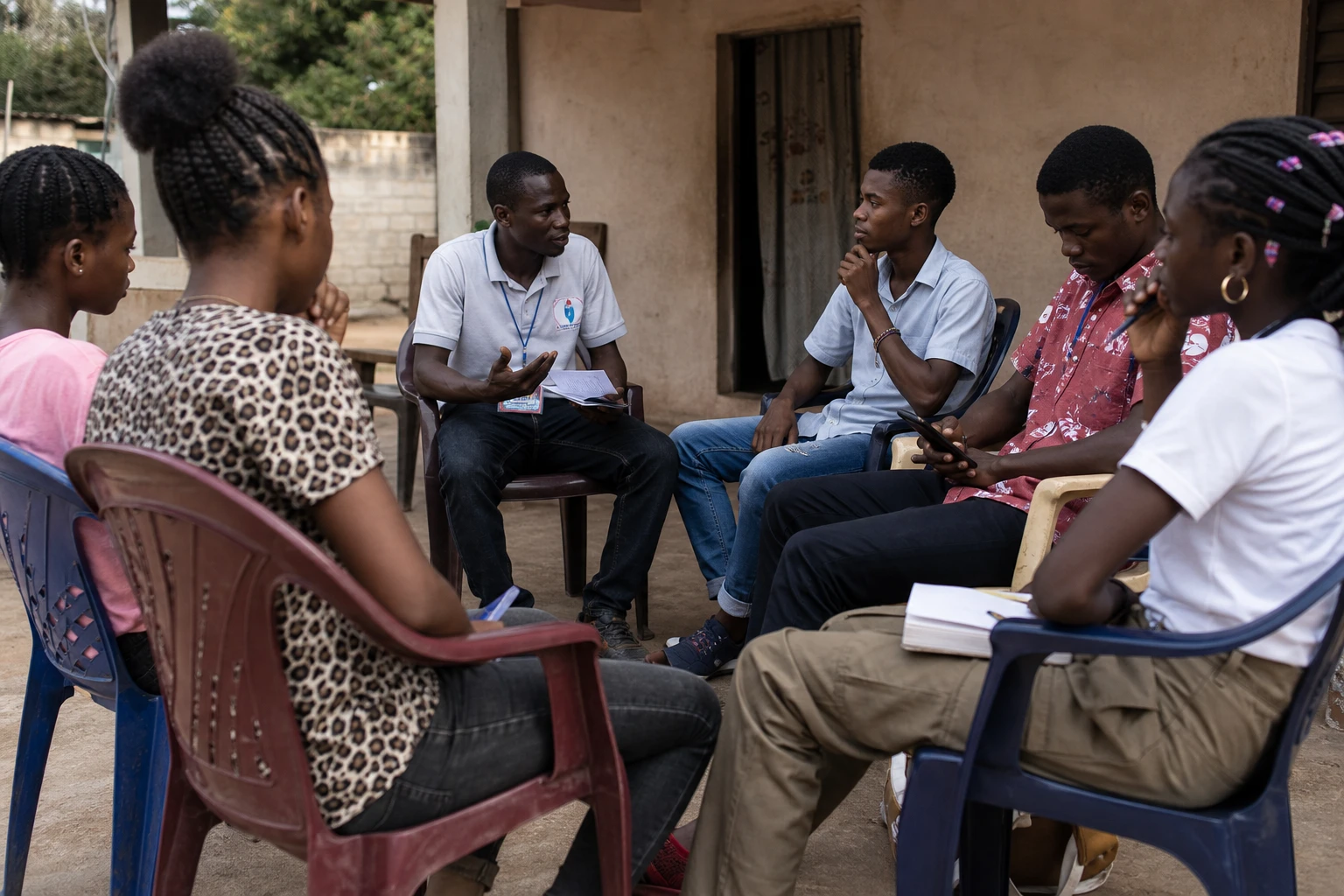
In Bangui, talking about the future is a practical act
In Bangui, young people are not short of ideas or energy. What they often lack are safe spaces in which to express them, test them against others’ views and turn them into useful projects. In the Central African Republic, where more than 73% of the population is under 35, every meeting that brings together training, self-confidence and leadership addresses a genuine national issue.
It is in this context that the fifth edition of an educational talk organised in Bangui by the JEFLUMA association forms part of a broader movement. For several years, associations, schools, NGOs and partners such as UNICEF and UNFPA have been stepping up initiatives to raise awareness, provide guidance and support Central African youth. This year’s announced theme, focused on leadership, challenging stereotypes and innovation, aligns with priorities already identified in national frameworks on youth, peace and education.
A local initiative in a country where youth is a defining issue
In the Central African Republic, youth is not merely a social category. It is also at the heart of the debate on stability, employment and the future of cities and provinces alike. Available data show that a significant proportion of young people are out of school, work or skills training, making mentoring and guidance spaces crucial. The World Bank estimated that around 660,000 young people, nearly 60% of this age group, were not in school, while UNFPA stresses that youth is a fundamental driver of peace and stability.
Within this landscape, Bangui occupies a particular position. As the political, administrative and economic capital, it concentrates both opportunities and frustrations. Central neighbourhoods have more educational and community initiatives than outlying areas or provinces, where access to training networks is more limited. UNFPA’s 2024 annual report on the Central African Republic also notes that opportunities and frameworks for political engagement are more accessible in Bangui than elsewhere, and sometimes non-existent in the provinces.
An educational talk: a simple format addressing a real need
The educational talk format has one merit: it speaks to young people without talking down to them. Participants exchange views with leaders, trainers, entrepreneurs, community or political representatives. They work on self-esteem, public speaking, discipline, educational and career guidance. In the Central African Republic, such events have already addressed a range of subjects, including disinformation, non-violence, menstrual hygiene and girls’ empowerment.
The fifth edition organised in Bangui continues this work. The organisers want to help girls and boys aged 15 to 30 envision a professional and civic future. Without claiming to replace school, these meetings fill a valuable gap: they provide guidance, role models and a shared language for discussing ambition, responsibility and leadership. They are also a reminder that young Central Africans are not merely beneficiaries of public policies, but actors capable of helping to shape them.
Gender remains central. JEFLUMA’s chosen theme emphasises dismantling stereotypes. This is no decorative slogan. In a country where girls still face more obstacles than boys in staying in school, accessing information or envisioning careers in management, discussing women’s leadership means tackling a concrete social barrier. UNICEF-supported initiatives in the Central African Republic also show that adolescent girls’ access to education remains linked to safety, transport, protection and the family environment.
What the event says about the Central African Republic today
This initiative tells a simple story: in the Central African Republic, rebuilding also means giving young people a voice. Successive crises have left deep scars, but they have not prevented the emergence of an active civil society, youth networks, school clubs and associations working on citizenship, peace, entrepreneurship and life skills. The Youth, Peace and Security Agenda, endorsed in Bangui in 2025, confirmed this direction by placing youth at the heart of national stability strategies.
The country belongs to CEMAC, the Central African economic community. This matters because the paths of young Central Africans do not stop at national borders. Their aspirations for employment, mobility, training and entrepreneurship also depend on the regional movement of skills and opportunities. When Bangui invests in youth leadership, the city is not just preparing an audience for its own institutions. It is also strengthening the human talent pool of a sub-region with a young population, where demand for skills is growing faster than formal employment.
The continental significance is clear. Across Africa, governments, NGOs and regional organisations are looking for ways to move from rhetoric about youth to practical support mechanisms. The Central African Republic shows that a country does not need a major programme to get started: a forum for discussion, credible speakers, a clear theme and young people who are genuinely listened to can already make a difference. The decisive next step is to turn these talks into lasting pathways to school, vocational training, civic engagement and employment.



