Algeria
 Egypt
 Libya
 Morocco
 Sudan
 Tunisia
 Benin
 Burkina Faso
 Cabo Verde
 Côte d'Ivoire
 Ghana
 Guinea
 Guinea-Bissau
 Liberia
 Mali
 Mauritania
 Niger
 Nigeria
 Senegal
 Sierra Leone
 The Gambia
 Togo
 Cameroon
 Chad
 DR Congo
 Equatorial Guinea
 Gabon
 Republic of the Congo
 São Tomé and Príncipe
 Burundi
 Comoros
 Djibouti
 Eritrea
 Ethiopia
 Kenya
 Madagascar
 Malawi
 Mauritius
 Mozambique
 Rwanda
 Seychelles
 Somalia
 South Sudan
 Tanzania
 Uganda
 Angola
 Botswana
 Eswatini
 Lesotho
 Namibia
 South Africa
 Zambia
 Zimbabwe
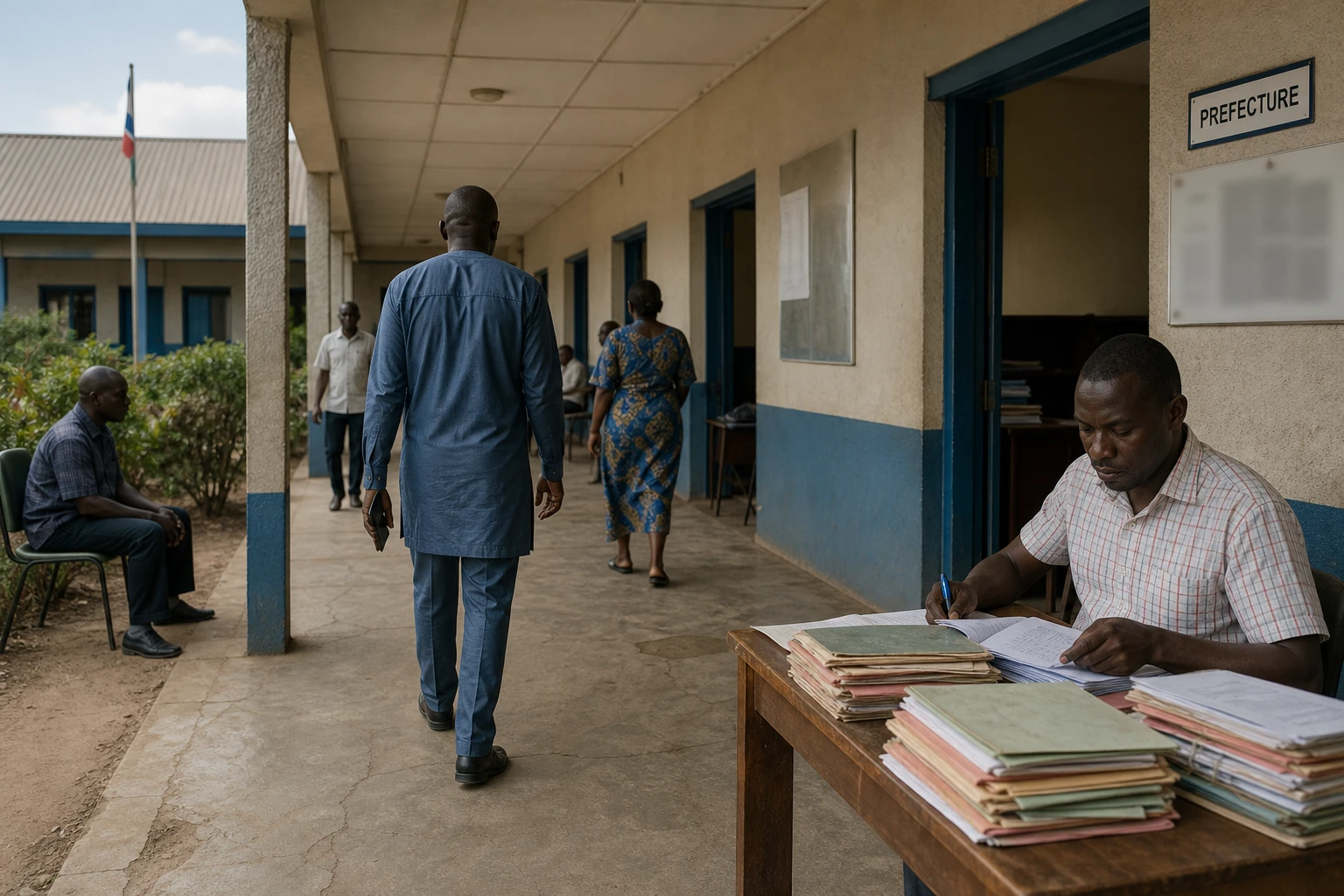
In south-eastern CAR, a local state outpost falters, but does not disappear
In Bambouti, in Haut-Mbomou, the return to freedom of a gendarmerie officer says more than a simple security incident. It tells the story of an area where the state is trying to re-establish a foothold, after public authority was long challenged by armed groups, population displacement and logistical isolation.
The Central African Republic designated 2025 as a year of joint elections, held on 28 December under the supervision of the National Elections Authority, with support from MINUSCA and regional and continental observers. But in the south-east, voting could not take place everywhere. Bambouti was among the localities where security remained too fragile to ensure polling stations could open as normal.
Haut-Mbomou also remains a sensitive border area. Bambouti lies near South Sudan, in a region where weapons, fighters, trafficking and refugees move across borders. This geography weighs heavily on the daily lives of residents, as well as those of state officials, who are often few in number and exposed to danger.
Séverin Ketemalet’s freedom: a locally confirmed episode still shrouded in uncertainty
According to the Haut-Mbomou prefecture, Séverin Ketemalet, commander of the Bambouti gendarmerie brigade, regained his freedom after nearly eight months in captivity. Local authorities say he escaped on Monday 3 August 2026, with the help of an Azande militiaman, before being received in Zemio. Local authorities confirmed this account the following day.
The man had been abducted on 28 December 2025, the day of the general elections, along with three other people. The group included the sub-prefect of Bambouti and two agents of the National Elections Authority. On that date, AAKG militiamen, from Azandé Ani Kpi Gbè, had prevented the vote from taking place in the locality.
Caution is nevertheless necessary. The available information does not make it possible to determine whether this was a genuine escape, an arrangement with his captors or a negotiated release. Local authorities have provided no public evidence to confirm any single account of events.
Administrative authorities described the commander as severely weakened, with psychological after-effects linked to the length of his detention. This human dimension matters. It is a reminder that in the Central African Republic, the abduction of a state official is never merely symbolic. It also disrupts basic services, the flow of public information and civil protection.
The other Bambouti hostages remain in captivity. The sub-prefect and the two election officials had not been reported released at the time of the latest information cross-checked. Their continued detention shows that the crisis is not over simply because a gendarmerie commander has escaped.
AAKG, local control and the challenge of sovereignty: what this episode says about CAR
AAKG, or Azandé Ani Kpi Gbè, emerged in 2023 in the south-east of the Central African Republic. Initially presented as an Azande self-defence group, it later became involved in clashes with the Central African Armed Forces and came under critical scrutiny from the United Nations, which reported attacks on civilians, national forces and MINUSCA.
The case of Bambouti illustrates a recurring problem in Central Africa: the difficulty states face in maintaining their outposts in border areas over the long term. When the administrative presence falters, the vacuum is quickly filled by local armed dynamics, sometimes communal, sometimes hybrid, and often linked to war, self-defence and survival.
For Bangui, the stakes go beyond the fate of one gendarme. The challenge is to restore a minimum chain of authority in Haut-Mbomou, as the government seeks to consolidate the state in remote prefectures and international partners continue to support stabilisation and electoral security operations.
For residents, the impact is tangible. When a brigade is neutralised, a sub-prefecture is taken hostage and an election does not take place, the same chain is broken: civil registration, transport, healthcare, schools, information and electoral services. The crisis then becomes administrative as well as military.
The case also sheds light on the role of MINUSCA and regional frameworks. In Central Africa, ECCAS is closely monitoring the elections and security vulnerabilities, while the UN continues to document violence in south-eastern CAR. The country thus remains a test of the consolidation of public authority in an area where local insecurity has immediate regional effects, extending to routes towards South Sudan and the Congolese border.
What happens next will depend above all on two things. First, the situation of the three other Bambouti hostages. Second, the Central African state’s ability to prevent a captivity episode from becoming a political precedent. In Haut-Mbomou, the real question is not only who escaped. It is who still controls the ground, and for how long.