Algeria
 Egypt
 Libya
 Morocco
 Sudan
 Tunisia
 Benin
 Burkina Faso
 Cabo Verde
 Ghana
 Guinea
 Guinea-Bissau
 Liberia
 Mali
 Mauritania
 Niger
 Nigeria
 Senegal
 Sierra Leone
 The Gambia
 Togo
 Cameroon
 Central African Republic
 Chad
 DR Congo
 Equatorial Guinea
 Gabon
 Republic of the Congo
 São Tomé and Príncipe
 Burundi
 Comoros
 Djibouti
 Eritrea
 Ethiopia
 Kenya
 Madagascar
 Malawi
 Mauritius
 Mozambique
 Rwanda
 Seychelles
 Somalia
 South Sudan
 Tanzania
 Uganda
 Angola
 Botswana
 Eswatini
 Lesotho
 Namibia
 South Africa
 Zambia
 Zimbabwe
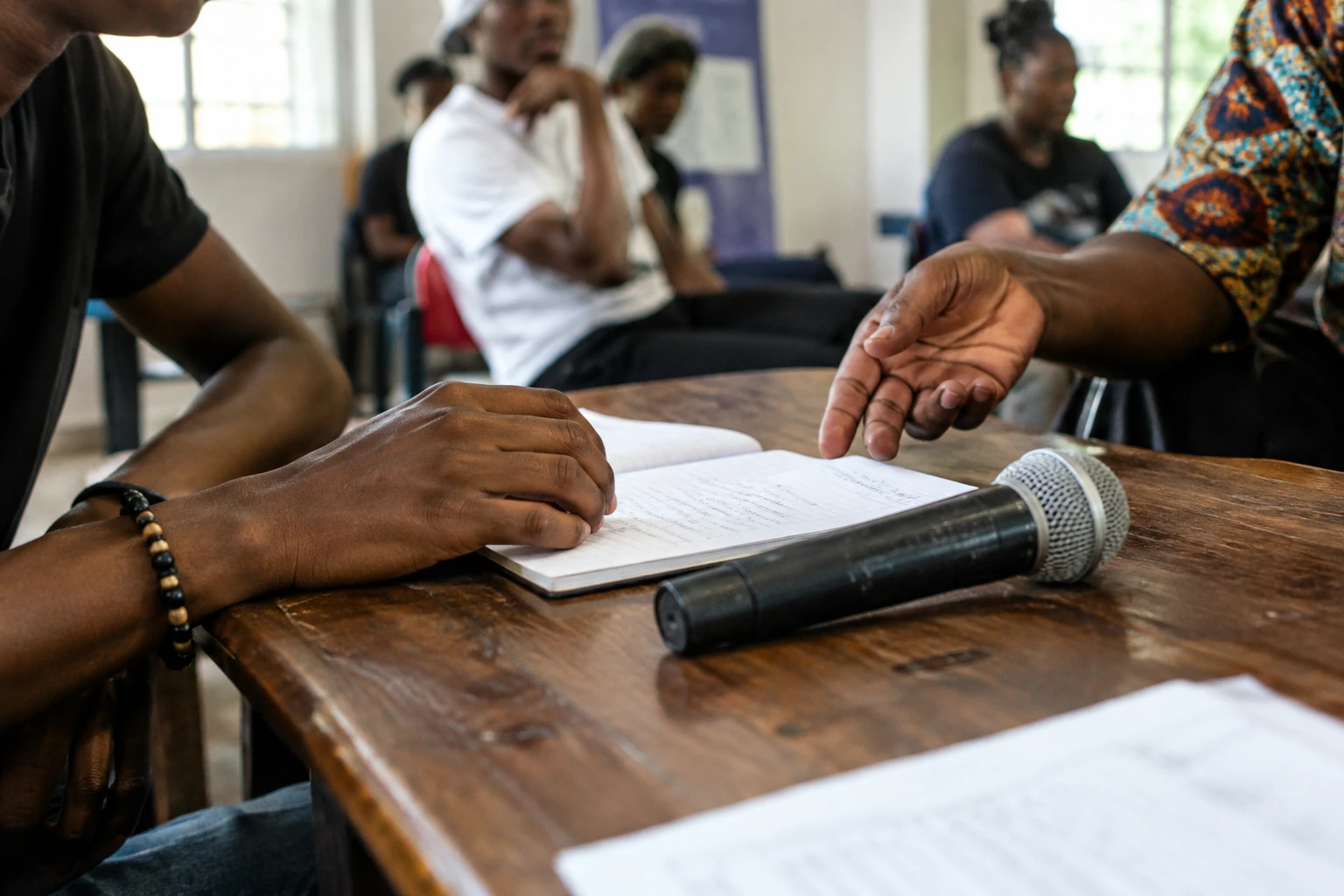
In Abidjan, slam is no longer limited to a performance on stage. It is also passed on in workshops, between established artists and emerging voices seeking to find their place. The tenth edition of the Babi Slam festival put this knowledge-sharing at the heart of its gatherings, ahead of the Grand Slam Night held on Saturday 31 October 2026.
A scene built over the years
The festival is organised by the Ivorian collective “Au Nom du Slam”. Since its beginnings, the collective has helped raise awareness of an art form in which poetry takes shape through the spoken word, sometimes accompanied by music. The aim is also to create opportunities for training and exchange beyond the performance itself.
The progress made can be measured in the words people use. Amee Slam, the collective’s president, recalls a time when introducing oneself as a slam poet often called for an explanation, or even an immediate demonstration. Today, the term is more widely recognised in Côte d’Ivoire’s cultural landscape.
This evolution is part of a broader history. Ivorian slam has grown through collectives, open-mic events and cultural gatherings. The Fédération Ivoirienne de Slam Poésie, established in 2021, is helping to organise the sector and coordinate artists. Babi Slam is one of the spaces where this scene is made visible.
From workshops to the stage: knowledge passed on in practice
The tenth edition brought together artists from different generations and countries. Elba, a Cameroonian slam poet who attended the gatherings, spoke in particular about what she learned in the workshops, including those led by rapper and author Oxmo Puccino. The Grand Slam Night then brought together Ivorian and international artists, with Oxmo Puccino as special guest.
For Bérénice, Côte d’Ivoire’s national slam champion in 2022, the guidance of more experienced artists matters as much as performing on stage. She describes a collective that guides, corrects and encourages younger artists. This practical, oral transmission helps new vocations emerge and sustains connections between generations of artists.
The evening ended with a concert by Oxmo Puccino. His presence gave the event the feel of a meeting between slam and rap, two forms in which text, rhythm and performance are central, even if their conventions are not the same.
An Abidjan gathering open to regional exchange
Abidjan is home to much of Côte d’Ivoire’s cultural infrastructure and events. But the festival is not confined to a local scene: guest artists and workshops encourage texts and practices to circulate between countries. The presence of a Cameroonian slam poet illustrates this West and Central African dimension, without erasing the distinct paths of each national scene.
This openness adds to a cultural network already animated by festivals, institutes, associations and professional events. The Abidjan Performing Arts Market, or MASA, also helps raise the profile of the continent’s performing arts. These events do not all serve the same purpose: some focus on showcasing work, others on training or bringing artists together.
The presence of an internationally known artist can attract a wider audience. But the festival’s continuity also depends on less visible work: organisation, mentoring, rehearsals and access to performance spaces. For young slam poets, these opportunities can help them develop their practice and meet their peers. They do not, however, guarantee regular income or professional opportunities.
The future also lies beyond the economic capital
The challenge for Côte d’Ivoire’s slam scene is now to extend opportunities beyond Abidjan, the economic capital, and support artists over the long term. Yamoussoukro, the political capital of Côte d’Ivoire, and other cities in the country have their own audiences and cultural dynamics. Events held in different parts of the country can broaden access to workshops and stages, provided the resources are available.
At regional level, Babi Slam is a reminder that spoken-word arts readily cross linguistic and national borders while remaining rooted in local realities. The challenge for future editions will be to preserve this balance: welcoming voices from elsewhere, consolidating Ivorian artists’ careers and giving emerging talent a genuine place. A decade of festival marks a milestone; transmission is measured in the stages and collaborations that follow.