Algeria
 Egypt
 Libya
 Morocco
 Sudan
 Tunisia
 Benin
 Burkina Faso
 Cabo Verde
 Côte d'Ivoire
 Ghana
 Guinea
 Guinea-Bissau
 Liberia
 Mali
 Mauritania
 Niger
 Nigeria
 Senegal
 Sierra Leone
 The Gambia
 Togo
 Cameroon
 Central African Republic
 Chad
 DR Congo
 Equatorial Guinea
 Gabon
 Republic of the Congo
 São Tomé and Príncipe
 Burundi
 Comoros
 Djibouti
 Eritrea
 Ethiopia
 Kenya
 Madagascar
 Malawi
 Mauritius
 Mozambique
 Rwanda
 Seychelles
 Somalia
 South Sudan
 Tanzania
 Uganda
 Botswana
 Eswatini
 Lesotho
 Namibia
 South Africa
 Zambia
 Zimbabwe
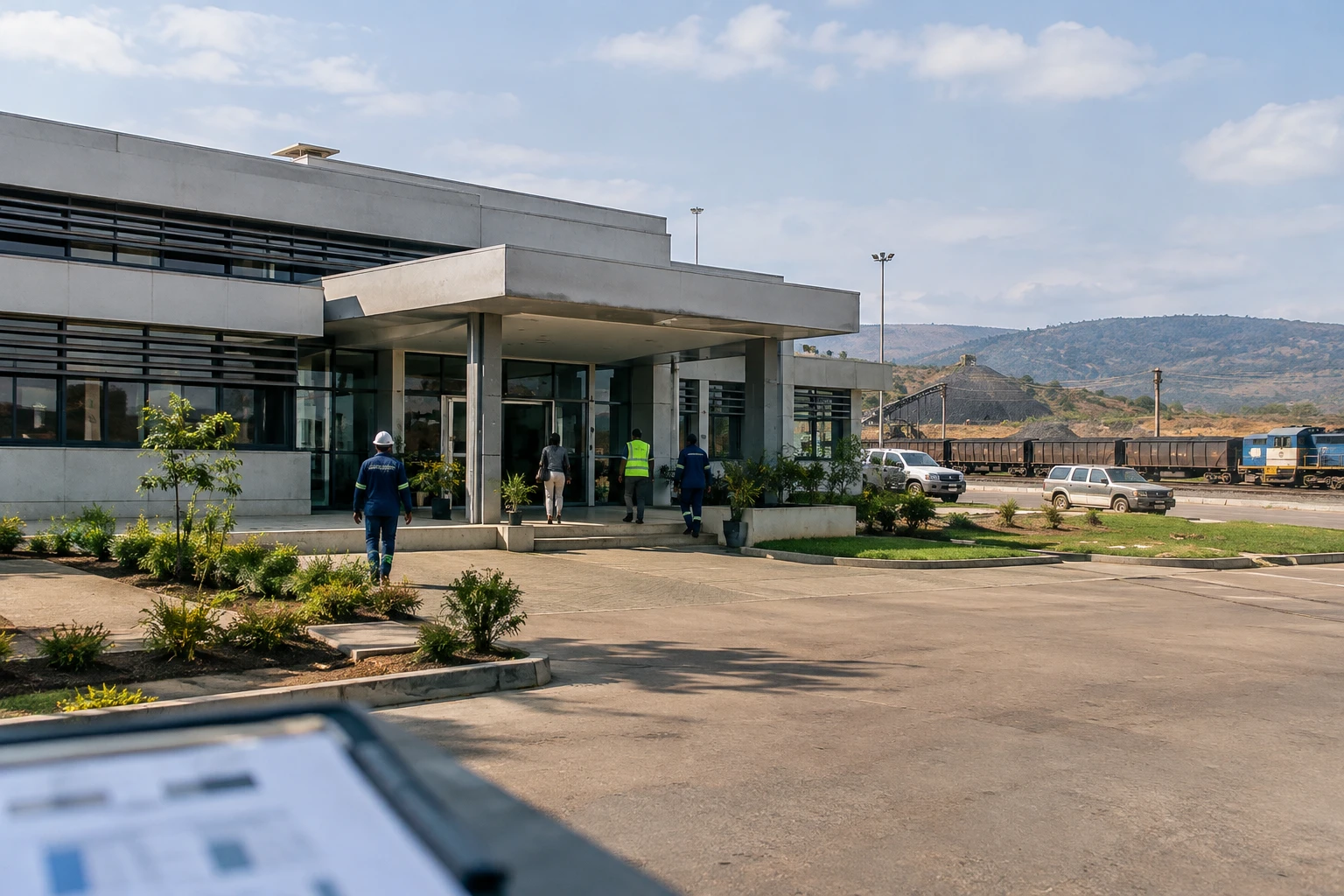
At Longonjo, in Angola’s Huambo province, the timetable for a future mine is now being shaped as much by financial negotiations as by work on site. For Angola, the stakes go beyond opening an extraction site: the question is what role the country can play in a global supply chain where strategic minerals are in demand, but processing remains concentrated outside the continent.
An Angolan project at the heart of a regional corridor
The Longonjo deposit is about 350 kilometres south-east of Luanda. It is part of a country seeking to diversify its economy, which remains heavily dependent on hydrocarbons, and to develop the value of its mineral resources. Rare earths comprise elements used in, among other things, some permanent magnets, electronic equipment and energy technologies.
The project is also linked to the Lobito Corridor, a rail and port infrastructure connecting Angola to the Democratic Republic of the Congo and, in time, Zambia. The line provides an export route to the Atlantic port of Lobito. This regional ambition is part of the work of SADC, the Southern African Development Community, which brings countries in the region together to co-ordinate infrastructure and trade, among other areas.
But easier exports alone do not guarantee that the most lucrative stages of the chain — separation, refining and magnet manufacturing — will take place in Angola or neighbouring countries. The debate over local processing therefore remains central.
Financing delays production
On 26 October 2026, Pensana, the British company developing Longonjo with its Angolan subsidiary Ozango Minerais, said it was targeting commissioning in early 2028. Production at full capacity is now expected in September 2028. At the beginning of the year, the group was still envisaging first production in 2027.
The company says the timetable depends on finalising financing. Pensana is seeking to raise between $75 million and $90 million in equity for Ozango and is continuing discussions on loans with ABSA and the US Export-Import Bank, EXIM. The group says Cascade Natural Resources, its strategic investor, has paid $15 million towards a total commitment of $165 million. It says a further substantial tranche could be released soon, although payment has not yet been secured.
This information comes from Pensana’s communications. South African publication Engineering News also reported on 26 October the need for $75 million to $90 million in financing, the $15 million already invested by Cascade and the 2028 production target. This cross-check confirms the announced figures, but does not provide independent assurance that the remaining financing will in fact be secured.
Pensana says 30% of the overall construction schedule has been completed and more than 60% of procurement expenditure committed. These advances do not remove the financial risk: the company says some site work and orders have slowed while it seeks capital. The company also expects purchase agreements and debt approvals to be finalised by February 2027. These steps will be crucial to keeping to the announced deadline.
Intermediate production, returns yet to be verified
In its first phase, the project is targeting 20,000 tonnes a year of mixed rare earth carbonate, or MREC. This is an intermediate product containing several elements that still requires processing before it can become separated oxides or materials ready for industrial manufacturing. Pensana plans to produce neodymium and praseodymium, as well as smaller quantities of dysprosium and terbium. The company then plans to raise production to 40,000 tonnes a year from the fourth year.
The announced initial development cost is $250 million. Pensana plans to transport the product via the Lobito Corridor and says the site will benefit from hydropower supply. This infrastructure could facilitate access to overseas markets. However, exporting MREC does not automatically mean Angola will capture the revenue and jobs associated with separation and component manufacturing.
Local benefits will also depend on the jobs created, procurement from Angolan companies, public revenue and planned community investment. The mining agreement cited for Longonjo provides for a royalty of 2% of revenue, according to information available on the project. Angola’s mining tax regime provides for several royalty rates depending on the category of mineral; its application to Longonjo must therefore be considered in light of the contractual provisions and the classification used.
The timetable as a test of credibility
Longonjo illustrates a tension affecting several African mining projects: resources attract international investors and buyers, but financing delays can push back the revenue expected by the state and communities. For Huambo’s residents, tangible effects will depend on announcements translating into jobs, local contracts and investments actually delivered. Nationally, the project will also test Angola’s ability to turn its resources into sustainable economic activity.
The regional dimension is just as important. The Lobito Corridor is presented as a trade route connecting Angola, the DRC and Zambia to global markets. Longonjo could boost mineral flows along this route, but its industrial impact will depend on the share of processing carried out in the region and the commercial agreements governing sales. For now, Pensana says it is in discussions with potential buyers, but its 26 October update did not announce firm agreements covering planned production.
The next stated milestone is February 2027, the target date for binding purchase agreements and debt approvals. Pensana’s ability to secure the equity it is seeking will then determine whether work on site can accelerate. The mine will therefore not produce in 2027, as the company had previously envisaged. For Angola, the challenge will be to ensure that this delay does not reduce the ambition to simple extraction for export, but also supports the development of skills, jobs and value added in the country and southern Africa.
Background sources: Engineering News report on Longonjo’s financing and timetable, Pensana update on mine development, overview of the Lobito Corridor and mining tax regime of Angola’s National Agency for Mineral Resources.