Algeria
 Egypt
 Libya
 Morocco
 Sudan
 Tunisia
 Benin
 Burkina Faso
 Cabo Verde
 Côte d'Ivoire
 Ghana
 Guinea
 Guinea-Bissau
 Liberia
 Mali
 Mauritania
 Niger
 Nigeria
 Senegal
 Sierra Leone
 The Gambia
 Togo
 Cameroon
 Central African Republic
 Chad
 DR Congo
 Equatorial Guinea
 Gabon
 Republic of the Congo
 São Tomé and Príncipe
 Burundi
 Comoros
 Djibouti
 Eritrea
 Ethiopia
 Kenya
 Madagascar
 Malawi
 Mauritius
 Mozambique
 Rwanda
 Seychelles
 Somalia
 South Sudan
 Tanzania
 Uganda
 Botswana
 Eswatini
 Lesotho
 Namibia
 South Africa
 Zambia
 Zimbabwe
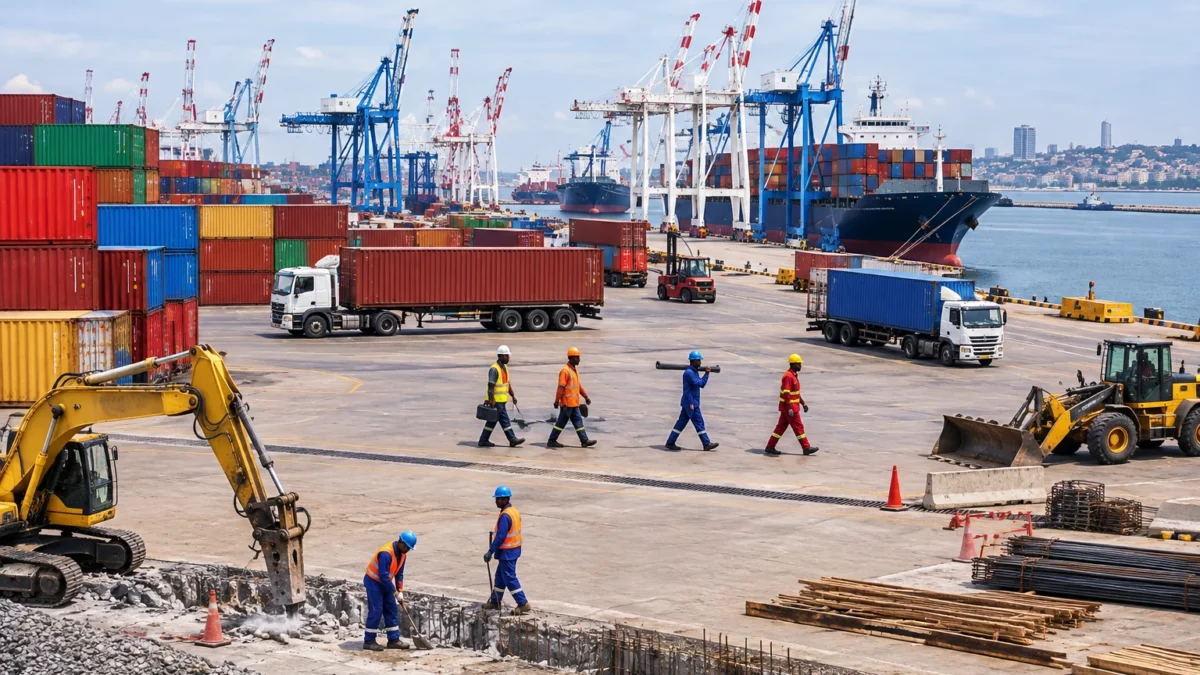
A port does not secure its place on the map through cranes alone. It also needs quays able to accommodate new equipment, reliable turnaround times and efficient routes inland. In Luanda, a project launched by DP World is intended to prepare for this transformation, as the country seeks to better connect its trade with regional markets.
A quay to strengthen before new ship-to-shore cranes arrive
Egyptian group EDECS has won a design and construction contract from DP World to strengthen and modernise the quay at its container terminal in the port of Luanda. The work covers the existing 610-metre quay. The value of the contract and its detailed timetable have not been disclosed.
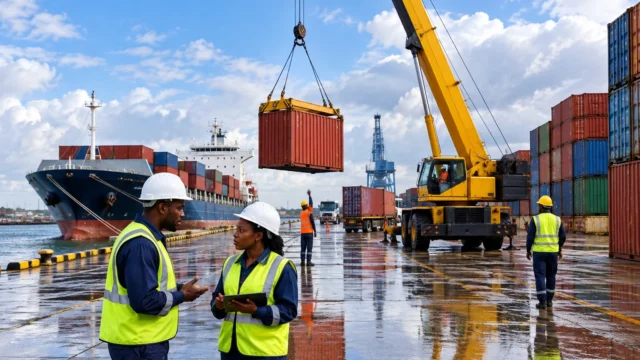
The work is intended in particular to make the quay compatible with rail-mounted ship-to-shore cranes. These cranes, known as STS, load and unload ships from the quay. They will replace or complement the mobile cranes currently in use. The modernisation therefore covers foundations and equipment, as well as the networks and facilities needed to operate them.
The contract forms part of a wider investment programme. On 6 October 2026, DP World announced an additional $90 million for the terminal, following a ten-year extension of its concession, which is now due to run until 2051. The company says it plans to extend the quay to about 830 metres and increase annual theoretical capacity from 500,000 to 1.2 million TEU, the standard unit equivalent to a 20-foot container. The plan also includes the purchase of three STS cranes and 12 semi-automated rubber-tyred gantry cranes, known as RTGs. These announced capacities are project targets, not volumes already handled.
Luanda, a maritime gateway at the heart of Angola
The port of Luanda handles a significant share of Angola’s maritime trade. DP World says the port processes more than 76% of the country’s container and general cargo volumes. This proportion should be read as a figure attributed to the operator and published as part of communications on port infrastructure. The company also estimates that container traffic in Angola could grow by an average of 3.3% a year over the next decade.
The capital is not, however, the country’s only maritime gateway. The port of Lobito, further south, is at the centre of a rail corridor serving mining regions in the Democratic Republic of the Congo and Zambia. This potential complementarity does not remove competition: both Luanda and Lobito must attract operators and link their quays to inland networks capable of moving goods.
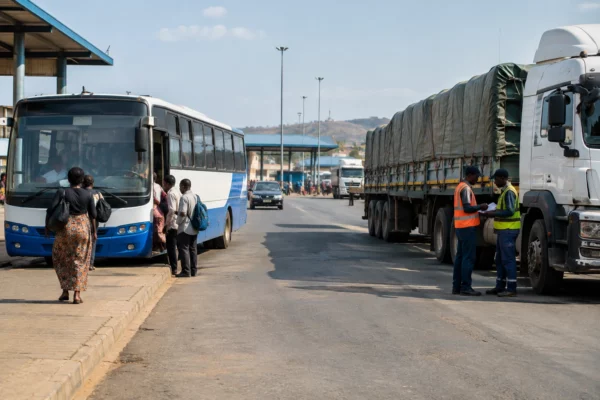
For Luanda, the stakes extend beyond Angolan imports and exports. The terminal could also serve as a transit point to landlocked markets, including some regions of the DRC and Zambia. But increased port capacity alone does not guarantee higher trade. The cost of passage, customs formalities, the availability of lorries and railways, and delays at borders will all weigh on shippers’ decisions.
Gains will depend on inland connections
More efficient cranes can speed up loading and reduce the time ships spend at berth. Greater capacity can also help absorb future volumes. For importers and exporters, however, the practical impact will depend on service reliability and whether productivity gains are reflected in lower logistics costs.
The benefits will not automatically be shared by all stakeholders. Shipping companies and large shippers may benefit from faster operations. Angolan businesses, particularly those importing inputs or exporting products, will chiefly expect predictable costs and shorter lead times. Hauliers, port workers and small businesses linked to port operations will be affected by changes to equipment, work organisation and skills requirements.
The extension of the concession until 2051 gives DP World a long-term horizon in which to recoup its investments. It also commits the management of strategic infrastructure to a private operator over the long term. Information published about the project does not detail the contractual terms, service commitments or public oversight mechanisms. These factors will matter in assessing how the investment aligns with Angola’s objectives.
Regional competition is also being fought on corridors
Angola is a member of the Southern African Development Community (SADC), a regional organisation that encourages economic co-operation and transport links between its members. Across the region, several maritime gateways are seeking to attract trade flows. Luanda’s performance will therefore be measured as much against other ports as by the quality of the corridors linking ports to cities, production zones and landlocked countries.
The development of the Lobito Corridor illustrates this regional dimension. Backed by Angolan and foreign partners, it aims to link the Atlantic port to mining markets in the DRC and Zambia. Luanda has a different role, notably as a major gateway for the Angolan domestic market. The coexistence of these routes could strengthen the country’s connectivity, provided investments meet the needs of the areas they cross and are not limited to port facilities.
The next step will be to verify the completion of the work and the commissioning of the new equipment, then compare the announced results with the actual turnaround times, costs and volumes handled. For Angola, the challenge is to turn an extended quay into smoother trade and useful regional connections, without confusing installed capacity with actual activity.