Algeria
 Egypt
 Libya
 Morocco
 Sudan
 Tunisia
 Benin
 Burkina Faso
 Cabo Verde
 Côte d'Ivoire
 Ghana
 Guinea
 Guinea-Bissau
 Liberia
 Mali
 Mauritania
 Niger
 Nigeria
 Senegal
 Sierra Leone
 The Gambia
 Togo
 Cameroon
 Central African Republic
 Chad
 DR Congo
 Equatorial Guinea
 Gabon
 Republic of the Congo
 São Tomé and Príncipe
 Burundi
 Comoros
 Djibouti
 Eritrea
 Ethiopia
 Kenya
 Madagascar
 Malawi
 Mauritius
 Mozambique
 Rwanda
 Seychelles
 Somalia
 South Sudan
 Tanzania
 Uganda
 Botswana
 Eswatini
 Lesotho
 Namibia
 South Africa
 Zambia
 Zimbabwe
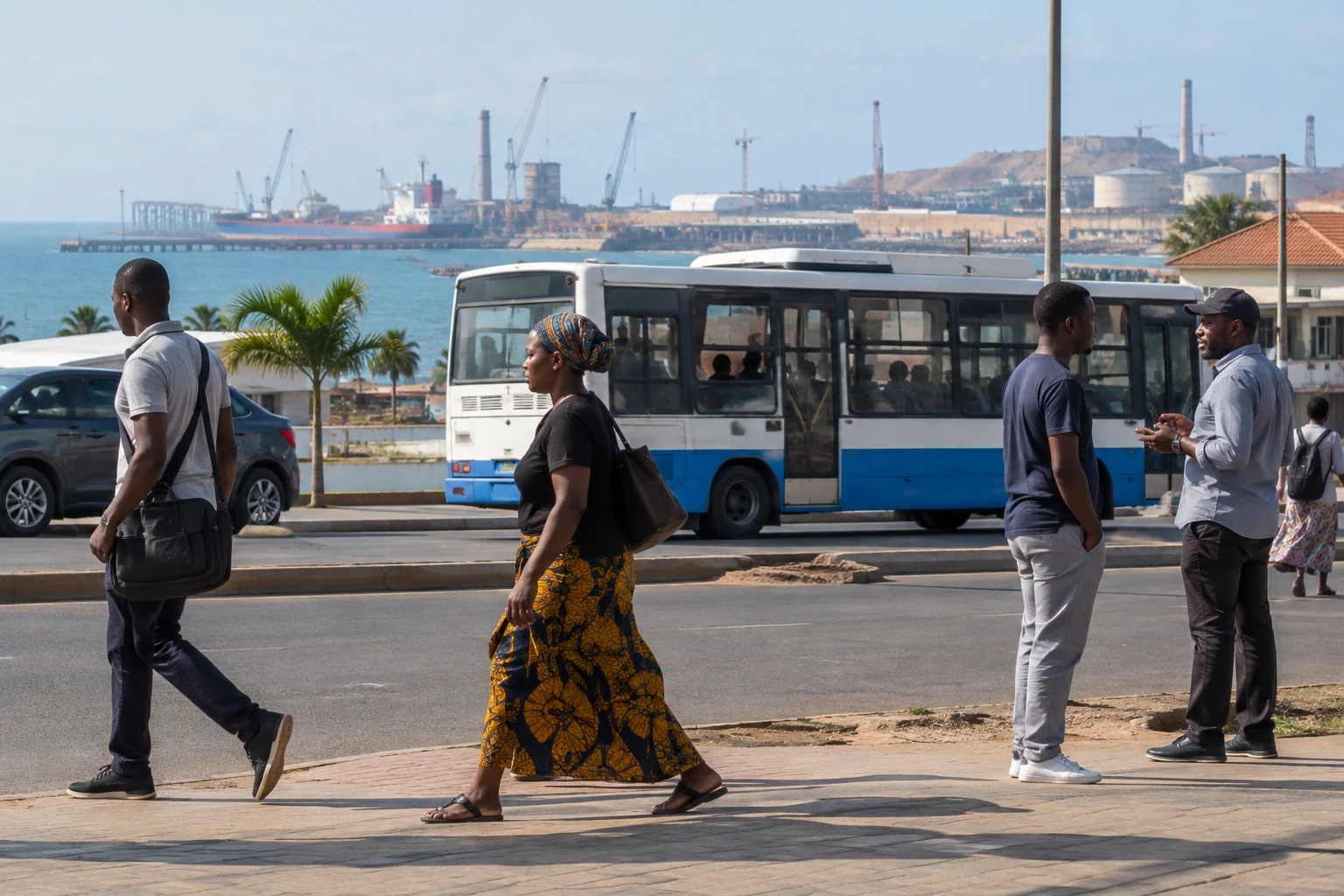
For Angola, the question is no longer just how to produce oil. It is also about refining a greater share of its crude at home and securing fuel supplies for southern Africa. At Lobito, this industrial ambition now depends as much on partners and financing as on construction itself.
An industrial project at the heart of regional ties
The refinery is planned in Benguela province, on Angola’s Atlantic coast. Its design capacity is 200,000 barrels of crude a day. Sonangol, the state oil company, presents the project as a way to reduce imports of refined products and develop industrial activity around the site. The official presentation of the Lobito refinery project also highlights its potential to create a petrochemicals hub.
This ambition concerns a country that exports crude oil but still relies on foreign supplies for a significant share of its petrol, diesel and other fuels. Refining more at home could therefore limit this dependence. It does not, however, guarantee lower prices at the pump or equitable access to products: those outcomes will depend on production costs, distribution channels and state decisions.
The project is also part of relations between Angola and Namibia. The two countries have established a framework for co-operation on hydrocarbons and mineral resources. In 2023, they set up a technical group to follow up on their memorandum of understanding. Angola’s oil ministry announced this co-operation mechanism at the time.
Luanda renews its invitation
On 20 October 2026, Namibian President Netumbo Nandi-Ndaitwah visited the Luanda refinery during her trip to Angola. Angola’s Minister of Mineral Resources, Petroleum and Gas, Diamantino Azevedo, renewed João Lourenço’s invitation to Namibia to join the Lobito project as a partner. The announcement was made during the visit, according to the relevant Angolan ministry.
The meeting took place during the first session of the Angola-Namibia bilateral commission. The Angolan president had also extended the invitation during the state visit on 19 October. It is therefore a renewed political proposal, not confirmation of an investment agreement. So far, no Namibian decision to take an equity stake has been announced in the official information consulted.
This caution has a precedent. In September 2023, a Namibian media outlet reported that Windhoek was considering two options: investing in the Angolan refinery or exploring the construction of its own facility. A Namibian mines and energy ministry official described the deliberations at the time as exploratory. Namibian media documented this hesitation. Since then, the prospect of developing a domestic oil industry has given Namibia its own interest in assessing the terms of a partnership.
Financing and the timetable remain decisive
Available figures on progress and cost should be treated with caution, as they vary according to announcements and the scope used. In August 2026, Angola’s ministry said overall completion had reached 25%, with total investment put at $3.8bn. It also outlined various technical stages, some of which were still to begin. This recent official update on the progress of refining projects does not, on its own, confirm earlier estimates of a total cost of $6.2bn or $4.8bn still to be raised.
Timetables have also shifted. The ministry’s official communications now put completion of Lobito in 2029. This is later than projections previously cited in the information provided about the project. It serves as a reminder that a project of this scale depends on raising capital, carrying out the work and co-ordination between companies and authorities.
For Angola, the challenge goes beyond finding an investor. It must attract partners without relinquishing national control of strategic infrastructure, and make the project economically viable. For residents and businesses, the impact will depend in particular on the refinery’s ability to supply the domestic market on affordable terms. For regional operators, the benefits will hinge on the regularity of available volumes, prices and transport infrastructure.
A regional supply offer still to be built
Namibia is not the only country approached by Luanda. Zambia has already expressed interest in participating in the project, while Botswana has raised the possibility. But an invitation or expression of interest is not a financial commitment. Each partner will have to weigh the terms of participation against expected benefits, construction risks and its own energy priorities.
Across southern Africa, an operational refinery at Lobito could diversify supply sources and strengthen trade between neighbouring countries. Angola, a member of the Southern African Development Community (SADC), is thus at the intersection of a national ambition and a regional market. However, the announced capacity alone will not make Lobito a reliable supplier: the work must be completed, sales organised and products transported to customer countries.
The next steps to watch are therefore concrete: an official response from Namibia, the financial terms offered to partners and actual progress on the construction site towards the 2029 deadline. Until these elements are clarified, Lobito remains a major industrial promise for Angola, but not yet a new regional source of fuel.