Egypt
 Libya
 Morocco
 Sudan
 Tunisia
 Benin
 Burkina Faso
 Cabo Verde
 Côte d'Ivoire
 Ghana
 Guinea
 Guinea-Bissau
 Liberia
 Mali
 Mauritania
 Niger
 Nigeria
 Senegal
 Sierra Leone
 The Gambia
 Togo
 Cameroon
 Central African Republic
 Chad
 DR Congo
 Equatorial Guinea
 Gabon
 Republic of the Congo
 São Tomé and Príncipe
 Burundi
 Comoros
 Djibouti
 Eritrea
 Ethiopia
 Kenya
 Madagascar
 Malawi
 Mauritius
 Mozambique
 Rwanda
 Seychelles
 Somalia
 South Sudan
 Tanzania
 Uganda
 Angola
 Botswana
 Eswatini
 Lesotho
 Namibia
 South Africa
 Zambia
 Zimbabwe
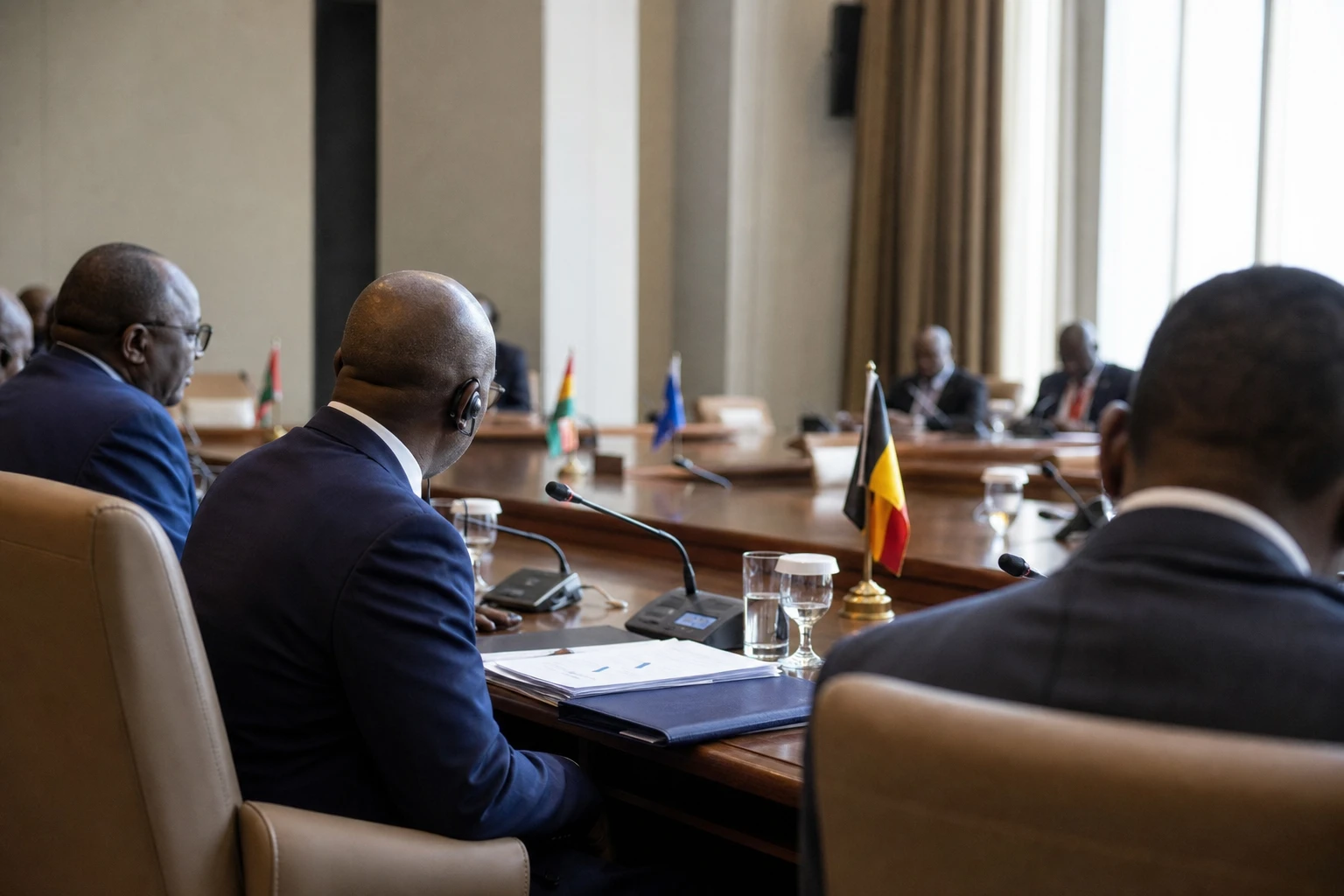
When flames hit villages, the political response quickly goes beyond security alone
In Algeria, forest fires do not affect only wooded areas. They also hit families, roads, water networks and rural areas where people expect the state to be present. Following the wave of fires that claimed lives in the north-east of the country, President Abdelmadjid Tebboune has chosen an unusually tough criminal response: he wants to reopen the Penal Code to allow the death penalty for those who deliberately start fires.
The decision comes amid a sensitive regional context. Algeria is part of the Maghreb, where climate pressures, drought and the vulnerability of forest areas make fire prevention more difficult. In the country, crisis management is often highly centralised around the presidency, the Interior Ministry, Civil Protection and the Justice Ministry. The message is therefore as political as it is judicial: to show that the state intends to punish more harshly, but also to take control of an issue seen by the public as explosive.
What the facts show: heavy loss of life, a tight timetable and questions over the cause
The fires affected several provinces, including Béjaïa, Jijel and Tizi Ouzou. Figures reported by the authorities and several media outlets agree on at least 12 dead and 54 injured, including some in serious condition. The deaths recorded were in Jijel, Béjaïa and Tizi Ouzou. According to the press and Algeria’s state news agency, the president gave the Justice Ministry until 15 September to propose an amendment to the Penal Code.
The current law already provides for heavy sentences. Deliberately setting fire to a forest is punishable by up to 30 years in prison, or even more in certain aggravating circumstances, according to information published by media outlets citing the regulations in force. Tebboune wants to go further by reintroducing the death penalty, with execution, for this type of offence. This is significant because it is not merely a symbolic toughening of the law: it would require an explicit rewriting of the criminal code.
The head of state has also questioned the fact that several fires broke out simultaneously in the middle of the night, fuelling suspicions of criminal acts. At the same time, the authorities have stressed the need to care for the injured, compensate those affected quickly and repair damaged homes. Public services must restore electricity, gas, water and telecommunications as soon as possible in the affected areas.
A tough criminal response may meet public anger, but cannot replace prevention or local resilience
The debate goes beyond the question of punishment alone. In the forested regions of northern Algeria, fires strike inhabited and cultivated areas, as well as places where informal activities depend on a swift return to normal. For residents, the immediate priorities are practical: rebuilding, making repairs, restarting businesses and restoring public services. For the state, the political challenge is also to prevent anger from turning into accusations of impotence.
The death penalty remains part of Algerian law, but no executions have been carried out since 1993. Amnesty International notes that the country has maintained a de facto moratorium since then. This means that the announced restoration would be less a new measure than a break with a practice in place for more than 30 years. In a country where death sentences are still handed down in some sensitive cases, the issue touches on justice, deterrence and Algeria’s international image.
Several human rights organisations point out that the harshest penalty cannot replace surveillance resources, forest maintenance or the coordination of emergency services. The core of the problem also lies in early warning, rapid access to remote areas, equipment for firefighting brigades and the protection of rural communities. In other words, punishment can complement public policy, but cannot by itself prevent disasters. This is not an ideological interpretation: it reflects the well-known limits of a purely punitive response to an environmental and territorial risk.
The Algerian case resonates beyond the country’s borders
Across Africa, the case highlights a recurring debate: how do states respond to disasters when climate vulnerability, security concerns and public pressure converge? Algeria is not alone in facing severe fires, and countries in the Maghreb, as in other African sub-regions, know that dry seasons become more dangerous when prevention lags behind. The issue therefore concerns criminal justice, civil protection and climate adaptation alike.
What happens next will depend on two deadlines. First, the promised legal changes due before 15 September. Second, the state’s ability to show in the following weeks that those affected are indeed rehoused, compensated and supported. That is where the credibility of the public response will be tested. In a country that has already experienced deadly fires in Kabylie and the east, the issue goes far beyond the day’s controversy: it says something about how Algeria intends to protect its territory, its people and its judicial sovereignty.