Egypt
 Libya
 Morocco
 Sudan
 Tunisia
 Benin
 Burkina Faso
 Cabo Verde
 Côte d'Ivoire
 Ghana
 Guinea
 Guinea-Bissau
 Liberia
 Mali
 Mauritania
 Niger
 Nigeria
 Senegal
 Sierra Leone
 The Gambia
 Togo
 Cameroon
 Central African Republic
 Chad
 DR Congo
 Equatorial Guinea
 Gabon
 Republic of the Congo
 São Tomé and Príncipe
 Burundi
 Comoros
 Djibouti
 Eritrea
 Ethiopia
 Kenya
 Madagascar
 Malawi
 Mauritius
 Mozambique
 Rwanda
 Seychelles
 Somalia
 South Sudan
 Tanzania
 Uganda
 Angola
 Botswana
 Eswatini
 Lesotho
 Namibia
 South Africa
 Zambia
 Zimbabwe
A market under pressure, a decision under scrutiny
Oil has long since moved beyond the realm of crude prices alone. It affects budgets, foreign exchange reserves and diplomatic room for manoeuvre — and, in Algeria, an economy still heavily dependent on hydrocarbons. It is against this backdrop that OPEC+ has chosen to proceed cautiously, returning a further share of production to the market in the heart of summer.
For Algiers, this development matters for two reasons. First, the country remains a recognised player in OPEC+, where it regularly advocates market stability. Second, any change in quotas affects public revenue, exports and the financial outlook of a state still seeking to diversify its growth, even if only indirectly.
What the seven countries actually decided
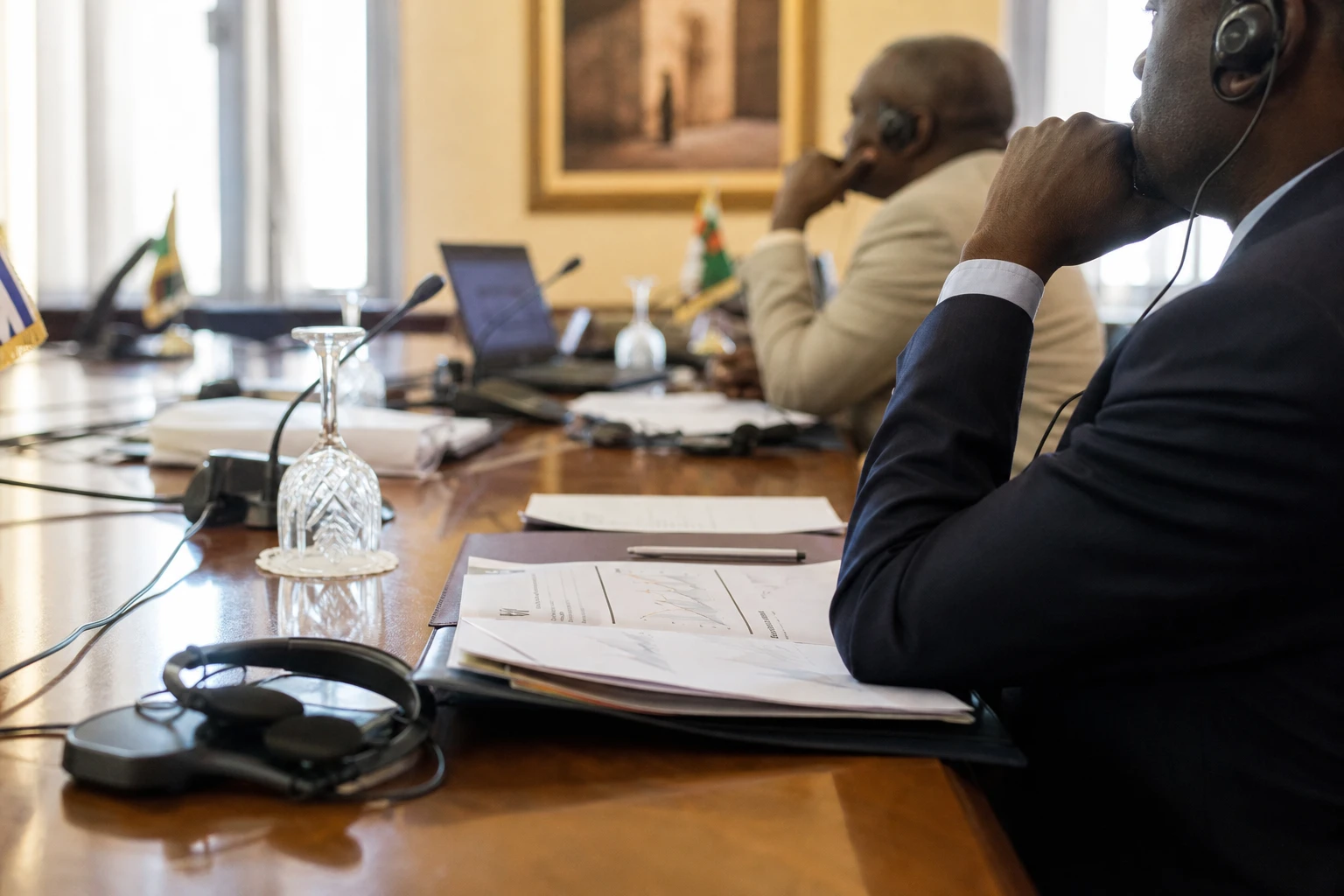
On 5 July 2026, the seven OPEC+ countries participating in additional voluntary adjustments — Saudi Arabia, Russia, Iraq, Kuwait, Kazakhstan, Algeria and Oman — met by videoconference. They decided to implement a collective adjustment of 188,000 barrels per day, scheduled to take effect in August 2026. The OPEC statement said the decision was a continuation of the voluntary adjustments announced in April 2023.
Algeria’s public media reported the same decision, noting that it came amid close monitoring of the oil market. Algeria’s Ministry of Hydrocarbons had announced the meeting, demonstrating that Algeria had taken a full part in the collective decision-making.
This latest adjustment extends a series of gradual decisions made since spring 2026. In May, and then in June and July, the same countries had already increased their volumes by comparable amounts. The approach remains the same: avoid a sudden surge in supply while responding to a market deemed strong enough to absorb a limited increase.
Why Algiers accepts this course
On paper, increasing quotas may seem risky when prices are weakening. But OPEC+ is seeking a balance. On the one hand, producers want to protect their revenues by preventing prices from falling too quickly. On the other, they need to gradually ease the constraints accumulated over years of restrictions without losing control of the market. The organisation presented the increase as a move intended to support oil market stability.
Algeria’s position is also explained by the structure of its economy. The World Bank says Algeria returned to the upper-middle-income category in 2024, but also notes that growth remains supported by public spending and that diversification is still a priority. In this context, any increase in hydrocarbon export revenue helps cushion the state’s financing needs.
The issue goes beyond national accounts, however. For several years, Algeria has sought to strengthen its position in the energy sector while reshaping its relations with African and Mediterranean partners. Unlike some Gulf producers, it does not have the capacity to make a dramatic shift in very large volumes. Its strategy instead rests on consistency, credibility and support for a multilateral framework in which collective discipline matters as much as production levels.
The practical effects: public finances, the domestic market and a continental signal
For the Algerian authorities, a measured increase in quotas could provide some breathing room. It could support exports and, in time, stabilise revenue that helps fund the budget. The effect on households is not automatic. Pump prices, transport costs and electricity prices also depend on domestic policy choices, subsidies and the extent to which oil and gas are processed locally. In other words, a higher quota does not automatically translate into an immediate gain for consumers.
For producers, the decision also sends a signal. OPEC+ wants to show that it can still manage supply despite tensions in the Middle East, market volatility and uncertainty over global demand. The issue matters for Algeria, but also for the group’s other African or closely Africa-linked members, as movements in crude prices affect budget balances, imports and exchange rates across the continent.
The decision also resonates across Africa. It is a reminder that many producer states face the same constraints: revenue concentrated in a single commodity, the need to fund public services, and pressure to invest in diversification. At a time when the African Union is pushing for the development of value chains and the AfCFTA, the African Continental Free Trade Area, has yet to transform intra-African trade, energy stability remains an issue of economic sovereignty.
The next step to watch will be the actual implementation of the increase in August 2026, followed by an assessment of the market by the seven countries concerned. If prices hold up, the gradual path could continue. If the market loosens too quickly, the group will probably have to slow down. For Algeria, as for its partners, the equation remains the same: produce a little more without losing the balance that still holds the cartel together.