Egypt
 Libya
 Morocco
 Sudan
 Tunisia
 Benin
 Burkina Faso
 Cabo Verde
 Côte d'Ivoire
 Ghana
 Guinea
 Guinea-Bissau
 Liberia
 Mali
 Mauritania
 Niger
 Nigeria
 Senegal
 Sierra Leone
 The Gambia
 Togo
 Cameroon
 Central African Republic
 Chad
 DR Congo
 Equatorial Guinea
 Gabon
 Republic of the Congo
 São Tomé and Príncipe
 Burundi
 Comoros
 Djibouti
 Eritrea
 Ethiopia
 Kenya
 Madagascar
 Malawi
 Mauritius
 Mozambique
 Rwanda
 Seychelles
 Somalia
 South Sudan
 Tanzania
 Uganda
 Angola
 Botswana
 Eswatini
 Lesotho
 Namibia
 South Africa
 Zambia
 Zimbabwe
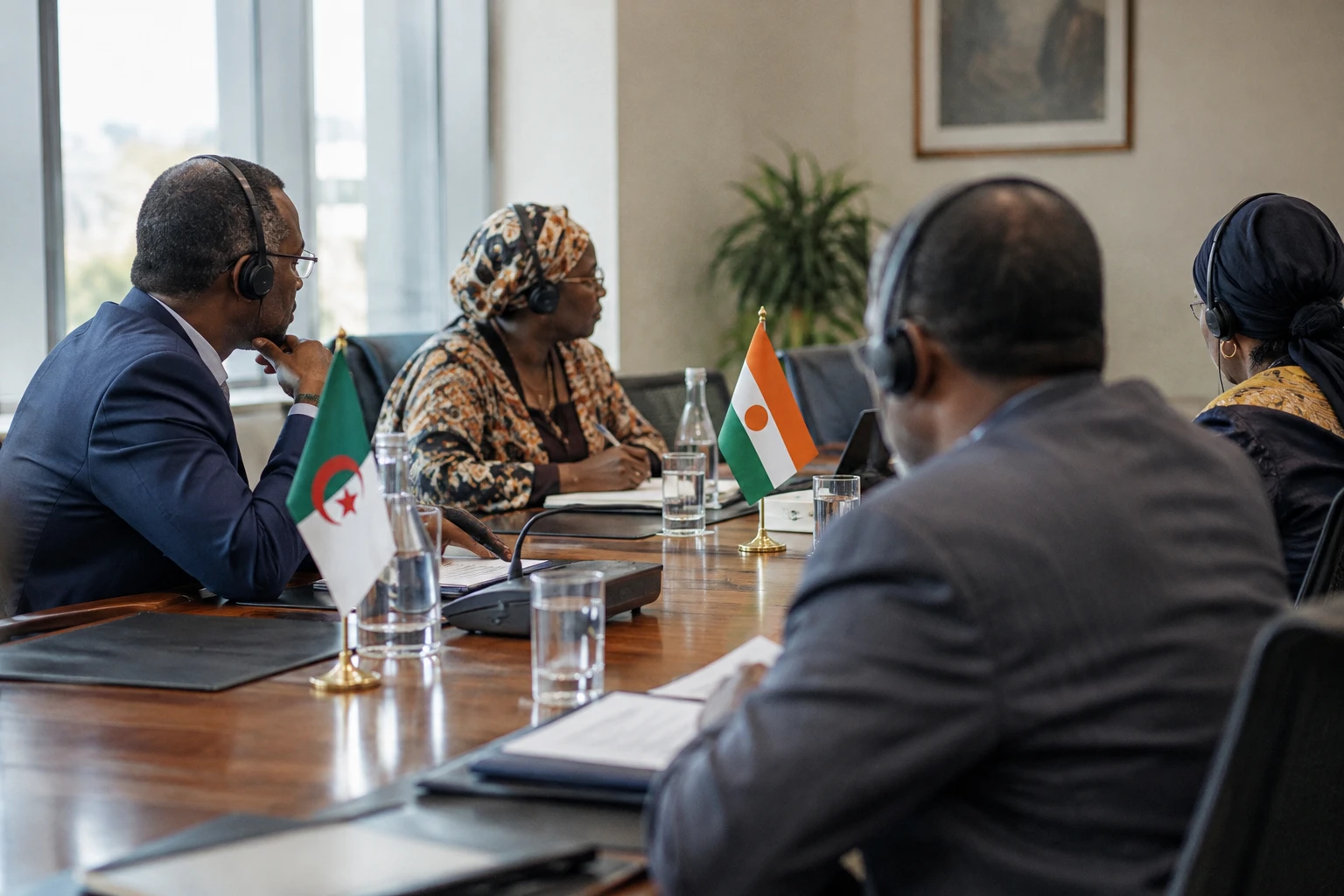
The decision opens a new chapter in relations between Algiers and Niamey: Algeria has authorised the deployment of military personnel to Niger, while the details of the mission remain unknown. For the two neighbours, the stakes combine border security, the protection of energy interests and a shift in Algerian defence policy.
Approval granted, but mission still to be defined
On 25 October 2026, both chambers of the Algerian parliament approved President Abdelmadjid Tebboune’s notification concerning the deployment of units of the People’s National Army to Niger. The National People’s Assembly announced that the motion had been approved by an absolute majority of members present; the Council of the Nation had also given its green light. The vote was therefore not unanimously favourable in both chambers, contrary to some initial accounts of the decision. Algeria’s state news agency APS specified the result of the Assembly vote.
Parliamentary approval does not yet amount to an actual deployment. As of 26 October, the authorities had not announced the number of troops involved, the precise location or the timetable. Algerian officials have described the aim as protecting infrastructure and economic interests, particularly in the oil sector; operational details remain to be confirmed. Associated Press reports that the details of the deployment have not been made public.
Algeria’s constitution, revised in 2020, allows the president to send army units abroad, subject to approval by both chambers with the required majority. The procedure provides a legal basis for a decision that breaks with the caution Algiers has traditionally shown towards military operations beyond its borders. It also highlights the difference between political authorisation and the practical conduct of the mission, which will depend on the executive’s next decisions.
Rapprochement after periods of tension
The vote comes after several months of rapprochement between Algiers and Niamey. The two countries share nearly 1,000 kilometres of border in a region traversed by armed groups, smuggling networks and cross-border trafficking. Niger’s Defence Minister, Salifou Modi, visited Algiers on 21 October and met President Tebboune. The two countries have also announced a military co-operation protocol, without publishing its contents. APS confirmed the meeting in Algiers.
The rapprochement follows a period of diplomatic chill. In 2025, Algeria’s destruction of a drone from Mali sparked a regional crisis and prompted the recall of ambassadors. Relations with Niamey subsequently warmed. In August 2026, after unrest in Niamey, Algeria announced that it would send four fighter jets to support the Nigerien army, at the request of the Nigerien authorities. Algeria’s defence ministry described the air mission.
The situation in Niger has also changed. The military authorities who took power in the July 2023 coup have ended several Western security partnerships and strengthened ties with other partners. Niger, Mali and Burkina Faso left ECOWAS on 29 January 2025; the three Sahelian states established the Alliance of Sahel States, a framework for political and security co-operation. Algeria is not a member and must therefore manage its relations with Niamey without belonging to the bloc. ECOWAS set 29 January 2025 as the date on which the withdrawal took effect.
Energy and security interests intertwined
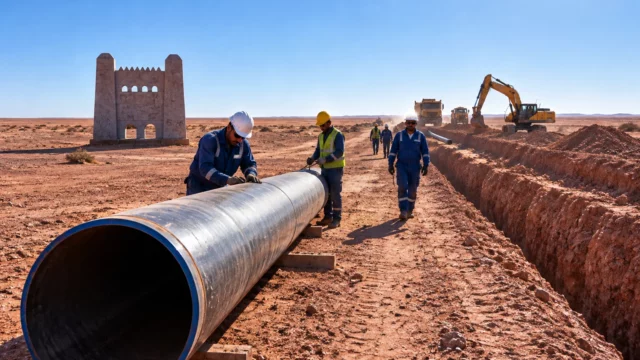
The protection of energy interests cited by parliamentarians takes on particular significance in light of the Trans-Saharan Gas Pipeline project. It is intended to transport Nigerian gas to Algeria via Niger. The project is being developed by the national companies Sonatrach, NNPC and Sonidep. In June 2026, Sonatrach announced the start of work on the Algerian section of the project. The timetable and completion of the entire corridor, however, remain dependent on technical, financial and security-related milestones. Sonatrach sets out the project partners and the start of construction in Algeria.
For Algiers, securing facilities and projects in southern Niger could protect investments and strengthen its presence in the Sahel. For Niamey, support from a neighbour with military resources and long diplomatic experience could diversify its partnerships. But the Nigerien authorities have not made public the precise mandate of the future deployment. It is therefore premature to conclude that the troops will be assigned to guard a specific site or take part in combat operations.
The effects will not be limited to leaders and companies. A foreign armed presence can alter local balances, particularly for communities living near infrastructure and transport routes. Its impact will depend on the location, duration, rules of engagement and co-ordination with Nigerien forces. None of these details has yet been made public.
A precedent for Algeria’s defence doctrine
If the announced deployment goes ahead, it will be the first official mission of Algerian troops abroad since 1973, when soldiers were sent to support Egypt during the Arab-Israeli war. This historical reference underlines the significance of the change, without implying that the two operations had the same purpose or scale.
The decision will be watched beyond the two capitals. It comes as Algeria seeks to influence security in its southern neighbourhood, while Niger is redefining its alliances after leaving ECOWAS. For the African Union, the issue concerns co-operation between states in response to cross-border crises and respect for their sovereignty. The next decisive indication will be the publication of the mandate, troop numbers and timetable: without these details, parliamentary approval sets a direction, but not yet the actual form of the commitment.