Algeria
 Egypt
 Libya
 Morocco
 Sudan
 Tunisia
 Benin
 Burkina Faso
 Cabo Verde
 Côte d'Ivoire
 Ghana
 Guinea
 Guinea-Bissau
 Liberia
 Mali
 Mauritania
 Nigeria
 Senegal
 Sierra Leone
 The Gambia
 Togo
 Cameroon
 Central African Republic
 Chad
 DR Congo
 Equatorial Guinea
 Gabon
 Republic of the Congo
 São Tomé and Príncipe
 Burundi
 Comoros
 Djibouti
 Eritrea
 Ethiopia
 Kenya
 Madagascar
 Malawi
 Mauritius
 Mozambique
 Rwanda
 Seychelles
 Somalia
 South Sudan
 Tanzania
 Uganda
 Angola
 Botswana
 Eswatini
 Lesotho
 Namibia
 South Africa
 Zambia
 Zimbabwe
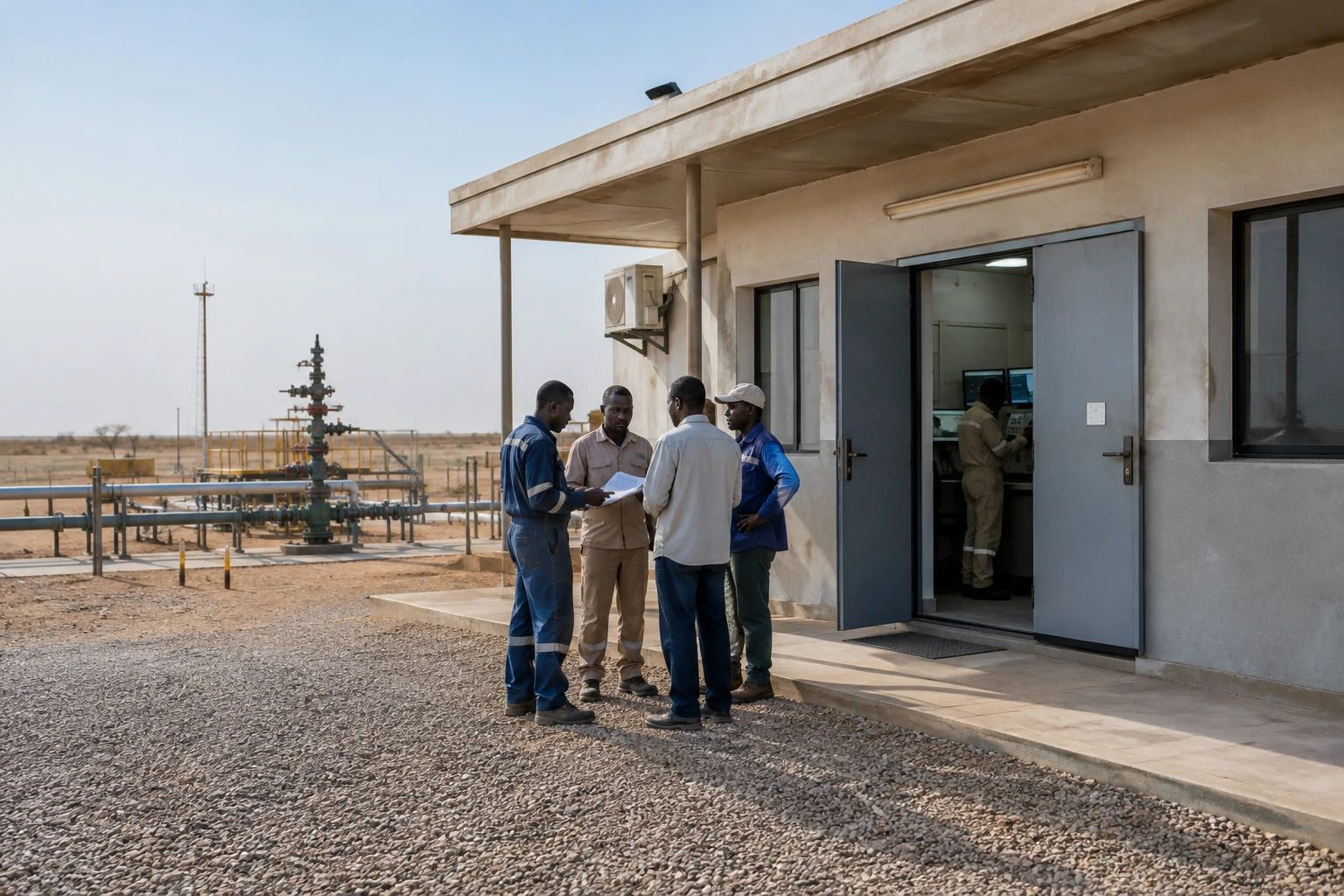
At Agadem, the stakes go beyond the spectacular eruption of a well. Oil has become a central resource for Niger’s public finances; a prolonged accident also raises questions about the protection of workers, nearby facilities and the environment.
An incident still not fully under control
On 25 September 2026, the Goumeri W-8 well in the Agadem oil block spewed crude and gas more than ten metres into the air, according to Niger’s Ministry of Petroleum. The site is about 1,700 kilometres from Niamey. It is operated by CNPC Niger Petroleum, the local subsidiary of China National Petroleum Corporation, the Chinese state-owned company.
In a situation update published on 13 October, the ministry said the blowout was still only “partially contained” as of 12 October. The platform, shared with two nearby wells, Goumeri W-3 and W-4, is severely damaged. The integrity of those facilities is also at risk. The ministry says there have been no deaths and that two employees exposed on the first day were hospitalised and treated. This information comes from the Nigerien authorities; no independent assessment of environmental damage was available in the information reviewed.
A ministry team is monitoring operations at the site. The government has announced an independent inquiry into the causes and responsibilities, with support from Algerian experts. The causes have not yet been established. The ministry says initial findings rule out a criminal or terrorist motive. This remains the authorities’ assessment, pending the inquiry’s conclusions.
The stated priority is to stop the blowout permanently, prevent a fire, limit damage and secure the neighbouring wells. The ministry has asked nearby residents to respect the safety perimeter. It has also promised that responsibilities will be established and damage addressed in accordance with the laws in force. It remains to be publicly clarified how the damage will be assessed and who will carry out the repairs.
Agadem, a pillar of a new oil economy
Niger has produced oil since 2011, when the Agadem block began operations. The project’s second phase, launched in 2023, significantly increased capacity. The Nigerien News Agency, citing ministry data, reported production of more than 20.3 million barrels in 2024. It said the target capacity was 110,000 barrels per day, of which 90,000 were intended for export.
To transport crude to international markets, a pipeline of about 2,000 kilometres links the oilfields to the Beninese coast. This infrastructure makes Nigerien oil a regional concern: landlocked Niger depends on a corridor through Benin and on the operation of facilities run with the participation of Chinese partners.
The project has already been affected by tensions between Niamey and Porto-Novo. In 2024, a commercial and diplomatic dispute delayed exports and led the Nigerien authorities to temporarily halt flows to Benin. The pipeline has also been targeted in attacks claimed by an armed group. These precedents show that the security and continuity of the sector depend on political and logistical relations extending beyond the Agadem site.
Measuring the benefits beyond export volumes
For the state, increased crude sales can boost public revenues and strengthen its ability to finance spending. But higher production alone does not guarantee that the proceeds will benefit people living near the oilfields. The quality of repairs, environmental monitoring and transparency over revenues also matter when assessing the project.
The immediate consequences of the blowout remain difficult to quantify. The ministry has not published a detailed estimate of the volumes of oil spilled or the results of tests on soil and water. Residents near the site and workers are directly affected by the safety perimeter and operational risks. Further afield, possible effects will depend on the extent of contamination, which has not yet been publicly documented.
The operator’s responsibility will therefore be a central focus of the inquiry, alongside the role of public oversight services. For the ministry’s pledge to address the damage to be verifiable, it will need to be accompanied by information on inspections, environmental measures and the timetable for restoration. So far, no findings from the inquiry have been released.
A test of regional cooperation
The incident does not concern Niger alone. The export corridor links Agadem to Benin, giving the management of the site cross-border economic significance. Any prolonged disruption could complicate production and expected revenues, although no shutdown of the pipeline had been confirmed in the information available as of 13 October.
The regional context has also changed since Niger’s withdrawal from ECOWAS, the Economic Community of West African States, which took effect in 2025 alongside Mali and Burkina Faso. Trade and cooperation between neighbouring countries remain essential for transport infrastructure, supplies and security. The Goumeri W-8 inquiry will therefore be watched for its technical findings as well as for how the Nigerien state and the operator account for their responsibilities.
The next concrete step is to stop the blowout permanently, followed by the publication of verifiable findings on its causes and impact. Until then, the official assessment remains provisional. The situation is a reminder that a sector that has become strategically important to public finances also requires robust mechanisms for prevention, oversight and redress.