Algeria
 Egypt
 Libya
 Morocco
 Sudan
 Tunisia
 Benin
 Burkina Faso
 Cabo Verde
 Côte d'Ivoire
 Ghana
 Guinea
 Guinea-Bissau
 Liberia
 Mauritania
 Niger
 Nigeria
 Senegal
 Sierra Leone
 The Gambia
 Togo
 Cameroon
 Central African Republic
 Chad
 DR Congo
 Equatorial Guinea
 Gabon
 Republic of the Congo
 São Tomé and Príncipe
 Burundi
 Comoros
 Djibouti
 Eritrea
 Ethiopia
 Kenya
 Madagascar
 Malawi
 Mauritius
 Mozambique
 Rwanda
 Seychelles
 Somalia
 South Sudan
 Tanzania
 Uganda
 Angola
 Botswana
 Eswatini
 Lesotho
 Namibia
 South Africa
 Zambia
 Zimbabwe
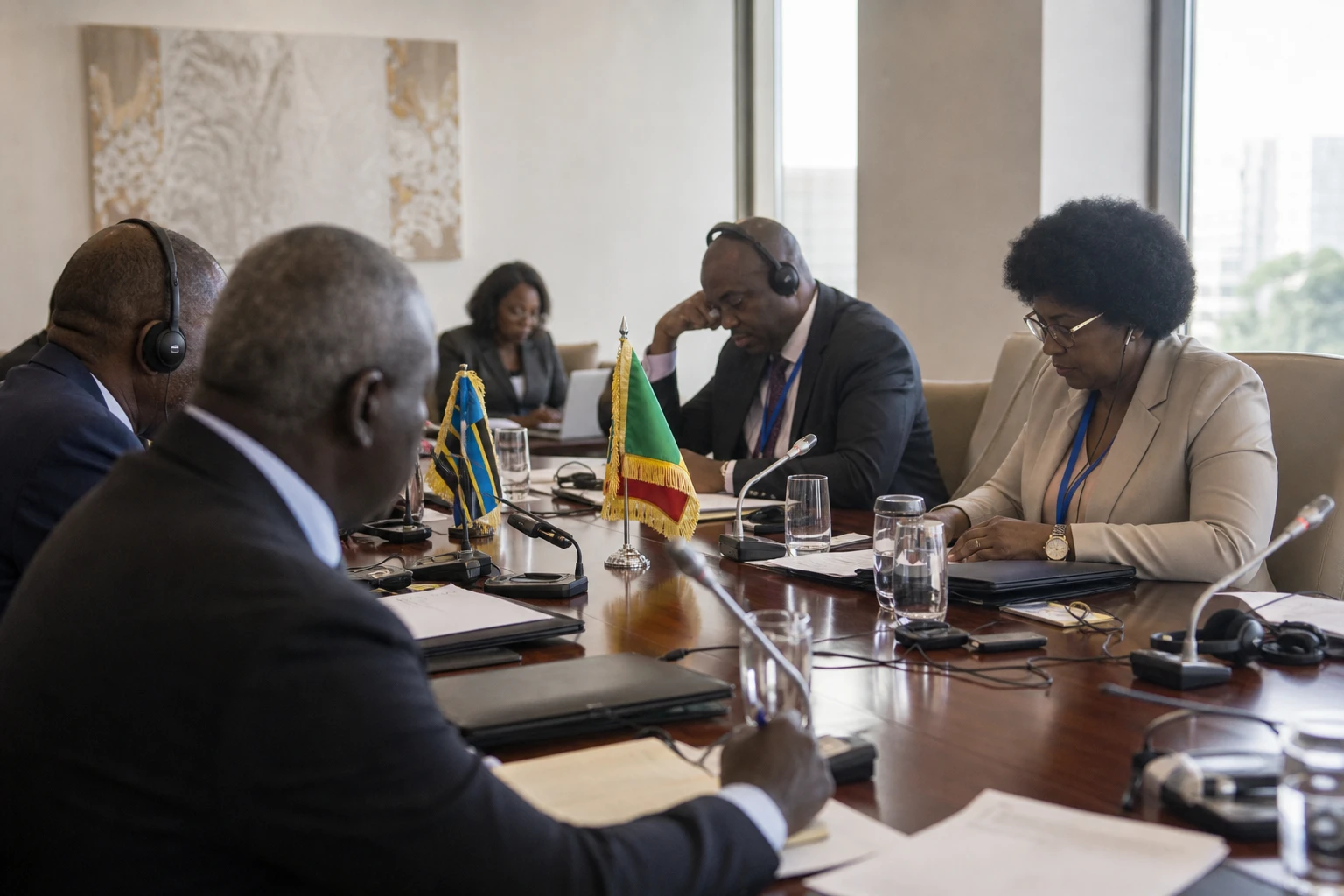
A discreet mineral, already strategic for several African capitals
In several countries across the continent, lithium is no longer a distant promise. It is becoming an industrial, fiscal and diplomatic issue. For governments, the challenge is not merely to export another mineral. Above all, it is to decide who captures the value, where jobs are created and how quickly projects move from geological maps to factories.
This shift is taking place against a clear regional backdrop. The global critical minerals market remains concentrated, while demand linked to batteries and electricity storage continues to rise. The International Energy Agency notes that lithium demand is growing faster than that for other critical minerals, and that global production still depends on a small number of countries. In Africa, this tension opens a window of opportunity. But it also demands an uncommon degree of discipline: financing, building, transporting and processing, then stabilising value chains that remain fragile.
From Zimbabwe and Mali to a new generation of projects
On the ground, two countries have already reached the threshold of industrial production. Zimbabwe has several active lithium mines, including Bikita, Arcadia and Sabi Star, often backed by Chinese capital. Mali followed with Goulamina and Bougouni. In its 2025 overview, the US Geological Survey still listed these two countries as African lithium producers, while its 2026 edition notes that two operations in Mali and five in Zimbabwe were among the world’s main production hubs.
This movement is no longer confined to southern Africa and the Sahel. In the Democratic Republic of the Congo, the Manono project has become a focal point for expectations. Zijin Mining says it is targeting capacity of 5 million tonnes of ore a year, yielding about 1 million tonnes of spodumene concentrate, with construction work already under way. In Ghana, Ewoyaa remains more political than mining-related: the project has obtained the necessary approvals, but is still awaiting parliamentary ratification of its mining lease, the final step before mine financing. The Ghanaian government has already said the fiscal terms should be reviewed in light of the fall in lithium prices.
Nigeria is also moving forward. The mines minister announced in May 2025 the commissioning of two processing plants, including a $600 million facility near the border between Kaduna and Niger, and a $200 million refinery near Abuja. Here too, the signal is significant: the debate is no longer solely about extraction, but also about local processing and industrial upgrading.
Côte d’Ivoire, Namibia and Angola join the discovery race
Alongside countries already producing, several jurisdictions are seeking to turn geological indications into bankable projects. In Côte d’Ivoire, Lithium Africa announced in early 2026 that it was preparing an initial drilling programme at Adzopé, after identifying a second mineralised zone at the project. In the same geological area, Atlantic Lithium says it has identified spodumene-bearing pegmatites on its Agboville and Rubino permits, with lithium anomalies in the soil and grades of up to 1.25% lithium oxide in some samples. The country is not yet a producer, but it is clearly on the radar of international players.
Namibia is following a similar, though earlier-stage, path. The Karibib project has published resources of 11.87 million tonnes at 0.45% Li2O, according to Lepidico documents. However, the transaction announced in 2026 involving the project also highlights the sector’s caution: the potential is there, but commercial production is not yet assured. In Angola, the Namibe project has attracted new interest, including from Sinomine, a sign that the continent’s southern coastline is also entering the map of mining expectations linked to the energy transition.
What Africa can gain, and what it could still lose
The main challenge remains capturing value. A deposit alone is not enough to create an industry. Roads, energy, sometimes railways, ports, technical skills, stable fiscal frameworks and industrial partners able to turn concentrate into a marketable product are all needed. Without them, countries export rock and then import refined material, cells and, later, equipment. This is precisely the risk of dependency illustrated by projects stalled halfway between exploration and production.
The second challenge is time. The lithium cycle has already shown how brutal it can be. Prices surged in 2022, then fell sharply, before rebounding somewhat. In such a market, investment decisions can be accelerated or frozen overnight. That is why African governments, from Ghana to Nigeria, are now negotiating more firmly. They are less focused on announcing projects than on securing lasting benefits for communities, public budgets and local economies.
Across the continent, African lithium therefore tells a story broader than that of a fashionable metal. It reveals the competition between raw extraction and industrialisation, quick returns and local roots, reliance on foreign capital and the gradual command of value chains. Zimbabwe and Mali have led the way. The DRC, Ghana, Nigeria, Côte d’Ivoire, Namibia and Angola now show that the industry is no longer centred on a single corridor. It is unfolding across several regions, at different speeds and with distinct power dynamics, around the same fundamental question: who will build Africa’s place in the global battery economy of tomorrow?