Egypt
 Libya
 Morocco
 Sudan
 Tunisia
 Benin
 Burkina Faso
 Cabo Verde
 Côte d'Ivoire
 Ghana
 Guinea
 Guinea-Bissau
 Liberia
 Mali
 Mauritania
 Niger
 Nigeria
 Senegal
 Sierra Leone
 The Gambia
 Togo
 Cameroon
 Central African Republic
 Chad
 DR Congo
 Equatorial Guinea
 Gabon
 Republic of the Congo
 São Tomé and Príncipe
 Burundi
 Comoros
 Djibouti
 Eritrea
 Ethiopia
 Kenya
 Madagascar
 Malawi
 Mauritius
 Mozambique
 Rwanda
 Seychelles
 Somalia
 South Sudan
 Tanzania
 Uganda
 Angola
 Botswana
 Eswatini
 Lesotho
 Namibia
 South Africa
 Zambia
 Zimbabwe
Between Algiers and Bamako, the diplomatic thaw of recent months has run up against a central question: who can still speak for northern Mali, and on what terms? The answer from Algeria’s foreign minister has, for now, closed a door that his country had long helped keep open.
Mediation weakened by war
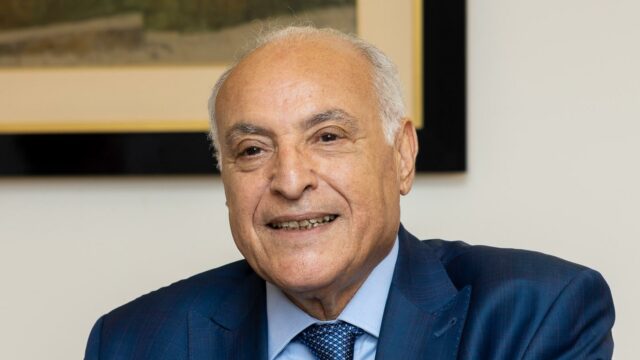
On 26 November 2026 in Algiers, Algerian Foreign Minister Ahmed Attaf said the conditions were not in place to restart mediation between Mali’s transitional authorities and the Azawad Liberation Front (FLA). He accused the north’s separatist movements of co-operating with the Group for the Support of Islam and Muslims (JNIM), affiliated with Al-Qaeda, and seeking foreign backing.
Attaf did not name any country. His allusion to Ukraine was nevertheless understood as a warning against outside involvement. The minister presented Algiers’ position as a matter of regional and neighbourhood security. Algeria’s APS news agency summed up its priorities the same day as the country’s stability and preventing crises from spreading.
FLA spokesman Mohamed El Maouloud Ramadane rejected the accusations. He acknowledged co-ordination on the ground with JNIM against the Malian army and its Russian partners, but said this did not amount to a political alliance. The movement also denied having sought foreign intervention. These opposing statements do not, on their own, establish the precise nature of the arrangements between armed groups.
However, contextual evidence lends weight to Algiers’ concerns. An ACAPS analysis, drawing in part on data from ACLED and other research, notes co-ordinated FLA and JNIM operations in April 2026. It describes co-operation made possible by their shared opposition to state authority, despite their differing political aims. This documents operational co-ordination, but is not sufficient to prove all the accusations made by Algerian officials.
Algiers’ cautious return to the Mali file
Algeria played a major role in the negotiations that led to the 2015 peace agreement, signed in stages in Bamako. The accord aimed, among other things, to reduce fighting and address northern political demands. Its implementation gradually stalled amid accusations that commitments had not been honoured and growing distrust between the parties. In 2024, Mali’s authorities announced the agreement’s end, accusing Algiers, among other things, of hostility — a charge Algeria rejected.
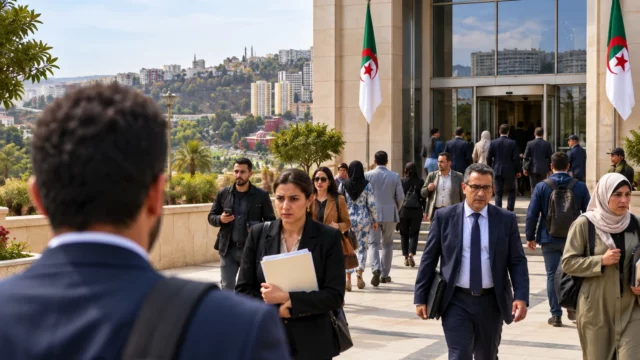
The rupture subsequently affected bilateral relations. After a crisis over the destruction of a Malian drone near the border in 2025, both countries recalled their ambassadors and closed their airspace. In July 2026, they restored diplomatic relations and reopened their airspace, according to the Associated Press. The normalisation gives Algiers an opportunity to regain a foothold in the matter, but does not mean Bamako accepts Algerian mediation or that armed groups would agree to it.
Attaf’s statement therefore draws a line. Algiers says it wants to contribute to the stability of its neighbours, while refusing to endorse movements it accuses of co-operating with JNIM or seeking foreign support. APS reports this security priority; Algerian media, for their part, have reported the FLA’s denial and details put forward by a former Algerian diplomat. The alleged efforts by the movement to seek outside support remain attributed claims, not independently established facts in the sources consulted.
For civilians, the lack of a political channel also takes its toll
In Bamako, the issue is sovereignty and control of territory. In the northern and central regions, the immediate concerns also include daily security, access to services and freedom of movement. ACAPS says the proliferation of armed groups, disinformation and suspicion of outside actors complicate humanitarian work. When front lines and de facto authorities shift, residents risk being caught between rival forces without a stable interlocutor.
Ad hoc co-operation between separatists and jihadists does not erase their differences. The FLA advances a political project linked to autonomy or independence for the north; JNIM pursues a transnational jihadist project. But on the ground, a convergence against the Malian army can increase their leverage and make it harder to distinguish between their areas of influence. Civilians, meanwhile, can suffer the consequences of fighting whatever justification the groups offer.
The transitional authorities, for their part, have strengthened their security partnership with Russia following the departure of French forces and the UN mission. The Associated Press reports that Russia’s Africa Corps is present alongside the Malian army in operations in the north. The FLA accuses the army and its allies of carrying out strikes that hit civilians; these allegations require independent verification before they can be presented as established. In this context, mutual accusations and the absence of negotiations make impartial documentation of abuses against the population all the more important.
An issue that extends beyond the two capitals
Mali has left the Economic Community of West African States (ECOWAS) alongside Burkina Faso and Niger, and is part of the Alliance of Sahel States. This regional realignment narrows the usual frameworks for political dialogue, without erasing cross-border realities. As Mali’s neighbour, Algeria remains directly concerned by the security of its border and armed movements across the Sahel.
The next step will depend less on statements than on verifiable actions: contacts between Bamako and Algiers, the Malian authorities’ official position on mediation, and independent clarification of co-ordination between the FLA and JNIM. For now, the three actors concerned show no common prospect of negotiations. The resumption of relations between Algeria and Mali has restored a diplomatic channel; it has not yet produced a political process for the country’s north.