Algeria
 Egypt
 Libya
 Morocco
 Sudan
 Tunisia
 Benin
 Burkina Faso
 Cabo Verde
 Côte d'Ivoire
 Ghana
 Guinea
 Guinea-Bissau
 Liberia
 Mali
 Mauritania
 Niger
 Nigeria
 Senegal
 Sierra Leone
 The Gambia
 Togo
 Cameroon
 Central African Republic
 Chad
 Equatorial Guinea
 Gabon
 Republic of the Congo
 São Tomé and Príncipe
 Burundi
 Comoros
 Djibouti
 Eritrea
 Ethiopia
 Kenya
 Madagascar
 Malawi
 Mauritius
 Mozambique
 Rwanda
 Seychelles
 Somalia
 South Sudan
 Tanzania
 Uganda
 Angola
 Botswana
 Eswatini
 Lesotho
 Namibia
 South Africa
 Zambia
 Zimbabwe
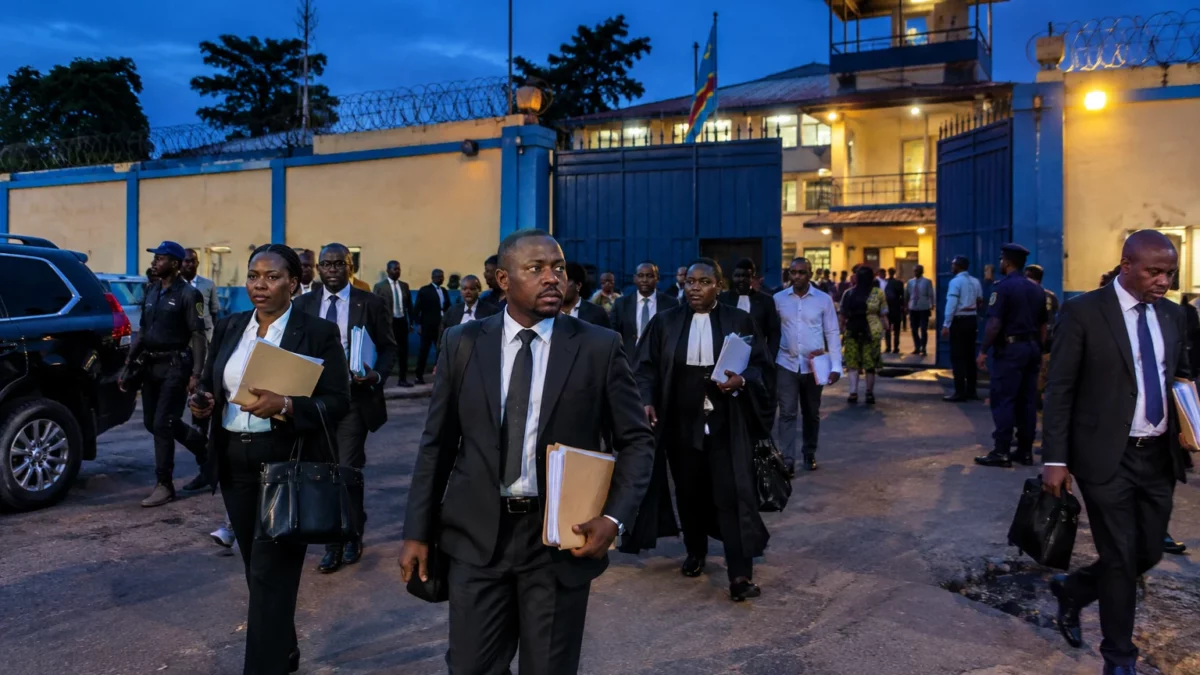
When an opposition figure is prosecuted for statements about the death of an activist, the question goes beyond the fate of a defendant: it also concerns how facts are established and how political speech can be expressed. In Kinshasa, the case against Prince Epenge has yet to reach a decision on the merits.
Proceedings still at an early stage
On 25 November 2026, the Kinshasa/Gombe magistrates’ court resumed hearing the case inside Makala Central Prison. The next hearing was scheduled for 11 December. The trial had already been adjourned once, on 11 November, because a notification document for defence lawyers was missing.
Prince Epenge, president of the Action for Democracy and Development of Congo (ADD-Congo) party and spokesman for the Lamuka opposition platform, is being prosecuted for “spreading false rumours”. The criminal charge relates to his statements about the death of Manassé Lomboto, a member of his party, after an opposition march held in Kinshasa on 15 September.
The public prosecutor accuses him of attributing the activist’s death to violence that occurred on the sidelines of the march. Epenge contests the charges. The circumstances of the death remain central to the case: the accounts put forward do not, in themselves, constitute a judicial conclusion about what happened. Congolese media reported in September that the prosecutor’s office cited ongoing investigations into the death.
At the 25 November hearing, lawyers requested their client’s provisional release, citing his state of health, among other reasons. The court suspended proceedings to consider the request. According to reports published in Kinshasa, it was expected to rule in the following days. The decision on this request is separate from the judgment on the charges.
Manassé Lomboto’s death at the heart of the case
The 15 September march was part of the opposition’s mobilisation against a constitutional amendment. It was dispersed by law enforcement officers. After Lomboto’s death, Epenge publicly questioned the circumstances surrounding it. The public prosecutor considers that these statements constitute the offence being prosecuted; the defence, for its part, is asking that its client be allowed to appear freely and answer summonses.
This distinction is essential. An accusation brought by the prosecutor’s office is not proof of guilt. Likewise, statements by a political leader about a death must be verified through the investigation and the evidence presented to the court. The trial must therefore examine both the statements at issue and the facts to which they relate.
The opposition figure’s arrest on 25 October and subsequent transfer to Makala on 31 October have placed the case within the broader debate on civil liberties in the Democratic Republic of the Congo. For the defence, its client’s detention and health are immediate concerns. For the prosecution, the proceedings must establish whether the statements in question constitute an offence. At this stage, neither position replaces the adversarial examination of the evidence.
A national issue in a regional context
The Kinshasa/Gombe magistrates’ court is a court of first instance. Holding the hearing at Makala, where Epenge is being detained, brings a procedural question into focus: can the defendant follow the proceedings and prepare his defence under satisfactory conditions? The successive adjournments do not decide the merits, but they prolong uncertainty for him, his relatives and his political supporters.
The case is unfolding as tensions over institutions and the country’s constitutional future run through the Congolese political scene. It also involves Lamuka, a platform of which Martin Fayulu is a leading figure, and ADD-Congo, the party led by Epenge. The significance of the case therefore extends beyond a confrontation between an individual and the prosecutor’s office: it will also be assessed in light of the treatment of opposition leaders.
At the regional level, the Democratic Republic of the Congo belongs to the Southern African Development Community (SADC), an organisation bringing together states in southern and central Africa, and the Economic Community of Central African States (ECCAS). These frameworks do not determine the outcome of a national trial. But the way institutions protect judicial guarantees contributes to the country’s democratic credibility within these organisations and the African Union.
The next milestone is 11 December 2026. It will show whether the request for provisional release has been decided and whether proceedings on the merits are advancing. Until then, the circumstances of Manassé Lomboto’s death, like the criminal charge brought against Prince Epenge, should continue to be presented with caution and attribution.