Egypt
 Libya
 Morocco
 Sudan
 Tunisia
 Benin
 Burkina Faso
 Cabo Verde
 Côte d'Ivoire
 Ghana
 Guinea
 Guinea-Bissau
 Liberia
 Mali
 Mauritania
 Niger
 Nigeria
 Senegal
 Sierra Leone
 The Gambia
 Togo
 Cameroon
 Central African Republic
 Chad
 DR Congo
 Equatorial Guinea
 Gabon
 Republic of the Congo
 São Tomé and Príncipe
 Burundi
 Comoros
 Djibouti
 Eritrea
 Ethiopia
 Kenya
 Madagascar
 Malawi
 Mauritius
 Mozambique
 Rwanda
 Seychelles
 Somalia
 South Sudan
 Tanzania
 Uganda
 Angola
 Botswana
 Eswatini
 Lesotho
 Namibia
 South Africa
 Zambia
 Zimbabwe
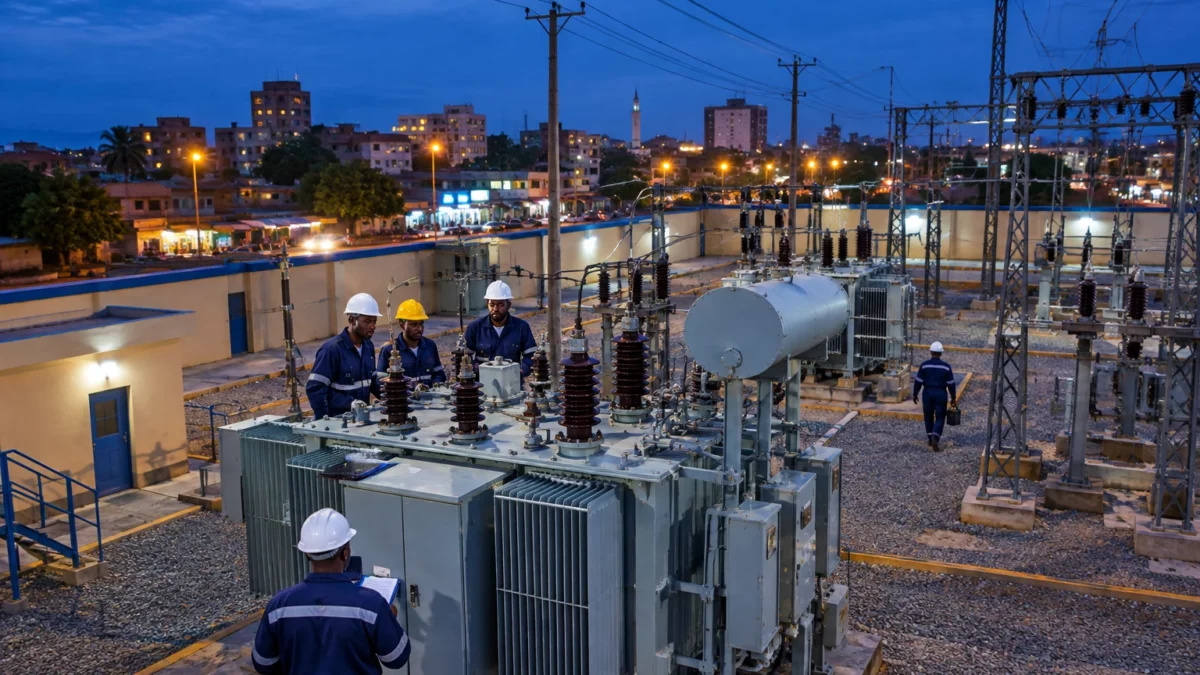
Restoring power in Sudan depends on more than replacing destroyed equipment. It also requires maintaining facilities, transporting fuel and enabling technicians to work in a country where war has fractured public services. Algeria and the Sonelgaz group could contribute expertise, but discussions in Algiers have not yet resulted in a works contract.
Cooperation still at the discussion stage
On 21 November 2026, Algeria’s Minister of Energy and Renewable Energies, Mourad Adjal, received a Sudanese delegation in Algiers. Abdallah Ahmed Mohamed Ali, director general of the Sudan Electricity Corporation (SEHC), took part. Discussions focused on the possible mobilisation of Sonelgaz’s technical and human resources to help restore the Sudanese grid.
Options discussed include rehabilitating facilities, providing technical support and training Sudanese technicians. The Algerian minister also said he would contact his counterpart to examine the possibility of an intergovernmental agreement. At this stage, no announcement consulted specifies the amount of any potential funding, an intervention timetable or the sites involved.
A technical meeting between the two companies’ teams is presented in the available information on the matter as a next step. It should make it possible to assess needs and set priorities. Until that assessment and any potential agreement are made public, the practical scope of Sonelgaz’s commitment remains to be determined.
Infrastructure caught up in the war
The conflict between the Sudanese army and the Rapid Support Forces (RSF) broke out in April 2023. Since then, fighting and air strikes have hit essential infrastructure, while insecurity has made maintenance and supply more difficult. The consequences of power cuts extend beyond households: health services, water pumping and economic activity also depend on electricity.
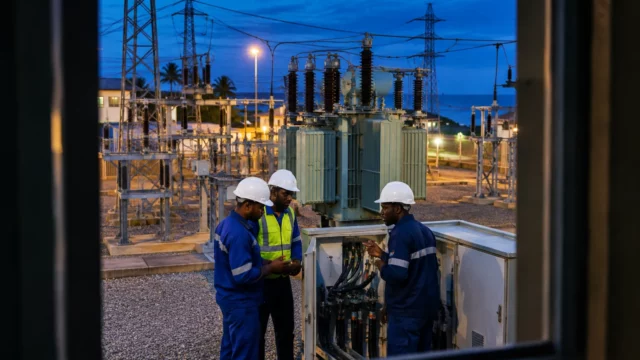
On 26 October 2026, five electricity substations were targeted in the states of Sennar, Al-Qadarif, White Nile and Al-Jazirah, according to the SEHC. The company said the attacks had disrupted power supply to the south-eastern grid. Sudan Tribune also reported strikes on facilities in these regions. Sudanese authorities blamed the RSF for the attacks; that attribution must remain explicitly reported as such.
The impact of an outage varies according to location and available resources. In cities, businesses and health infrastructure need a stable power supply. In rural areas, electricity can also determine access to water and the preservation of products. Households and small businesses, with fewer backup options, are particularly vulnerable to prolonged interruptions and the cost of alternatives.
Repairs require more than equipment
The expertise of a foreign operator can help bring equipment back into service and train local teams. But on its own, it cannot guarantee a regular power supply. Site security, access to spare parts, fuel availability and the ability to finance repairs will also affect the results.
The training proposed as a possible area of cooperation could matter beyond immediate interventions. Strengthening Sudanese skills in operations and maintenance would help reduce dependence on external assistance. This would, however, require teams to be able to work over the long term and repaired facilities not to be damaged again.
The regional significance of the matter is linked in particular to the Intergovernmental Authority on Development (IGAD), an East African organisation of which Sudan is a member, and the African Union. The war in Sudan has repercussions beyond the country’s borders, notably through population displacement and regional tensions. Bilateral energy cooperation can support civilian needs, but it is no substitute for a political settlement or security guarantees.
From announcement to worksite: the next steps
Sonelgaz is also developing electricity partnerships elsewhere on the continent. In Côte d’Ivoire, CI-Energies and the Algerian group signed an agreement on 17 November covering mobile turbines. The agreement illustrates the interest in Algerian expertise across different African electricity systems. It does not, however, allow assumptions to be made about the arrangements or funding for any potential intervention in Sudan.
Several points remain to be monitored to assess the significance of the announcement: whether the technical assessment takes place and what it concludes, whether an agreement between the governments is signed, how operations are funded and which sites are identified as priorities. A central question will also be how infrastructure and teams are protected in a conflict that remains active.
For Sudanese people, the issue is not merely whether electricity substations are repaired. It is whether they can regain a service reliable enough to keep hospitals running, supply neighbourhoods and support daily activity. The Algiers discussions open up the possibility of cooperation; turning them into work on the ground will now depend on decisions, resources and security conditions that have yet to be specified.