Algeria
 Egypt
 Libya
 Morocco
 Sudan
 Tunisia
 Benin
 Burkina Faso
 Cabo Verde
 Côte d'Ivoire
 Ghana
 Guinea
 Guinea-Bissau
 Liberia
 Mali
 Mauritania
 Nigeria
 Senegal
 Sierra Leone
 The Gambia
 Togo
 Cameroon
 Central African Republic
 Chad
 DR Congo
 Equatorial Guinea
 Gabon
 Republic of the Congo
 São Tomé and Príncipe
 Burundi
 Comoros
 Djibouti
 Eritrea
 Ethiopia
 Kenya
 Madagascar
 Malawi
 Mauritius
 Mozambique
 Rwanda
 Seychelles
 Somalia
 South Sudan
 Tanzania
 Uganda
 Angola
 Botswana
 Eswatini
 Lesotho
 Namibia
 South Africa
 Zambia
 Zimbabwe
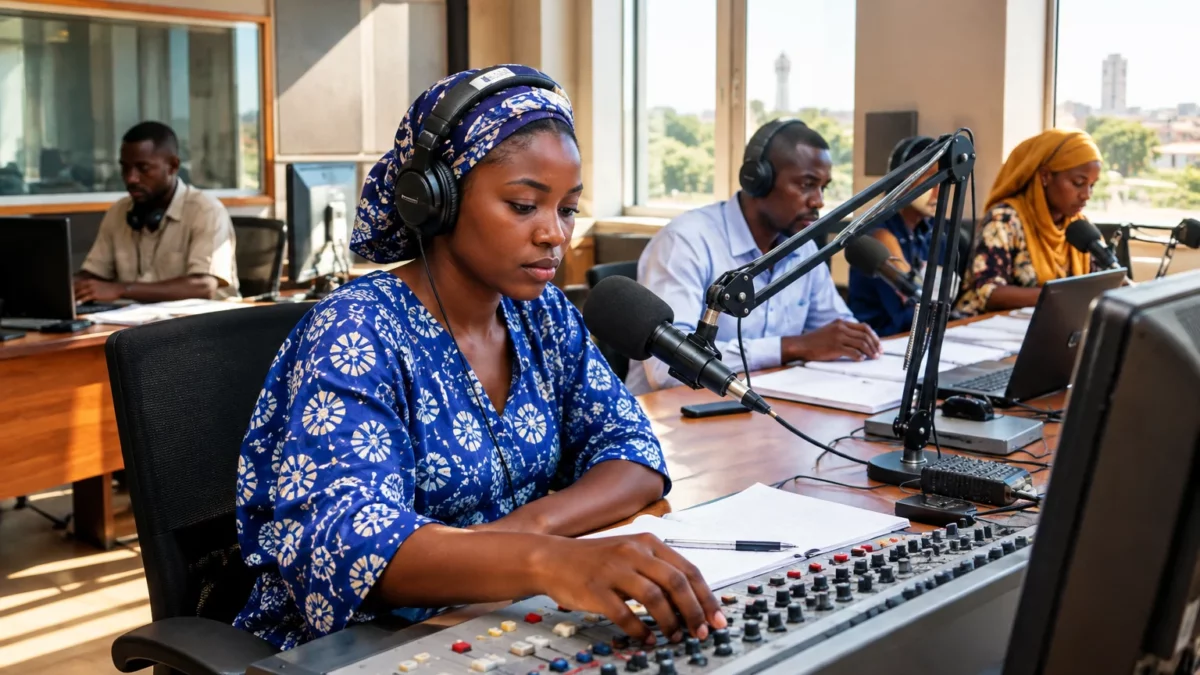
In Niger, the lack of information about Moussa Kaka’s fate raises a practical question: how can journalism be practised when the detention of a professional is neither located nor publicly explained? In Niamey, the case is now drawing voices from the press and human rights organisations across the continent.
Detention acknowledged, but no location or public reason given
The director of Radio Télévision Saraounia (RTS) left his media outlet’s premises on 31 August 2026 to go home. He never arrived. For several weeks, his family and colleagues received no information about where he was.
Niger’s Minister of Justice and Human Rights, Alio Daouda, said on 25 September, during Niger’s review before the United Nations Human Rights Council in Geneva, that Moussa Kaka was being detained and would have to answer to justice for an offence. On 6 October, he confirmed to Reporters Without Borders (RSF) that the journalist was alive and in the custody of the authorities. No place of detention or details of the alleged offence have been made public.
This distinction matters: announcing a detention does not answer questions about procedural safeguards, access to a lawyer or contact with family. Human Rights Watch and Amnesty International report that the place where Moussa Kaka is being held remains unknown. The African Commission on Human and Peoples’ Rights says a joint urgent appeal letter called on the authorities to disclose his fate and guarantee his rights.
A case unfolding amid heightened tensions
Moussa Kaka’s disappearance came two days after an attempted mutiny in Niamey on 29 August. The authorities subsequently announced the arrest of military personnel suspected of taking part. The context helps explain the political tension at the time, but does not, in itself, establish a link between these events and the journalist’s detention.
Niger has been governed by military authorities since the July 2023 coup. Against this backdrop, relations between the state and the media are under close scrutiny. In October 2025, Moussa Kaka and other journalists were arrested after an invitation to a press conference was published on social media. They were later released. That earlier case does not establish the reasons for the current detention, which have not been made public.
The journalist’s career is also a reminder that tensions surrounding the press are not new. In 2007, under President Mamadou Tandja, Moussa Kaka was arrested after covering the Tuareg rebellion in the north of the country. He spent 379 days in prison before being released in October 2008. This precedent sheds light on his long career in a difficult environment, without prejudging the allegations against him today.
African solidarity calls for concrete guarantees
The president of the Central African Journalists’ Union, Eustache Michael Mounzatela, is urging African media professionals to mobilise. He is calling on the Nigerien authorities to specify where Moussa Kaka is, what he is accused of and how his fundamental rights are being guaranteed. In his view, a detention whose location and grounds remain unknown undermines both press freedom and the public’s right to information.
African and international organisations have also brought the case to the attention of the relevant bodies. RSF has referred it to the United Nations Committee on Enforced Disappearances and to the African Union’s Special Rapporteur on Freedom of Expression and Access to Information. The African Commission says a joint letter called on the Nigerien authorities to disclose the place of detention, ensure access to a lawyer and family, and release the journalist if there is no legal basis for depriving him of his liberty.
For journalists, uncertainty surrounding a colleague can also weigh on day-to-day work: investigating, verifying information or reporting on a public decision becomes riskier when the rules and grounds for a detention are not made clear. For residents of Niamey and other regions, the issue therefore goes beyond the fate of a single media outlet. It touches on the ability to access diverse information and hold institutions to account.
A regional issue of freedoms and transparency
Beyond Niger, the case has drawn the attention of African human rights organisations and journalists’ networks across the continent. The African Commission has documented steps taken in relation to the case, while media professionals in several countries have voiced concern. This mobilisation places the issue in a regional context: commitments to fundamental rights must be translated into verifiable guarantees, including during periods of political tension.
The next step depends on information the authorities have yet to make public: where Moussa Kaka is being held, the legal basis for his detention and the conditions for access by his family and counsel. Until these details are available, calls for transparency will remain at the heart of the campaign. The government says the journalist is alive and detained; rights organisations are demanding that this statement be accompanied by guarantees and verifiable information.