Algeria
 Egypt
 Libya
 Sudan
 Tunisia
 Benin
 Burkina Faso
 Cabo Verde
 Côte d'Ivoire
 Ghana
 Guinea
 Guinea-Bissau
 Liberia
 Mali
 Mauritania
 Niger
 Nigeria
 Senegal
 Sierra Leone
 The Gambia
 Togo
 Cameroon
 Central African Republic
 Chad
 DR Congo
 Equatorial Guinea
 Gabon
 Republic of the Congo
 São Tomé and Príncipe
 Burundi
 Comoros
 Djibouti
 Eritrea
 Ethiopia
 Kenya
 Madagascar
 Malawi
 Mauritius
 Mozambique
 Rwanda
 Seychelles
 Somalia
 South Sudan
 Tanzania
 Uganda
 Angola
 Botswana
 Eswatini
 Lesotho
 Namibia
 South Africa
 Zambia
 Zimbabwe
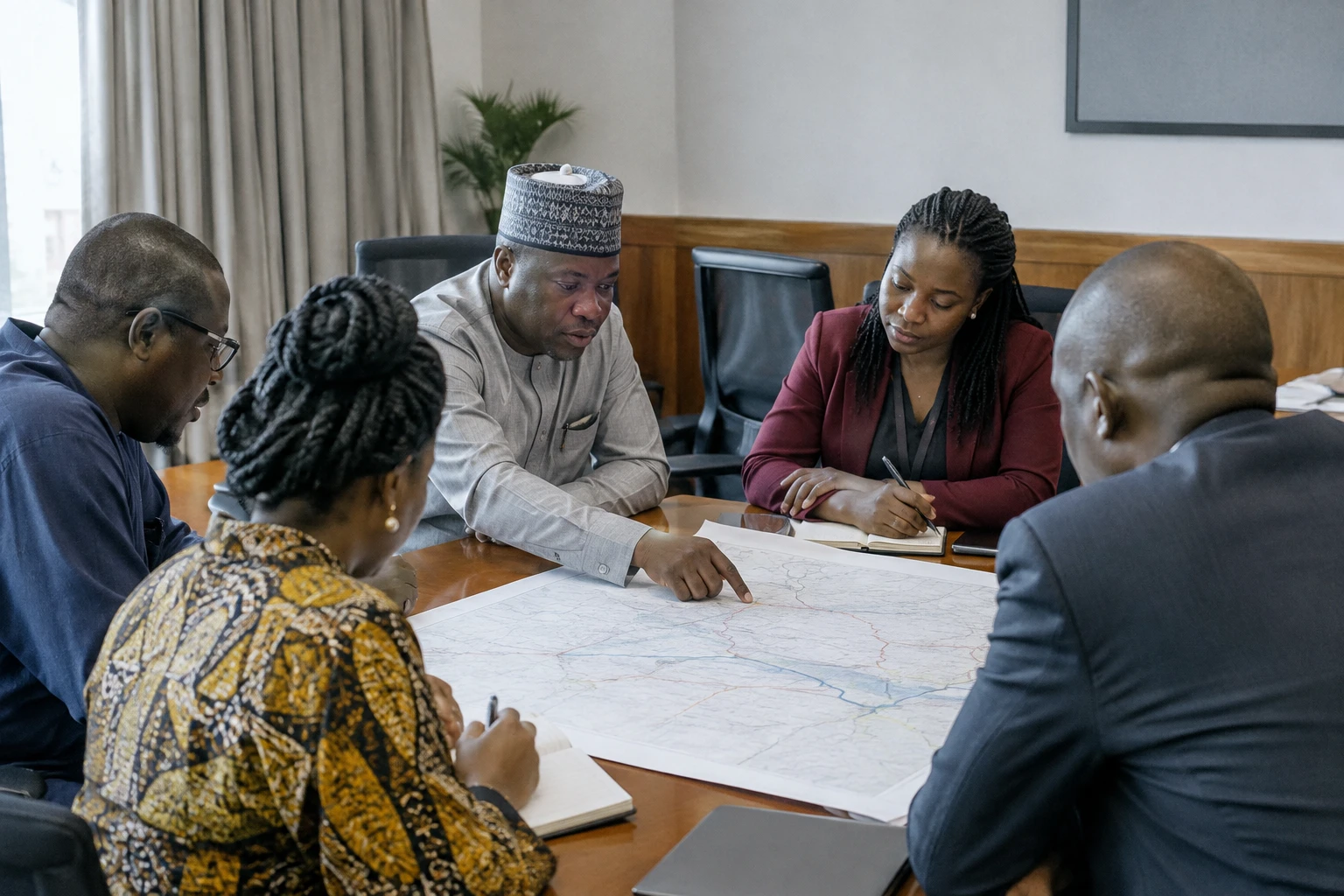
A continental gas pipeline cannot be built on agreements between states alone. It needs capital, customers and guarantees spanning several decades. At this stage, Nigeria is seeking to mobilise international partners for the planned gas corridor between the Gulf of Guinea and Morocco.
A regional project still awaiting funding
Developed by the Nigerian National Petroleum Company (NNPC), Nigeria’s state-owned oil company, and Morocco’s National Office of Hydrocarbons and Mines (ONHYM), the African Atlantic Gas Pipeline is intended to connect West Africa’s gas resources to regional markets. Its route could then reach Europe via the Maghreb-Europe Gas Pipeline, between Morocco and Spain.
The project is estimated to cost between $25 billion and $26 billion. It would extend for about 6,800 kilometres and cross 13 coastal countries, with interconnections planned to landlocked Sahelian states. Its stated capacity is 30 billion cubic metres a year. These figures describe a project target, not infrastructure that is already financed or under construction.
An institutional milestone was reached on 19 July 2026 in Freetown, the capital of Sierra Leone. The heads of state of ECOWAS — the Economic Community of West African States — signed the project’s intergovernmental agreement. ONHYM says a further signing involving Morocco and Mauritania is still to take place. The regional agreement therefore does not amount to a final investment decision.
Detailed engineering studies have been completed, route surveys carried out and environmental and social studies advanced, according to ONHYM. The project sponsors still need to establish a project company in Casablanca and a governance authority based in Abuja, Nigeria. They will then need to secure sufficient financial commitments to begin construction.
ADNOC among potential partners approached
On 3 November 2026 in Abu Dhabi, NNPC chief executive Bashir Bayo Ojulari said at the ADIPEC exhibition that his company was seeking investors, including the Emirati state-owned company ADNOC. NNPC confirms that its chief executive made the remarks on that occasion. The approach does not mean ADNOC has agreed to invest: no financial commitment by the group to the pipeline has been announced.
Potential interest reflects ADNOC’s and its investment subsidiary XRG’s international experience in several parts of the gas industry, from production to liquefied natural gas (LNG), which is cooled for transport by ship. XRG holds stakes in projects in Mozambique and the United States, among others. In July 2026, ADNOC also consolidated LNG marketing activities with those of ADNOC Trading. Its presence across the gas value chain could make it a potential partner to approach, without prejudging its decision or the project’s profitability.
Funding will not, however, depend on a single investor. To raise sums of this scale, the project sponsors will need to clarify how costs and risks are shared between states, companies and lenders. They will also need to establish who will buy the gas, at what price and under what transit rules. The greater the number of countries and jurisdictions involved, the more decisive coordination and contractual guarantees become.
Building in stages and convincing the markets
NNPC is considering a phased approach, drawing on the West African Gas Pipeline (WAGP), an existing network operating between Nigeria, Benin, Togo and Ghana. Ojulari referred to an extension to Sierra Leone, followed by the gradual expansion of the corridor. The aim is to demonstrate the commercial viability of initial sections before proceeding with subsequent ones. But this strategy guarantees neither the funding nor completion of the entire route.
Phased construction could give some West African markets earlier access to gas, provided volumes are available and connections are built. The benefits would not be the same everywhere: producing countries, territories along the route and connected consumers would face different costs and receive different benefits. The project will also need to make public its environmental and social safeguards, particularly for communities near the route.
The timetable raises a central question for states: how can gas exports be reconciled with local energy needs? Nigeria is seeking to increase its gas revenues, while countries along the route may hope to improve their supply or earn transit fees. These benefits will depend on commercial agreements and distribution infrastructure, which do not automatically follow from building a major gas pipeline.
A corridor within the regional balance
The project comes as West African states seek to better connect their energy markets. The WAGP provides an operational precedent, but on its own it does not demonstrate the feasibility of a network almost ten times longer. The comparison matters: the new corridor requires much broader coordination and a far greater mobilisation of capital.
The Nigeria-Morocco gas pipeline is also being assessed alongside other export options, including the trans-Saharan project linking Nigeria to Algeria via Niger. These initiatives reflect different route choices and regional partnerships. They are not necessarily mutually exclusive, but all will need to convince investors and buyers in an evolving energy market.
In the short term, the milestones to watch are the additional signing announced by ONHYM, the creation of the governance structures, and then financial commitments and a final investment decision. Until these steps are taken, any potential ADNOC participation remains one funding avenue among others, and the pipeline remains a regional project in preparation.