Algeria
 Egypt
 Libya
 Morocco
 Sudan
 Tunisia
 Benin
 Burkina Faso
 Cabo Verde
 Côte d'Ivoire
 Ghana
 Guinea
 Guinea-Bissau
 Liberia
 Mali
 Mauritania
 Niger
 Nigeria
 Sierra Leone
 The Gambia
 Togo
 Cameroon
 Central African Republic
 Chad
 DR Congo
 Equatorial Guinea
 Gabon
 Republic of the Congo
 São Tomé and Príncipe
 Burundi
 Comoros
 Djibouti
 Eritrea
 Ethiopia
 Kenya
 Madagascar
 Malawi
 Mauritius
 Mozambique
 Rwanda
 Seychelles
 Somalia
 South Sudan
 Tanzania
 Uganda
 Angola
 Botswana
 Eswatini
 Lesotho
 Namibia
 South Africa
 Zambia
 Zimbabwe
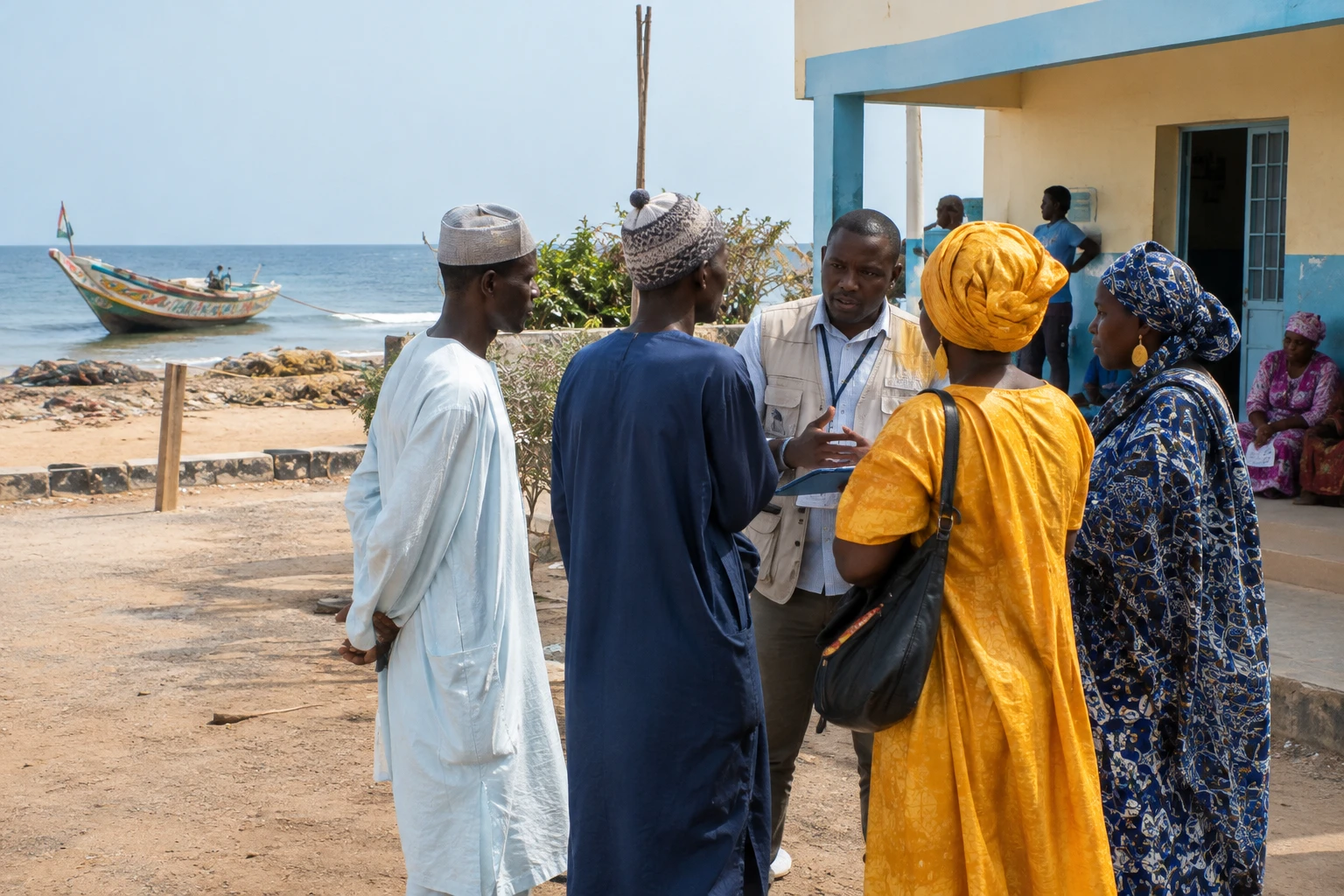
On Lompoul beach in northern Senegal, searches are continuing as families wait for news. The capsizing of a pirogue off Kébémer highlights the human cost of a sea route on which departures continue despite warnings and rescue operations.
Death toll still provisional off Louga
The first bodies were found on Saturday 7 November along the coast at Lompoul, in the Louga region. The exact circumstances of the shipwreck and the number of people on board had not been established in the first hours, according to the Senegalese Press Agency.
The death toll changed as operations continued. The Interior Ministry reported 21 bodies and one survivor on the evening of 7 November. The APS later reported 34 deaths on Sunday 8 November. On Monday 9 November, the US news agency Associated Press said the toll had risen to 39 after more bodies were found, according to rescue services. Only one survivor was reported. The total number of passengers and the number of people still missing remain unknown.
This increase does not necessarily mean the reports are contradictory: the figures were published at different times as searches progressed. Identifying the victims and establishing a definitive death toll therefore remain essential. President Bassirou Diomaye Faye offered his condolences to the families and said state resources had been mobilised to find the missing, rescue any possible survivors and support their relatives.
A regional Atlantic route, but responses remain national
The pirogue capsized off Kébémer, on the coast between Dakar and Saint-Louis. The route it was intended to take was not independently specified in the initial reports. Crossings from West Africa to Spain’s Canary Islands, however, follow a long Atlantic route, exposed to shipwrecks and difficult to monitor along its entire length.
The phenomenon extends beyond Senegal’s borders. Departures and routes also involve nationals of other West African countries, while rescue operations, victim identification and efforts to combat networks require cooperation between states. ECOWAS, the Economic Community of West African States, works in particular on free movement and migration issues. But regional coordination must also take account of sea rescues, the protection of people and returns.
The Senegalese government has announced plans to strengthen cooperation with neighbouring countries against smuggling networks. President Faye has also pledged to continue the fight against those organising crossings and to support opportunities for young people in Senegal. These commitments follow other enforcement and arrest operations in the country. However, on their own, they do not explain why people take to the sea or measure the effectiveness of the policies in place.
Beyond the networks, the question of opportunities
People smugglers organise departures and profit from dangerous crossings. But reducing the phenomenon to their activities would overlook the reasons passengers accept the risk: the search for work, hoped-for income, family plans or established networks. These factors are cited by the International Organization for Migration in its analyses of migration routes in Senegal.
Labour-market data also call for a more precise debate. In the second quarter of 2026, the National Agency for Statistics and Demography estimated broad unemployment at 23.5% among 15- to 34-year-olds, compared with 19.1% of the active population as a whole. The rate was significantly higher in rural areas than in urban areas: 29.2% compared with 12.6%. These figures describe real pressure, but do not mean that all young people without jobs choose to emigrate. They also show that responses must take account of disparities between towns and the countryside, as well as employment opportunities in different areas.
For the families affected, the immediate priorities are to find the missing, identify the dead and arrange support for them. For the authorities, the challenge is twofold: to pursue criminal networks and make employment and training solutions credible in the regions as well as in Dakar. Local organisations, including associations, also have a crucial role in supporting relatives and providing information about the risks.
Signals to watch on both sides
The tragedy comes amid high death tolls on the Atlantic route. Associated Press reports that the Spanish organisation Walking Borders recorded 635 deaths between January and May 2026 on the route to the Canary Islands. This figure covers the entire route under observation, not just the Senegalese coast. It also highlights an important limitation: people missing at sea are difficult to count accurately.
What happens next will depend on several concrete factors: the progress of searches at Lompoul, the identification of victims and the findings of investigations into the organisation of the departure. It will also be important to see how Dakar and its West African partners coordinate efforts to combat smugglers with the protection of people. A lasting response will be measured not only by the number of interceptions, but also by its ability to reduce dangerous departures without ignoring the economic and social realities driving them.